
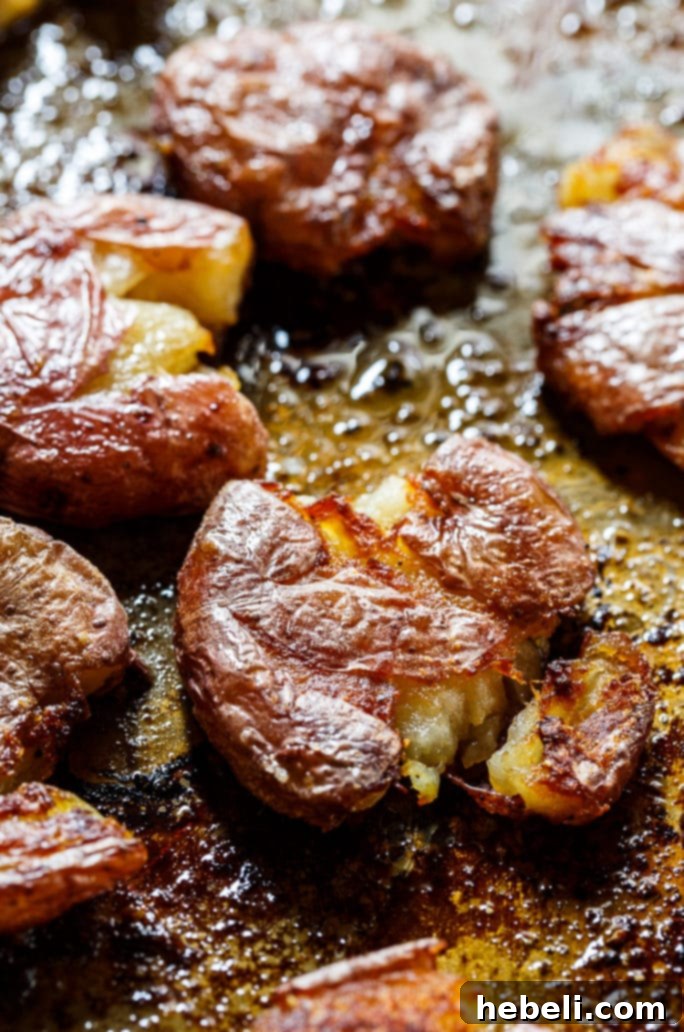
Prepare to meet your new favorite potato dish: the most delicious Roasted Salt and Vinegar Potatoes you’ve ever tasted. These culinary delights are a masterclass in contrasts – unbelievably smooth and creamy on the inside, yet boasting an irresistibly crisp and crunchy exterior. Each bite delivers a delightful tang from authentic malt vinegar, perfectly balanced with just the right amount of saltiness. What truly sets this recipe apart is how the salt penetrates the entire potato, ensuring every morsel is bursting with flavor, not just the surface.

Why You’ll Crave These Salt and Vinegar Potatoes
If you’re a fan of salt and vinegar chips, prepare for a revelation. This recipe transforms humble potatoes into a gourmet experience that elevates the classic flavor profile. The meticulous cooking process ensures a texture that is both deeply satisfying and incredibly addictive. Imagine breaking through that golden, crunchy crust to find a fluffy, tender interior, all while your taste buds are enlivened by that signature vinegary zing. These aren’t just any roasted potatoes; they are a culinary journey designed to deliver maximum flavor and textural pleasure with every forkful.
They make an exceptional side dish for almost any meal, from a casual weeknight dinner to a festive holiday spread. Their unique flavor and delightful crunch will undoubtedly make them a standout on your table. Forget soggy or bland potatoes; this recipe guarantees a show-stopping side that will have everyone asking for more.
The Secret to Perfectly Salted and Crispy Potatoes
The magic behind these extraordinary potatoes lies in a clever cooking technique. Unlike typical roasting methods, this recipe begins with a unique boiling process. The potatoes are immersed and cooked in water that is significantly more salted than usual – we’re talking about a generous 1 1/4 cups of salt dissolved in two quarts of water. This may sound like an astronomical amount of salt, but trust us and the culinary experts at Cook’s Country who perfected this method; it is precisely the right balance for infusing flavor deep into the potato’s core.
This high-salt boil serves multiple purposes. First, it seasons the potatoes from the inside out, ensuring a robust flavor profile that goes beyond the surface. Secondly, the salt helps to break down the starches on the potato’s exterior, which is crucial for achieving that coveted ultra-crispy crust during roasting. The potatoes absorb the salty water, plumping up and becoming wonderfully seasoned and tender.
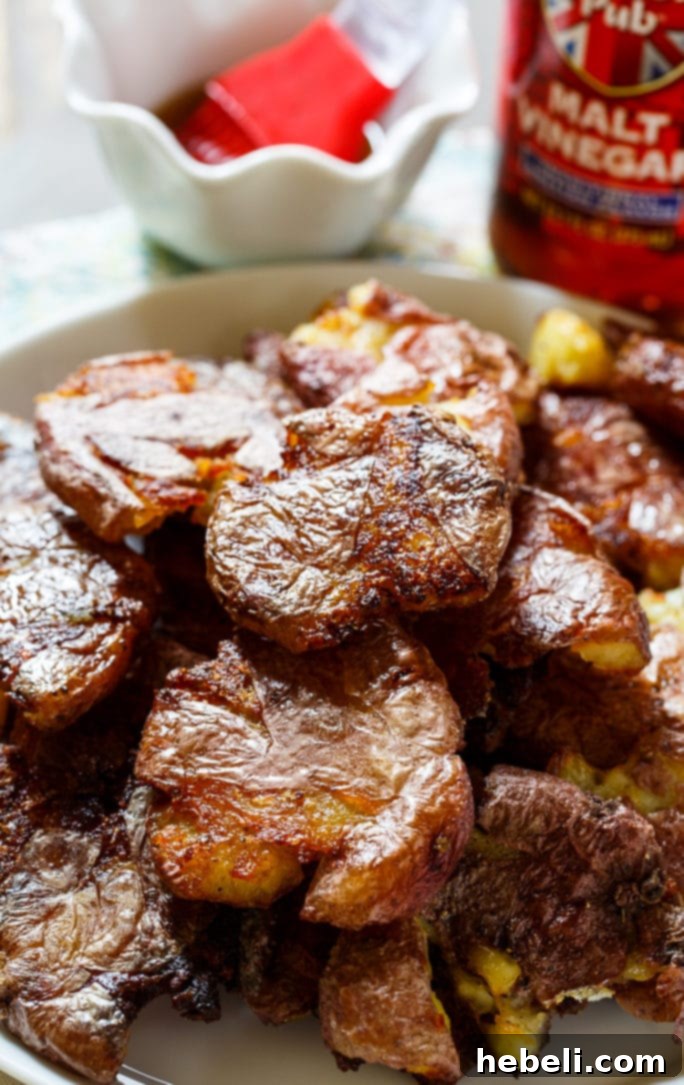
Once boiled to tender perfection, the potatoes are drained and allowed to air dry on a wire rack. This critical step removes excess surface moisture, preventing steaming in the oven and promoting maximum crispness. They are then placed on a generously olive-oiled baking sheet and gently smashed. Smashing creates more surface area, allowing more of the potato to come into direct contact with the hot baking sheet, leading to a glorious, golden-brown crunch. Finally, a brush of malt vinegar and a sprinkle of pepper prepare them for their high-heat roast in a 500-degree Fahrenheit oven for about 25-30 minutes.

How to Make Roasted Salt and Vinegar Potatoes: A Step-by-Step Guide
Creating these sensational potatoes is simpler than you might think, but each step is vital for achieving the perfect balance of flavor and texture. Follow these detailed instructions to master this recipe:
Ingredients Spotlight
- Small Red Potatoes (or Baby Yukon Golds): Unpeeled, about golf-ball size or smaller. Their waxy texture holds up well to boiling and roasting, providing a creamy interior.
- Olive Oil: Essential for coating the baking sheet and creating that crisp exterior. Don’t skimp!
- Salt (Non-Iodized): This is the star ingredient for the boiling process. Using non-iodized salt is crucial, as iodine can impart an unpleasant, metallic taste to the potatoes during such a high-salt boil. Kosher salt or sea salt are excellent choices.
- Malt Vinegar: The distinctive tangy flavor comes from malt vinegar. Its unique profile is irreplaceable for achieving the authentic salt and vinegar taste.
- Black Pepper: A simple seasoning to complement the bold flavors.
Step-by-Step Guide
Here’s how you’ll bring these incredible potatoes to life:
- Prepare Your Oven and Equipment: Position an oven rack in the upper-middle section of your oven and preheat it to a blazing 500 degrees Fahrenheit (260°C). This high heat is key to achieving maximum crispness quickly. Set a wire rack inside a rimmed baking sheet; this will be used for air-drying the potatoes later.
- The Salt Bath: In a large Dutch oven or a generously sized pot, bring two quarts of water to a rolling boil. Carefully add the potatoes and the astonishing 1 1/4 cups of non-iodized salt. Cook the potatoes until they are just tender when pierced with a fork, typically taking about 20 to 30 minutes, depending on their size. Be careful not to overcook them, or they will fall apart when smashed.
- Drain and Air Dry: Once tender, drain the potatoes thoroughly. Transfer them onto the prepared wire rack set in the rimmed baking sheet. Allow them to air dry for at least 10 minutes. This step is crucial for removing surface moisture, which is essential for crisping up in the oven.
- Prepare for Roasting: While the potatoes are drying, liberally coat a fresh baking sheet (or the same one after cleaning the wire rack) with all 6 tablespoons of olive oil. Ensure the entire surface is well-oiled to prevent sticking and promote even browning.
- Smash and Season: Arrange the air-dried potatoes on the oiled baking sheet, ensuring they are evenly spaced and not overcrowded. Using the underside of a sturdy measuring cup or a potato masher, gently flatten each potato to about 1/2-inch thickness. This increases the surface area for crisping.
- First Vinegar Application and Roast: Brush the flattened potatoes with 1 1/2 tablespoons of the malt vinegar. Season them generously with black pepper. Place the baking sheet into your preheated 500-degree oven. Roast until the potatoes are beautifully browned and incredibly crispy, which typically takes about 25 to 30 minutes. Keep an eye on them to prevent burning, as oven temperatures can vary.
- Final Touch and Serve: Once roasted to perfection, remove the potatoes from the oven. Immediately brush them with the remaining malt vinegar. This second application ensures a fresh burst of tangy flavor right before serving. Serve them hot, straight off the baking sheet, and watch them disappear!
Choosing the Best Potatoes for Roasting
The type of potato you choose can significantly impact the final texture of your roasted potatoes. For this particular recipe, varieties that are waxy and hold their shape well after boiling are ideal. We highly recommend using small red potatoes due to their excellent texture and mild flavor profile. Baby Yukon Gold potatoes are another fantastic option, offering a slightly creamier texture while still holding up to the smashing and roasting process.
The key is to select potatoes that are approximately the size of a golf ball or smaller. This ensures they cook evenly and quickly, and that each smashed potato yields a perfectly sized, bite-friendly piece with a good ratio of crispy crust to tender interior. Avoid large, starchy potatoes like Russets, as they tend to fall apart when boiled and can become mushy rather than creamy on the inside.
Expert Tips for Success
To ensure your Roasted Salt and Vinegar Potatoes are nothing short of spectacular every time, consider these helpful tips:
- Spice It Up: For those who enjoy a little heat, a pinch of cayenne pepper sprinkled over the potatoes with the black pepper before roasting will add a delightful kick.
- Fresh Herb Boost: Elevate the flavor profile with fresh herbs. Before serving, sprinkle your crispy potatoes with finely chopped fresh chives or green onions. Their bright, oniony notes provide a wonderful contrast to the tangy vinegar and salty potatoes.
- Achieving Maximum Crispness: Don’t overcrowd the baking sheet. Give each potato ample space to breathe and crisp up. If your batch is too large, use two baking sheets. Also, ensure your oven is fully preheated to 500°F (260°C) before placing the potatoes inside.
- The Right Salt Matters: As mentioned, always use non-iodized salt for the boiling step. Iodized salt can react with the potatoes and impart a metallic, off-flavor that will detract from the dish. Coarse kosher salt or sea salt are ideal.
- Malt Vinegar is Key: While other vinegars might seem similar, malt vinegar has a distinctive, slightly sweet, and robust flavor that is integral to the authentic “salt and vinegar” taste. Avoid substitutions if possible for the best results.
- Preheat the Oil: For an even crispier bottom crust, place your olive oil-coated baking sheet into the hot oven for a few minutes before adding the smashed potatoes. This ensures the oil is sizzling hot when the potatoes hit the pan.
Serving Suggestions
These versatile Roasted Salt and Vinegar Potatoes make an excellent companion to a wide range of main courses. Their bold flavor and satisfying crunch can complement both simple and elaborate meals:
- Classic Comfort: Pair them with roasted chicken, grilled fish, or juicy pork chops for a hearty and flavorful meal.
- BBQ & Grilling: They are a fantastic alternative to fries or potato salad at your next barbecue, perfect alongside burgers, ribs, or pulled pork.
- Vegetarian Delight: Serve them with a vibrant green salad, a hearty lentil soup, or a grilled halloumi for a satisfying vegetarian option.
- Brunch Favorite: Add them to your brunch spread alongside eggs, bacon, and sausages for a delicious twist on breakfast potatoes.
Storage and Reheating
While these potatoes are undeniably best enjoyed fresh from the oven, any leftovers can be stored. Place cooled potatoes in an airtight container and refrigerate for up to 3 days. When ready to reheat, avoid the microwave, as it will make them soggy.
For the best results, reheat them in a preheated oven at 400°F (200°C) for about 10-15 minutes, or until heated through and re-crisped. An air fryer is another excellent option; simply air fry at 375°F (190°C) for 5-7 minutes, shaking halfway through, until crispy again. This will help restore their glorious crunch.
Frequently Asked Questions (FAQ)
- Can I use regular white vinegar instead of malt vinegar? While you can use white vinegar, it won’t give you the same authentic “salt and vinegar” flavor. Malt vinegar has a distinct, richer, and slightly sweeter profile that is essential for this recipe. If you absolutely must substitute, apple cider vinegar would be a closer alternative than plain white vinegar, but it still won’t be identical.
- Why is so much salt used in the boiling water? Will the potatoes be too salty? The large amount of salt in the boiling water seasons the potatoes from the inside out, creating a deep flavor that goes beyond surface seasoning. While the water is very salty, the potatoes absorb a balanced amount and are then drained, resulting in perfectly seasoned potatoes, not overly salty ones. Trust the process!
- Can I use larger potatoes for this recipe? It’s best to stick to small potatoes (golf ball size or smaller) like small red or baby Yukon Golds. Larger potatoes will take much longer to cook through, and smashing them might be more challenging, potentially leading to an uneven crispy-to-creamy ratio.
- How do I ensure my potatoes are extra crispy? Several factors contribute to ultimate crispness: 1) the high-salt boil breaking down starches, 2) thorough air-drying after boiling to remove surface moisture, 3) smashing the potatoes to increase surface area, 4) liberal coating with olive oil, and 5) roasting at a high oven temperature (500°F) without overcrowding the baking sheet.
More Delicious Potato Recipes
If you’ve fallen in love with these salt and vinegar potatoes, you’ll surely enjoy exploring other fantastic potato creations:
- Melting Potatoes
- Italian Roasted Potatoes
- Greek Potatoes
- French Onion Potatoes
- Paprika Potatoes
- Super Crispy Roasted Potatoes
Never miss a recipe. Follow Spicy Southern Kitchen on Facebook and Pinterest.
Roasted Salt and Vinegar Potatoes
40 minutes
30 minutes
1 hour 10 minutes
4 servings

Equipment
-
Rimmed Baking Sheet
-
Wire Rack
Ingredients
- 6 tablespoons olive oil
- 2 pounds small red potatoes, unpeeled
- 1 1/4 cup salt, do not use iodized salt. It will give potatoes a chemical taste
- 3 tablespoons malt vinegar
- black pepper
Instructions
-
Place oven rack in upper-middle position. Heat oven to 500 degrees. Set wire rack in a rimmed baking sheet.
-
Bring 2 quarts of water to a boil in a Dutch oven or large pot. Add potatoes and salt and cook until potatoes are just tender, about 20 to 30 minutes. Drain potatoes and place them on the wire rack to air dry for 10 minutes.
-
Coat a baking sheet with the 6 tablespoons of olive oil.
-
Place potatoes on greased baking sheet, spacing them evenly. Use the underside of a measuring cup to flatten each potato to 1/2-inch thickness.
-
Brush potatoes with 1 1/2 tablespoons of the malt vinegar and season with pepper.
-
Roast until potatoes are browned, about 25 to 30 minutes.
-
Brush with remaining vinegar and serve.
Nutrition
Carbohydrates: 36g |
Protein: 4g |
Fat: 21g |
Saturated Fat: 3g |
Polyunsaturated Fat: 2g |
Monounsaturated Fat: 15g |
Sodium: 35408mg |
Potassium: 1040mg |
Fiber: 4g |
Sugar: 3g |
Vitamin A: 16IU |
Vitamin C: 20mg |
Calcium: 46mg |
Iron: 2mg
Nutrition information is automatically calculated, so should only be used as an approximation.
Did you make this?Leave a comment below and tag us @spicysouthernkitchen on social media!
Disclosure: This post may contain affiliate links.