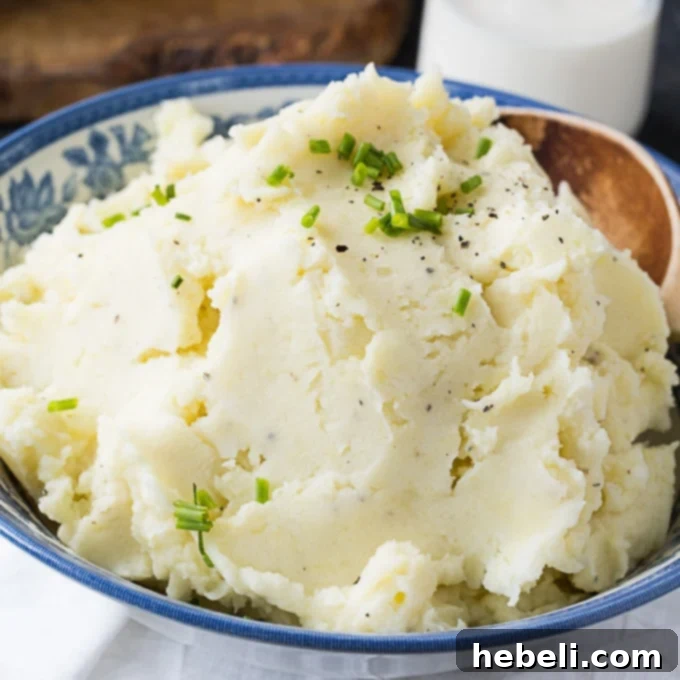
Creamy & Tangy Buttermilk Mashed Potatoes: Your Ultimate Holiday Side
Transform your side dish game with these incredibly creamy and delightfully tangy Buttermilk Mashed Potatoes. Forget bland or overly rich versions; the magic of buttermilk infuses these potatoes with a unique flavor profile that is both comforting and exciting. Whether you’re planning an elaborate Thanksgiving feast, a cozy Sunday dinner, or simply craving a delicious and easy-to-make side, these mashed potatoes are guaranteed to be a crowd-pleaser.
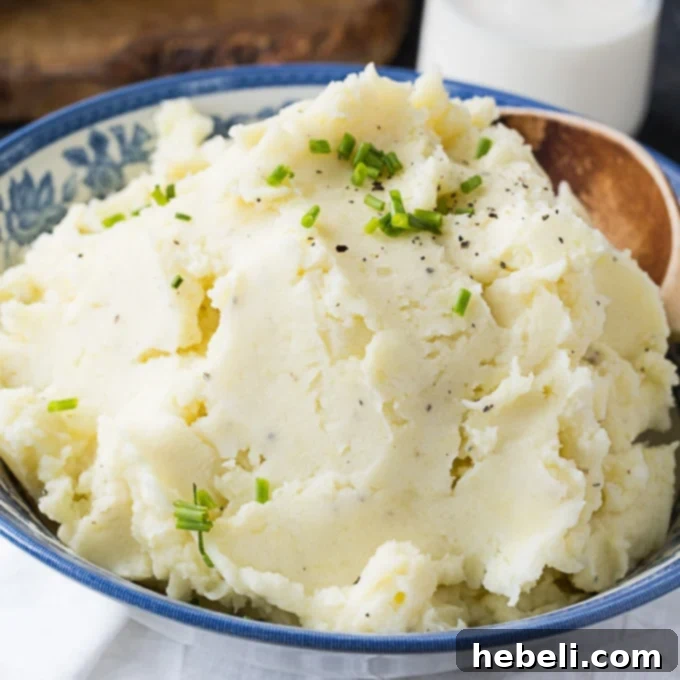
Buttermilk Mashed Potatoes offer a wonderful twist on a classic. While traditional mashed potatoes often rely heavily on butter and heavy cream for richness, buttermilk brings a different kind of creaminess and a subtle, refreshing tang. This not only lightens the dish slightly but also adds a complexity of flavor that makes these potatoes stand out. The buttermilk’s acidity works harmoniously with the potatoes, creating a smooth, velvety texture that is simply irresistible.
There are countless ways to prepare mashed potatoes, and every home cook has their cherished recipe. From incredibly rich, garlic-infused concoctions to simple, rustic preparations, the world of mashed potatoes is vast and varied. If you’ve ever explored different styles, you know how a single ingredient can completely redefine the experience. For instance, some people swear by the surprising creaminess achieved with Mayonnaise Mashed Potatoes. Our Buttermilk Mashed Potatoes, however, carve out their own niche, offering a brighter, more nuanced flavor that complements a wide array of main courses without overpowering them.
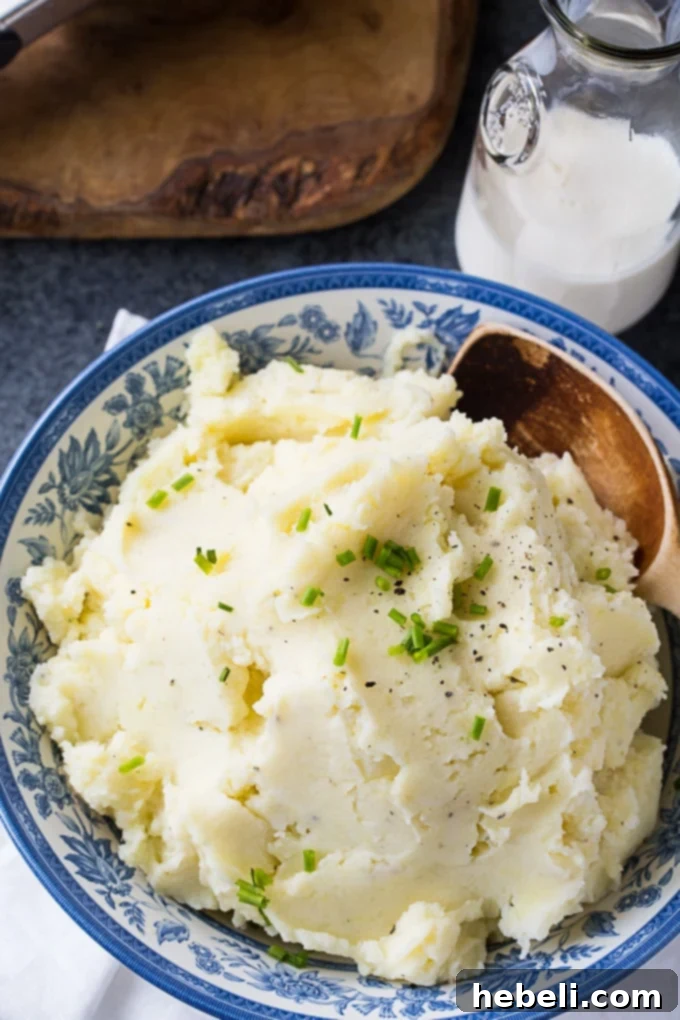
The Secret to Perfect Buttermilk Mashed Potatoes: Choosing the Right Potatoes
The foundation of any great mashed potato dish lies in the potatoes themselves. For Buttermilk Mashed Potatoes, your choice of spud can significantly impact the final texture and flavor. While many varieties can work, some are undeniably superior for mashing:
- Yukon Gold Potatoes: These are often considered the gold standard for mashed potatoes, and for good reason. Yukon Golds have a naturally buttery flavor and a fine-grained, moist flesh that produces an incredibly creamy and smooth mash. Their moderate starch content means they break down beautifully without becoming gluey, offering a velvety texture that perfectly absorbs the tang of buttermilk.
- Russet Potatoes: Also known as baking potatoes, Russets are another excellent choice. They are high in starch and have a drier, fluffier texture when cooked, which makes them ideal for absorbing liquids like milk, butter, and buttermilk. If you prefer a lighter, airier mash, Russets are a fantastic option. Just be mindful not to overwork them, as their high starch content can lead to a gluey consistency if mashed too vigorously.
- Red Bliss or New Potatoes: While not typically recommended for traditional creamy mashed potatoes due to their waxy texture and lower starch content, some people enjoy the more rustic, slightly lumpy texture they provide. However, for the ultimate creamy and smooth buttermilk mash, Yukon Golds or Russets are your best bet.
Regardless of your choice, ensure your potatoes are peeled and cut into uniform chunks. This ensures even cooking, which is crucial for a consistently smooth mash. Unevenly cooked potatoes can lead to lumps and an undesirable texture.
Mastering the Mash: Techniques for Fluffy Perfection
Beyond the type of potato, the method you use to mash them plays a critical role in achieving that perfect texture. Here are the most effective tools and techniques for your Buttermilk Mashed Potatoes:
- Potato Ricer: For the absolute smoothest, fluffiest, and most lump-free mashed potatoes, a potato ricer is your best friend. This tool presses cooked potatoes through small holes, separating the starch granules and creating an incredibly light and airy consistency. It’s particularly effective for high-starch potatoes like Russets. If you’re serious about perfect mashed potatoes, a ricer is a worthwhile investment.
- Potato Masher: If you prefer a slightly more rustic texture with a few small lumps, a traditional potato masher will do the trick. Choose one with a sturdy handle and a wide mashing surface. The key here is to mash the potatoes immediately after draining them while they are still hot, allowing them to break down easily.
- Electric Mixer (with caution): An electric mixer can also be used, but it requires careful handling. Over-beating potatoes with an electric mixer can release too much starch, resulting in a gummy, gluey, or pasty texture. If you choose this method, mix on low speed for only a very short time, just until the ingredients are incorporated and the desired consistency is reached. Stop as soon as the lumps disappear.
Buttermilk Considerations and Flavor Boosters
Buttermilk is the star ingredient here, and understanding how to handle it ensures the best results:
- Buttermilk Fat Content: You can use either full-fat or low-fat buttermilk. Full-fat buttermilk will yield a richer, creamier result, while low-fat versions will still provide that signature tang and a lighter texture. The choice depends on your dietary preferences and desired decadence.
- Temperature is Key: A crucial tip for incorporating buttermilk is to avoid adding it directly from the refrigerator. Cold buttermilk can cool down your potatoes too quickly, affecting the overall temperature and potentially making them harder to incorporate smoothly. More importantly, if buttermilk is heated too quickly or excessively, its proteins can curdle. Instead, gently warm the buttermilk in the microwave for about 30 seconds or bring it to room temperature before adding it to the potatoes. The milk and butter mixture should be heated gently in a saucepan until warm, not boiling, then combined with the buttermilk.
- Seasoning: While salt and pepper are essential, don’t be afraid to experiment with other seasonings. A pinch of garlic powder or onion powder can deepen the savory notes. For a fresh touch, stir in some finely chopped fresh chives or parsley just before serving.
- Roasted Garlic Infusion: For an extra layer of flavor, consider roasting a head of garlic until soft, then squeezing the caramelized cloves into your mashed potatoes along with the buttermilk mixture. The sweet, mellow garlic will complement the tang of the buttermilk beautifully.
- Herbaceous Touches: Beyond chives, fresh dill, thyme, or rosemary (finely chopped) can elevate your mashed potatoes, offering an aromatic complexity that pairs well with many entrees. Add them in moderation to avoid overpowering the buttermilk flavor.
How To Serve Buttermilk Mashed Potatoes
The versatility of Buttermilk Mashed Potatoes makes them an ideal accompaniment to a vast array of dishes, from festive holiday meals to simple weeknight dinners. Their creamy texture and bright tang provide a refreshing contrast to rich meats and gravies.
- Thanksgiving and Holiday Feasts: These potatoes are a natural fit for Thanksgiving turkey, Christmas ham, or a succulent roasted chicken. Their tanginess cuts through the richness of gravies and holiday roasts, offering a delightful balance to your festive spread.
- Classic Southern Comfort: Pair them with hearty Southern staples like Cubed Steak with Onion Gravy or crispy Chicken Fried Steak for a truly comforting and satisfying meal. The creamy potatoes absorb the savory gravies beautifully.
- Everyday Mains: Beyond holidays, these mashed potatoes are excellent with grilled or baked salmon, pork chops, meatloaf, or even a simple pan-seared steak. They also make a fantastic base for shepherd’s pie or a topping for pot pie.
- Vegetarian Options: Serve them alongside roasted vegetables, mushroom gravy, or a hearty lentil loaf for a fulfilling vegetarian meal. The tang of the buttermilk brightens up even the most earthy vegetable dishes.
Storage, Reheating, and Making Ahead
Buttermilk Mashed Potatoes are delicious fresh, but with a few tips, they can also be a fantastic make-ahead or leftover dish.
- Refrigeration: Leftovers will keep well for up to 4 days when stored in an airtight container in the refrigerator. Ensure they cool completely before covering and storing to prevent condensation, which can lead to sogginess.
- Reheating: To reheat, gently warm the potatoes in a saucepan over low heat, stirring occasionally, until heated through. You might need to add a splash of extra milk or buttermilk to restore their creamy consistency. Alternatively, microwave individual servings in 30-second intervals, stirring in between, until warm. For larger portions, an oven at 300°F (150°C) covered with foil can also work, with a little added liquid to prevent drying out.
- Freezing: While mashed potatoes can be frozen, the texture can sometimes change upon thawing, becoming a bit grainier. If freezing, cool them completely, then transfer to a freezer-safe bag or container, removing as much air as possible. They can be frozen for up to 1-2 months. Thaw overnight in the refrigerator, then reheat gently on the stovetop, adding a bit more milk or buttermilk to revive their creaminess.
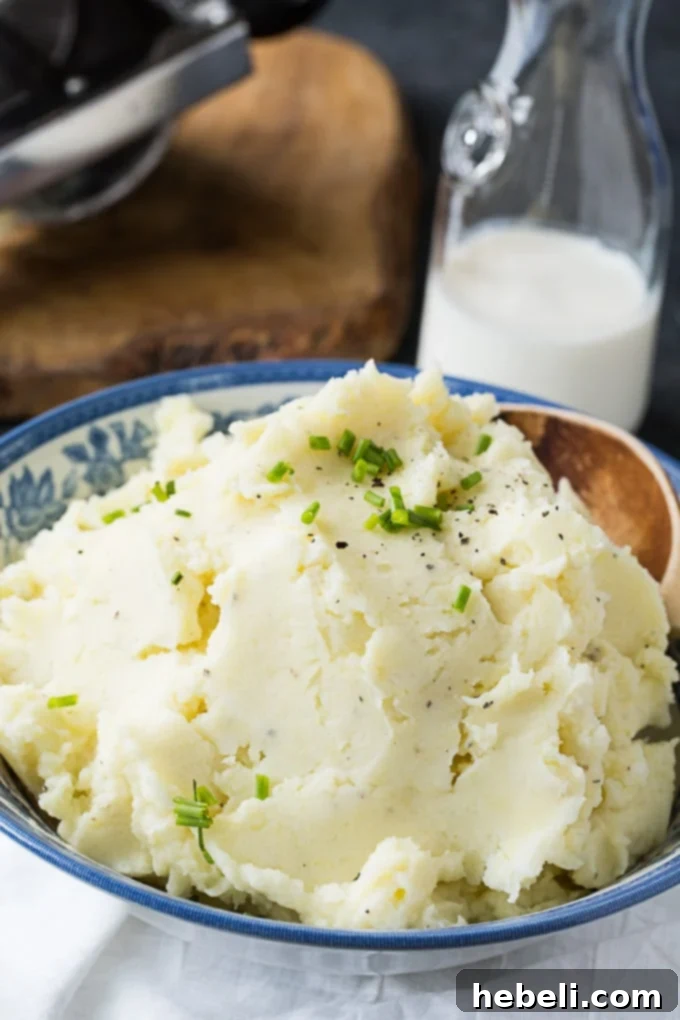
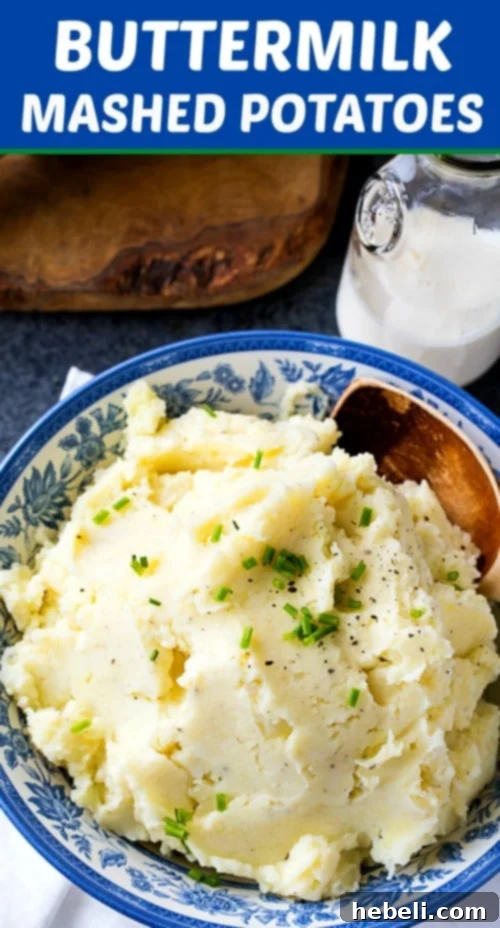
Pin this now to find it later!
Pin It
The unique tang and velvety texture that buttermilk imparts truly elevate these potatoes, making them a standout winner on any table.
Need more delicious ideas for using up that jar of buttermilk? Explore these fantastic recipes:
- Sweet Potato Buttermilk Pie
- Buttermilk Coleslaw
- Chocolate Buttermilk Cake
- Old-Fashioned Buttermilk Pie
- Homemade Buttermilk Bread
- Buttermilk Pancakes
- Buttermilk Hot Sauce Brined Chicken
- Whole Wheat Buttermilk Bread
Buttermilk Mashed Potatoes Recipe
Print Recipe
Buttermilk Mashed Potatoes are exceptionally creamy with a wonderful tang from the buttermilk. This recipe is a perfect side for any meal, especially holiday gatherings.
Equipment
-
Potato Ricer
Ingredients
- 2 1/2 pounds Yukon Gold or Russet potatoes, peeled and cut into chunks
- 1/3 cup milk
- 5 tablespoons butter
- 1/3 cup buttermilk, warmed
- 1 teaspoon salt
- 1/2 teaspoon pepper
- chopped fresh chives, optional
Instructions
-
Place potatoes in a large pot and cover with cold water. Add a teaspoon of salt to the water. Bring to a boil over high heat, then reduce heat and simmer for 15 to 20 minutes, or until the potatoes are fork-tender. Drain the potatoes very well.
-
While potatoes are cooking, combine the milk and butter in a small saucepan. Heat over low heat until the butter is melted and the mixture is warm, but not boiling. Remove from heat.
-
Press the drained, hot potatoes through a potato ricer directly into a large bowl. If you don’t have a ricer, use a potato masher to mash thoroughly until smooth.
-
Pour the warm butter and milk mixture over the riced or mashed potatoes and stir gently to combine.
-
Add the warmed buttermilk, along with the salt and pepper. Stir carefully until everything is well mixed and the potatoes are creamy. Be careful not to overmix, which can lead to a gluey texture.
-
Taste and adjust seasoning if necessary. If desired, garnish with freshly chopped chives before serving for a touch of freshness.
Notes
If you don’t have a potato ricer, a sturdy potato masher works well for a slightly less smooth texture. An electric mixer can be used on low speed, but be very careful not to overbeat, as this can make the potatoes gluey.
Always warm the buttermilk gently before adding it to the potatoes to prevent it from curdling and to ensure a smooth, consistent temperature.
Nutrition
Carbohydrates: 34g |
Protein: 5g |
Fat: 11g |
Saturated Fat: 7g |
Polyunsaturated Fat: 0.5g |
Monounsaturated Fat: 3g |
Trans Fat: 0.4g |
Cholesterol: 28mg |
Sodium: 493mg |
Potassium: 839mg |
Fiber: 4g |
Sugar: 3g |
Vitamin A: 340IU |
Vitamin C: 37mg |
Calcium: 58mg |
Iron: 1mg
Nutrition information is automatically calculated and should only be used as an approximation.
Disclosure: This post contains affiliate links.