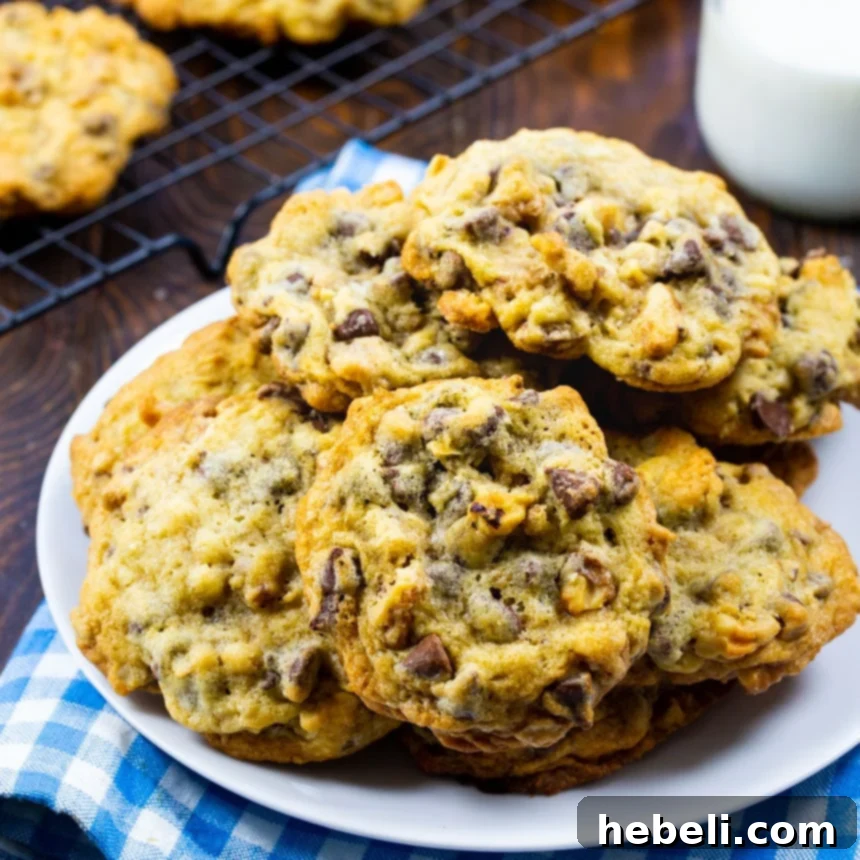
The Ultimate DoubleTree Chocolate Chip Cookie Recipe: Your Guide to Bakery-Quality Perfection at Home
Unlock the secret to the famous DoubleTree chocolate chip cookies! This recipe delivers everything you love: crisp, golden edges, a sumptuously chewy center, and an abundance of rich chocolate, crunchy walnuts, and hearty oats. Prepare to bake a batch of pure bliss that rivals the iconic hotel treat.
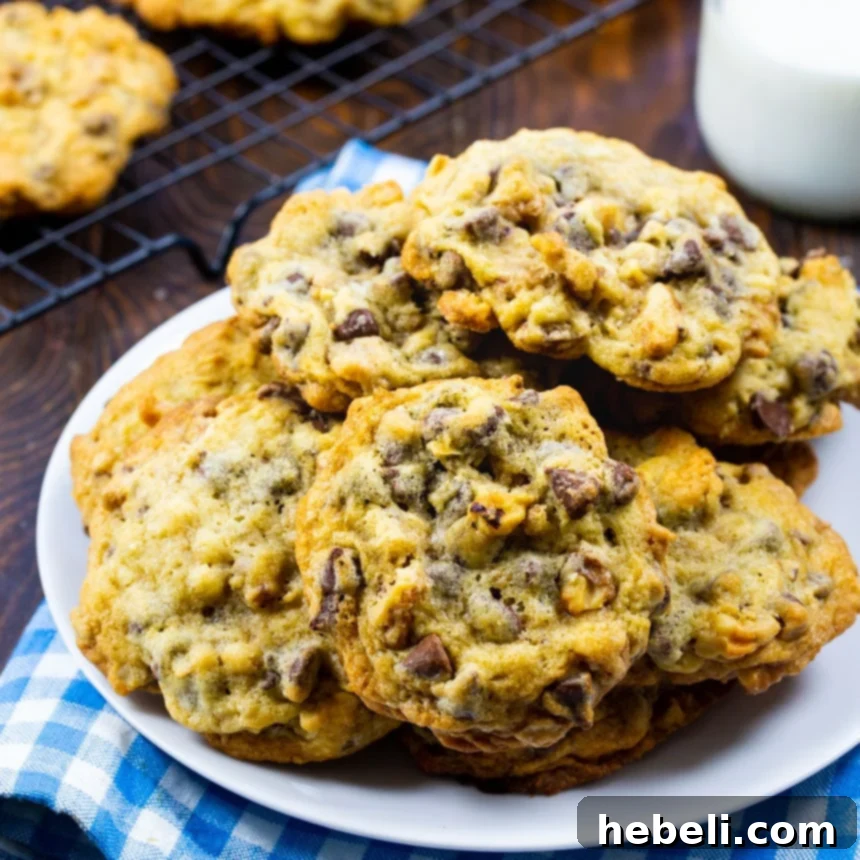
Discover the Magic of Homemade DoubleTree Cookies
There’s an undeniable comfort that comes with checking into a Hilton DoubleTree Hotel and being greeted with their warm, signature chocolate chip cookie. It’s more than just a welcome; it’s an experience. Now, imagine recreating that exact moment of joy in your own kitchen. This isn’t just “a” recipe; it’s widely recognized as the official DoubleTree cookie recipe, famously published in Bake from Scratch Magazine and cherished by home bakers across the internet. We’ve taken this beloved formula and perfected it, ensuring every bite is a delightful echo of the original.
Want to save this recipe?
Join our community to get this recipe sent directly to your inbox, plus discover new recipes from us every week!
Enter your email address to subscribe to our newsletter and receive this recipe, along with weekly culinary inspiration!
Email Me This Recipe
What Makes These DoubleTree Cookies Truly Exceptional?
Beyond the simple act of baking, there’s a science and an art to achieving that signature DoubleTree taste and texture. Our comprehensive guide delves into the nuances that elevate these cookies from good to extraordinary, ensuring you understand the magic behind every delicious bite.
Unforgettable Flavor Profile: A Symphony of Sweet and Spice
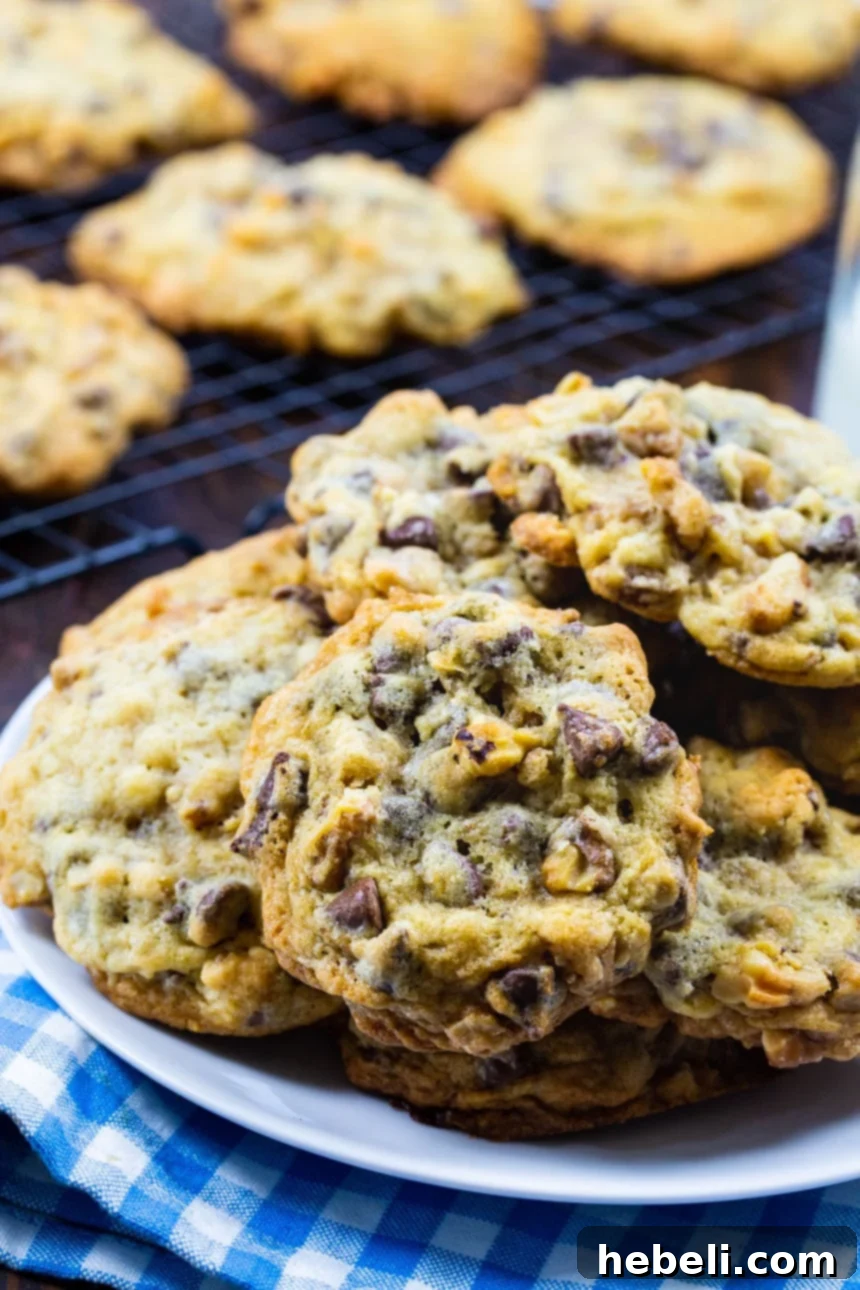
These aren’t just ordinary chocolate chip cookies. While loaded with generous amounts of semi-sweet chocolate chips and crunchy walnuts, the recipe incorporates a subtle yet impactful touch: a pinch of cinnamon. This warming spice doesn’t overpower; instead, it harmoniously enhances the chocolate and nut flavors, adding a layer of sophisticated depth that truly sets these cookies apart. It’s a secret ingredient that elevates the entire experience, making each bite more complex, inviting, and utterly satisfying. The blend of sweet chocolate, earthy walnuts, and fragrant cinnamon creates a unique flavor that is both familiar and exciting.
The Perfect Texture: Thick, Chewy, and Irresistibly Soft
Achieving the ideal cookie texture is an art form, and the DoubleTree recipe masters it with finesse. The secret to their incredible chewiness and thickness lies in a clever addition: a small amount of lemon juice. This isn’t for flavor; rather, the lemon juice acts as an acid that reacts with the baking soda, creating an effervescent lift during baking. This chemical reaction results in a taller, more substantial cookie with a beautifully soft, moist, and chewy interior that contrasts perfectly with those delicately crisp edges. Forget flat, sad cookies; prepare for plump, inviting delights that hold their shape and deliver on every textural promise.
Essential Equipment for DoubleTree Cookie Success
Having the right tools can make all the difference in your baking journey. While you don’t need a professional kitchen, a few key pieces of equipment will ensure your DoubleTree cookies turn out perfectly every time. Investing in quality baking tools not only makes the process smoother but also significantly contributes to consistent, professional-looking results.
- Electric Mixer: Whether you prefer a sturdy stand mixer for hands-free operation or a versatile hand-held model for its ease of storage, an electric mixer is crucial. It’s essential for properly creaming butter and sugars, ensuring a light and airy dough foundation. This step, which incorporates vital air into the mixture, is fundamental for the cookies’ ultimate texture and rise.
- Parchment Paper: A baker’s best friend, parchment paper is a non-negotiable for perfectly cooked cookies. Lining your baking sheets with parchment paper prevents sticking, promotes even browning across the bottom of the cookies, and makes cleanup an absolute breeze. It also helps in easy transfer of the warm cookies.
- Baking Sheets: Flat, light-colored baking sheets are ideal for cookie baking. Darker sheets can absorb more heat, causing the bottoms to brown too quickly or even burn before the rest of the cookie is cooked through. Using two sheets allows you to prep one batch while another bakes, streamlining the entire baking process and saving time.
- Spring-Loaded Ice Cream Scoop (or 1/4 cup measure): While not strictly necessary for the recipe’s success, a spring-loaded scoop ensures uniform cookie size. Consistent sizing means consistent baking times, preventing some cookies from being underdone and others overdone. If you don’t have one, a lightly greased 1/4 cup measuring cup works perfectly for portioning.
- Wire Rack: Essential for cooling your cookies. Transferring them to a wire rack immediately after a few minutes of initial cooling on the baking sheet prevents the bottoms from becoming soggy (due to trapped steam) and allows air to circulate evenly around each cookie, maintaining their crisp edges and wonderfully chewy centers.
Mastering the Art of Softened Butter
The state of your butter is paramount in baking, especially for cookies where texture is key. For these DoubleTree delights, you need softened butter, not merely room temperature, and certainly not melted. Melted butter will cause your cookies to spread excessively during baking, resulting in flat, greasy discs that lack the desired chewiness and thickness. Conversely, butter that’s too cold won’t cream properly with the sugars, leading to a dense and potentially crumbly cookie texture.
The perfect softened butter should yield easily when gently pressed with your finger, leaving a slight indentation, but it should still hold its shape and not be greasy or shiny. The best and most reliable way to achieve this is to simply let it sit on your kitchen counter for 30 to 60 minutes, depending on your room’s ambient temperature. If you’re short on time and need to soften butter faster, cut your cold butter into small, evenly sized cubes; this increases its surface area, allowing it to come to the right temperature more quickly. Avoid using the microwave if possible, as even a few seconds too long can melt it, irrevocably compromising your cookie’s texture. Patience with butter yields perfect cookies every single time!
Storage Best Practices for Peak Freshness
Once baked, these DoubleTree cookies are so irresistible, they might not last long! However, if you manage to have leftovers, proper storage is key to maintaining their deliciousness and signature chewy texture. Store your completely cooled cookies in an airtight container at room temperature. They will remain wonderfully fresh, delightfully chewy, and flavorful for 4 to 5 days. For longer storage, you have excellent options:
Freezing Baked Cookies: For extended enjoyment, place cooled cookies in a single layer on a baking sheet and freeze until solid. Once frozen, transfer them to a freezer-safe bag or container, separating layers with parchment paper, and freeze for up to 3 months. Thaw at room temperature for a quick treat, or gently warm them in the microwave for a fresh-baked feel.
Freezing Cookie Dough: If you love having fresh cookies on demand, portion the raw dough into balls as instructed, then freeze on a parchment-lined baking sheet until solid. Once firm, transfer the dough balls to a freezer-safe bag and store for up to 3 months. You can bake them directly from frozen; just add a few extra minutes to the baking time.
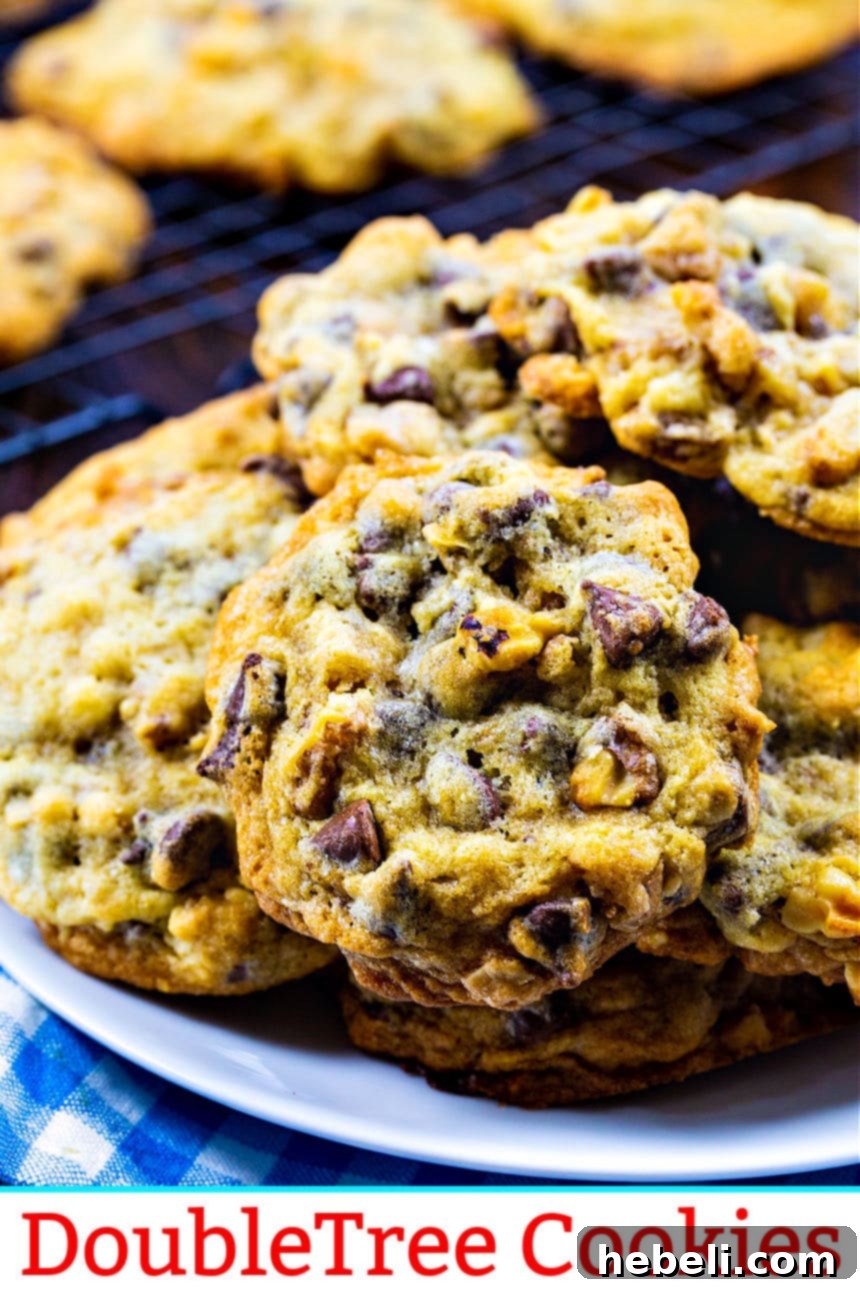
Loved this recipe? Pin it now to save it for later!
Pin It
Explore More First-Rate Cookie Recipes
If you’ve fallen in love with these DoubleTree cookies, you’ll adore our other curated cookie recipes. Expand your baking repertoire with these fan favorites, each guaranteed to bring joy to your kitchen and your taste buds:
- Soft and Chewy M&M Cookies: A colorful and delightful treat for all ages, bursting with candy-coated chocolate fun.
- Oatmeal Sandwich Cookies: Wholesome oats paired with a creamy, delectable filling, creating a nostalgic and comforting dessert.
- Classic Chewy Chocolate Chip Cookies: The timeless favorite, perfected for ultimate chewiness and loaded with rich chocolate.
- Chocolate Chip Pudding Cookies: Extra soft and incredibly moist thanks to a secret ingredient, these cookies are a true revelation.
- No-Bake Chocolate Oatmeal Cookies: Quick, easy, and satisfying for when you need a sweet fix fast, with no oven required.
- White Chocolate Macadamia Nut Cookies: A gourmet combination of sweet white chocolate and crunchy, buttery macadamia nuts.
- Crunchy Butterfinger Cookies: For those who love a candy bar crunch in their cookies, these are packed with irresistible Butterfinger pieces.
- Lofthouse-Style Frosted Cookies: Soft, cake-like cookies with a generous layer of fluffy, sweet frosting, perfect for any celebration.
The Official DoubleTree Chocolate Chip Cookie Recipe
Get ready to bake the most incredible cookies! This detailed recipe will guide you through every step to create those beloved DoubleTree treats right in your kitchen, ensuring a perfect batch every time.
DoubleTree Chocolate Chip Cookie Recipe
20 mins
22 mins
42 mins
24 Cookies

Print Recipe
Equipment
- 2 Rimmed Baking Sheets
- Parchment Paper
- Electric Mixer (stand or hand-held)
- Spring-Loaded Ice Cream Scoop (or 1/4 cup measure)
- Wire Cooling Rack
Save this recipe!
Get this sent to your inbox, plus receive new recipes from us every week!
Sign up for our newsletter to have this recipe and more delicious creations delivered straight to your inbox:
Subscribe & Get Recipe
Ingredients
- 1 cup (2 sticks) unsalted butter, softened
- ¾ cup plus 1 tablespoon granulated sugar
- ¾ cup packed light brown sugar
- 2 large eggs
- 1 ¼ teaspoons pure vanilla extract
- ¼ teaspoon fresh lemon juice
- 2 ¼ cups all-purpose flour
- ½ cup old fashioned oats
- 1 teaspoon baking soda
- 1 teaspoon salt
- Pinch of ground cinnamon
- 2 ⅔ cups semi-sweet chocolate chips
- 1 ¾ cups chopped walnuts
Instructions
-
Preheat your oven to 300°F (150°C). Line two large baking sheets with parchment paper. This lower temperature ensures a more even bake and chewy interior, preventing the edges from burning before the center cooks.
-
In the bowl of an electric mixer, beat the softened butter, granulated sugar, and light brown sugar on medium speed for a full 2 minutes. Stop and scrape down the sides of the bowl midway to ensure everything is well combined and thoroughly aerated, creating a light and fluffy base.
-
Add the eggs one at a time, mixing well after each addition until just combined. Then, stir in the vanilla extract and fresh lemon juice. Beat on low speed for 30 seconds, then increase to medium speed and beat for another 2 minutes, stopping once to scrape down the bowl. The lemon juice is crucial for activating the baking soda, contributing to the cookie’s unique lift and texture.
-
In a separate medium bowl, whisk together the all-purpose flour, old fashioned oats, baking soda, salt, and ground cinnamon. With the mixer on low speed, gradually add the dry ingredients to the wet ingredients. Mix just until blended; be careful not to overmix, as this can develop gluten and lead to tough, dry cookies.
-
Gently fold in the semi-sweet chocolate chips and chopped walnuts using a sturdy spatula. Mix until they are just evenly distributed throughout the dough, ensuring every bite will have a perfect balance of chocolate and nut.
-
Using a spring-loaded ice cream scoop (approximately 3 tablespoons of dough) or a 1/4 cup measuring cup lightly coated with cooking spray, scoop out uniform portions of dough. Place the dough balls onto the prepared baking sheets, ensuring they are about 2 inches apart to allow for proper spreading without merging.
-
Bake for 20 to 22 minutes. The cookies are done when the edges are beautifully golden brown, but the centers still appear soft and slightly underbaked. This ensures a wonderfully chewy interior that is characteristic of DoubleTree cookies.
-
Allow the cookies to cool completely on the baking sheets for 5-10 minutes before carefully transferring them to a wire rack to finish cooling. This initial cooling period on the hot sheet helps them set and prevents them from crumbling when moved.
Notes
Storage: Store cooled DoubleTree cookies in an airtight container at room temperature for 4 to 5 days to maintain their freshness and signature chewiness. For optimal freshness, ensure they are completely cool before storing.
Freezing Baked Cookies: For longer storage, place completely cooled cookies in a single layer on a baking sheet and freeze until solid (about 1-2 hours). Transfer to a freezer-safe bag or container, separating layers with parchment paper, and freeze for up to 3 months. Thaw at room temperature for a quick treat, or gently warm in the microwave for a fresh-baked experience.
Freezing Cookie Dough: Form dough into balls as instructed, then freeze on a parchment-lined baking sheet until solid. Once firm, transfer the dough balls to a freezer-safe bag and freeze for up to 3 months. Bake from frozen, adding approximately 2-4 extra minutes to the baking time, without thawing.
Nutrition Information (per cookie)
Calories: 345kcal | Carbohydrates: 35g | Protein: 5g | Fat: 22g | Saturated Fat: 10g | Polyunsaturated Fat: 5g | Monounsaturated Fat: 5g | Trans Fat: 0.3g | Cholesterol: 37mg | Sodium: 214mg | Potassium: 187mg | Fiber: 3g | Sugar: 21g | Vitamin A: 271IU | Vitamin C: 0.1mg | Calcium: 34mg | Iron: 2mg
Nutrition information is automatically calculated and should be used as an approximation. Actual values may vary based on ingredients and preparation methods.
Expert Tips for Baking the Perfect DoubleTree Cookies
Achieving bakery-quality cookies every time involves a few simple tricks and careful attention to detail. Follow these expert tips to ensure your homemade DoubleTree cookies are nothing short of perfection, consistently delivering that irresistible taste and texture:
- Don’t Overmix the Dough: This is a golden rule in baking, especially for cookies. Once you add the flour and other dry ingredients, mix only until they are just combined and no streaks of flour remain. Overmixing develops the gluten in the flour, leading to tough, dense cookies instead of the desired light and chewy ones. Gentle folding is often best for the final additions.
- Chill Your Dough (Optional but Recommended): While the original recipe doesn’t strictly require it, chilling the dough for at least 30 minutes (or even overnight) can significantly improve the cookies’ flavor, texture, and appearance. Chilling allows the flavors to meld and deepen, and it solidifies the butter, which prevents the cookies from spreading too much in the oven, resulting in thicker, richer, and chewier cookies.
- Use Room Temperature Eggs: Like butter, eggs at room temperature emulsify better with the other ingredients, leading to a smoother, more uniform dough. If you forget to take them out in advance, simply place eggs in a bowl of warm water for 5-10 minutes to quickly bring them to temperature.
- Measure Flour Correctly: Too much flour is a common baking mistake that can lead to dry, crumbly cookies. Always fluff your flour with a fork, then spoon it lightly into your measuring cup, and finally, level it off with a straight edge (like the back of a knife). Never pack the flour into the measuring cup.
- Don’t Crowd the Baking Sheet: Give your cookies ample space to spread. Placing them too close together can cause them to merge into one giant cookie and bake unevenly. Stick to the recommended 2 inches apart for optimal air circulation and consistent baking.
- Know Your Oven: Oven temperatures can vary significantly from the dial setting. Investing in an inexpensive oven thermometer can ensure your oven is truly at the precise 300°F (150°C) required for these cookies. An accurate temperature is crucial for achieving the optimal bake time and the perfect crisp-chewy texture.
- Cooling is Crucial: Allow cookies to cool on the baking sheet for a few minutes after removing them from the oven before transferring them to a wire rack. This initial cooling helps them firm up and prevents them from breaking apart when moved. Moving them too soon can cause them to crumble.
Variations and Customizations for Your DoubleTree Cookies
While the classic DoubleTree recipe is perfect as is, you can always personalize your batch to suit your taste preferences or to add an exciting twist. Here are a few ideas to inspire your next baking adventure:
- Chocolate Choices: Experiment with different types of chocolate for varied sweetness and flavor profiles. Try milk chocolate chips for a sweeter, creamier taste, dark chocolate chunks for a more intense cocoa experience, or a delightful mix of both. White chocolate chips could also be a delicious addition.
- Nutty Alternatives: While walnuts are traditional, feel free to substitute them with other nuts. Pecans, almonds, or even a mix of your favorite nuts can add a different crunch and flavor. For an enhanced nutty flavor, lightly toast your chosen nuts in a dry pan or oven before adding them to the dough.
- Add-Ins Galore: Get creative with additional mix-ins! Consider adding a handful of shredded coconut for a tropical hint, dried cranberries or cherries for a touch of tartness, or even mini marshmallows for an extra gooey surprise. Just be mindful not to overfill the dough, which can affect its structure.
- Spice it Up: A tiny dash of other warming spices like nutmeg, allspice, or even a hint of cardamom can complement the cinnamon and add another layer of aromatic complexity to your cookies. Start with a small amount and adjust to your preference.
- Salt Sprinkle: For an extra gourmet touch and to beautifully enhance the chocolate flavor, sprinkle a tiny pinch of flaky sea salt on top of the cookie dough balls just before baking. The contrast of sweet and salty is truly irresistible.
Frequently Asked Questions About DoubleTree Cookies
Here are answers to some common questions about making and enjoying these famous DoubleTree chocolate chip cookies:
- Can I make these cookies without oats?
- While old-fashioned oats contribute significantly to the unique chewy texture and slight nuttiness of DoubleTree cookies, you can omit them if you prefer. However, for best results and to maintain the dough’s consistency, it is recommended to replace the ½ cup of oats with an additional ½ cup of all-purpose flour.
- Why is lemon juice in the recipe? Does it affect the flavor?
- The lemon juice is not included for flavor. Instead, it acts as an acidic component that reacts with the baking soda (a base). This chemical reaction produces carbon dioxide bubbles, which are essential for helping the cookies rise and achieve their characteristic thick, soft, and chewy texture. Rest assured, it will not impart a noticeable lemon flavor to the finished cookie.
- My cookies spread too much and ended up flat. What went wrong?
- Excessive spreading is a common issue with cookies. The most frequent culprits include using butter that is too soft or melted, not measuring the flour accurately (too little flour), or an oven that isn’t hot enough (causing the butter to melt before the cookie sets). Ensure your butter is softened but still firm, measure your flour precisely using the spoon-and-level method, and consider checking your oven temperature with an independent thermometer.
- Can I freeze the cookie dough for later?
- Absolutely! Freezing cookie dough is a great way to have fresh, warm cookies whenever a craving strikes. Simply scoop the dough into balls as instructed in the recipe, place them on a parchment-lined baking sheet, and freeze until solid. Once firm, transfer the frozen dough balls to a freezer-safe bag or container and store for up to 3 months. You can bake them directly from frozen; just add a few extra minutes (typically 2-4 minutes) to the baking time without thawing.
- How do I achieve those crisp edges and a chewy center?
- The key to this perfect textural contrast lies in a few factors. Firstly, the recommended lower baking temperature of 300°F (150°C) is crucial for a slower, more even bake. Secondly, bake the cookies until their edges are golden brown but their centers still appear slightly soft and not fully set. Finally, allow the cookies to cool on the hot baking sheet for 5-10 minutes before transferring them to a wire rack. This initial cooling period allows them to continue baking slightly and set without becoming hard, creating that desirable crisp edge and wonderfully chewy interior.
Did you make this delicious DoubleTree Cookie recipe?
We’d love to see your creations! Leave a comment below and tag us @spicysouthernkitchen on social media to share your baking success!
Recipe Source: Bake From Scratch Magazine