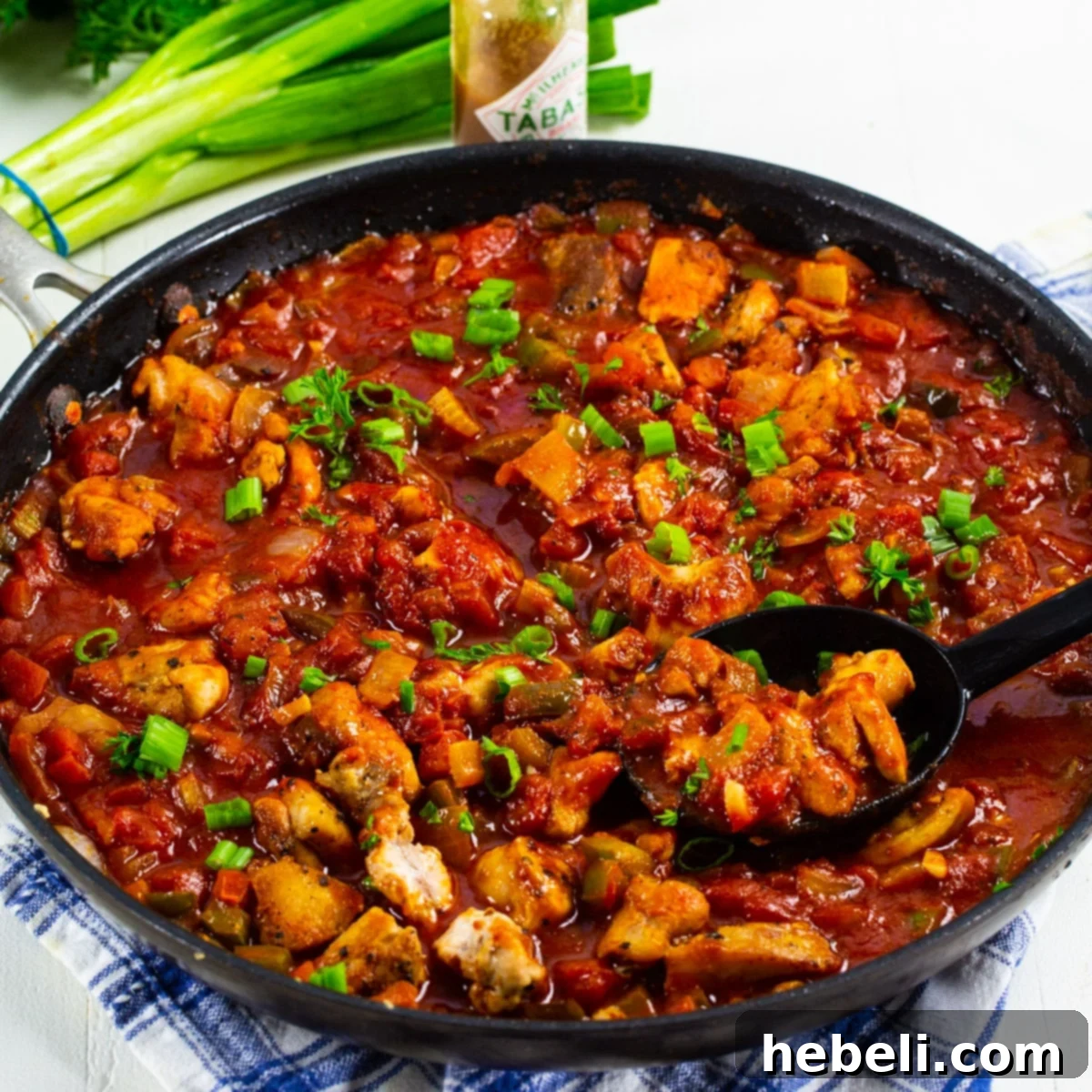
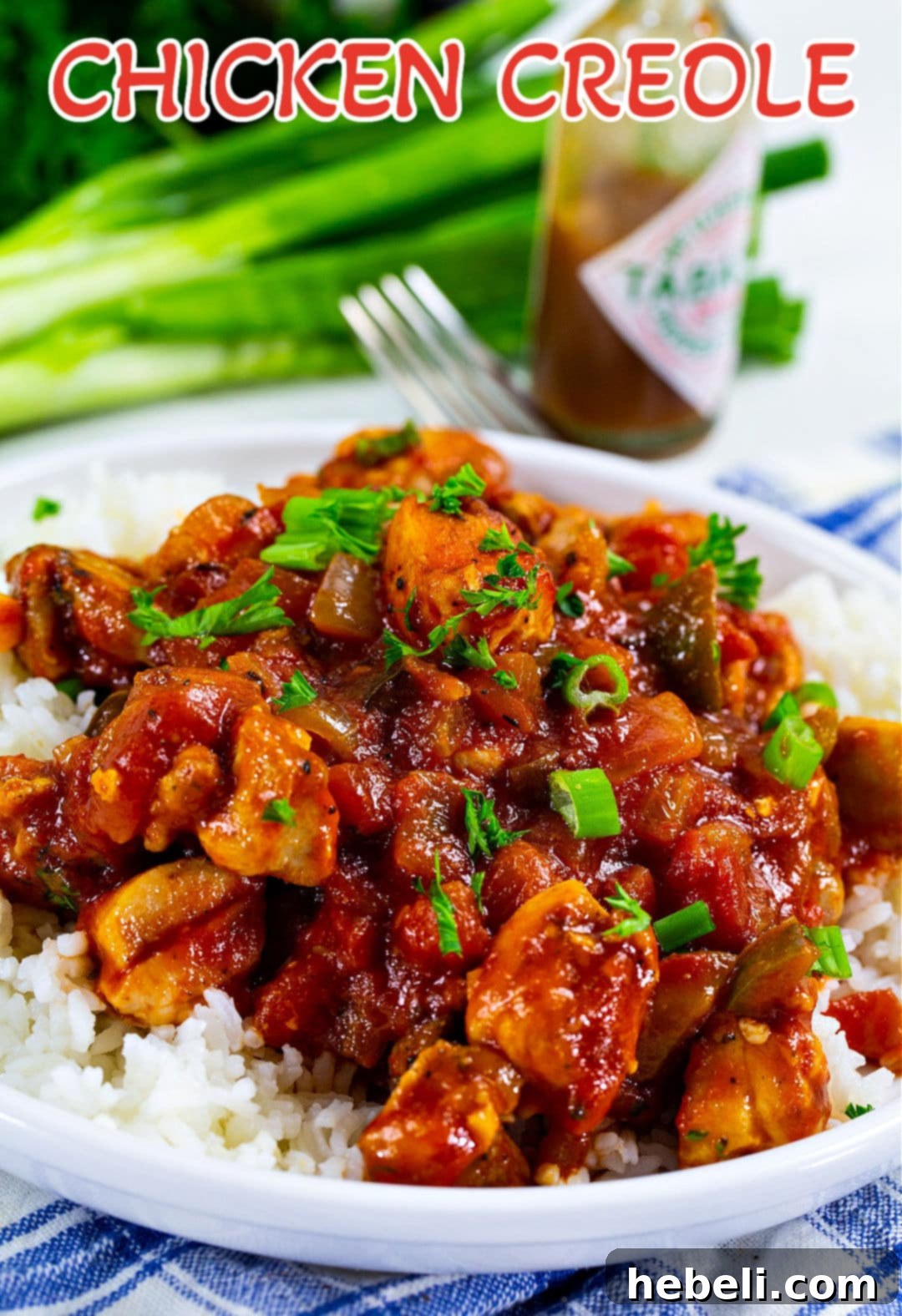
Embark on a culinary journey to the heart of Louisiana with our definitive Chicken Creole recipe. This iconic New Orleans-style dish features succulent pieces of chicken, expertly seasoned and slow-simmered in a vibrant, savory tomato sauce. Infused with the aromatic “holy trinity” of onion, bell pepper, and celery, along with fragrant garlic, Chicken Creole delivers a comforting and deeply satisfying meal that’s perfect over fluffy white rice.
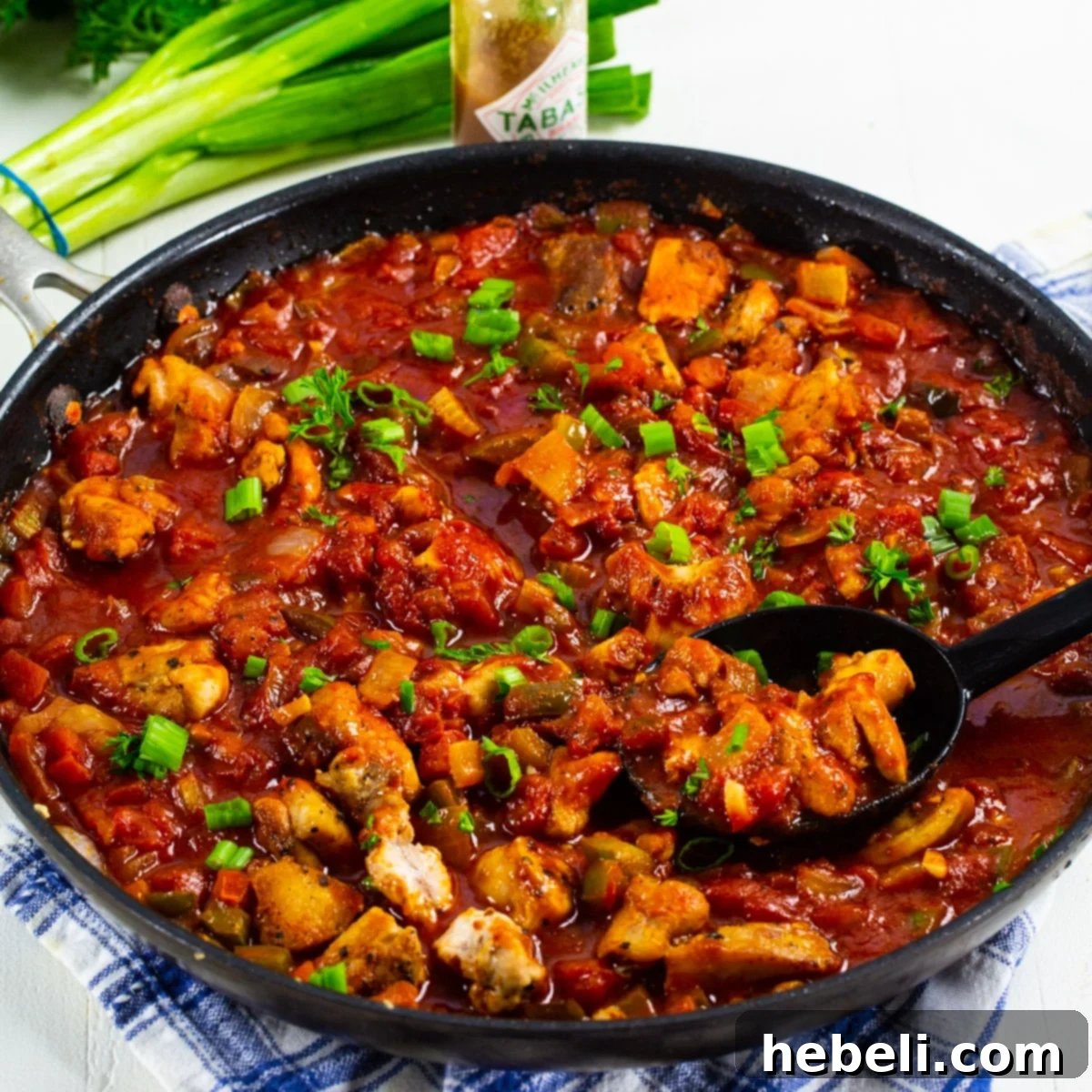
Authentic Chicken Creole: Bringing New Orleans Flavor to Your Table
Chicken Creole is a quintessential dish from the vibrant culinary landscape of New Orleans, known for its rich history and bold flavors. This classic recipe embodies the essence of Creole cuisine, blending influences from French, Spanish, African, and Caribbean traditions into a harmonious and incredibly delicious meal. Imagine tender, seasoned chicken pieces bathed in a robust tomato sauce, brightened by bell peppers, sweet onions, crisp celery, and pungent garlic. It’s a symphony of tastes that promises warmth, comfort, and an unforgettable dining experience. Perfect for a cozy family dinner or entertaining friends, this Chicken Creole recipe is designed to be straightforward, allowing you to achieve authentic flavors right in your own kitchen.
Many home cooks might shy away from dishes that sound as grand as “Creole,” but this recipe proves that incredible flavor doesn’t have to be complicated. With readily available ingredients and a few simple steps, you can create a masterpiece that tastes like it came straight from a charming French Quarter restaurant. We’ll guide you through selecting the best chicken, building a foundational flavor base, and balancing the spices to your personal preference, ensuring every spoonful is packed with the soulful taste of Louisiana.
Choosing the Ideal Chicken Cut for Creole Perfection
The choice of chicken is paramount to achieving the tender, juicy texture that defines an excellent Chicken Creole. While many recipes opt for various cuts, our preferred selection for this dish is boneless, skinless chicken thighs. Here’s why:
- Moisture and Flavor: Chicken thighs naturally possess a higher fat content than leaner cuts like breasts. This inherent richness translates into superior moisture retention during the simmering process, ensuring the chicken remains incredibly tender and flavorful, even after a good braise in the tomato sauce. They are far more forgiving if slightly overcooked.
- Texture: Thigh meat has a wonderful, succulent texture that holds up beautifully in stews and sauces, absorbing the flavors without becoming dry or stringy.
- Ease of Preparation: Boneless and skinless thighs require minimal trimming and are easy to cut into uniform 1-inch pieces, which is ideal for even cooking and serving.
For this recipe, you will need approximately six medium-sized chicken thighs. If you prefer to use boneless, skinless chicken breasts, you certainly can. However, be extremely mindful of overcooking, as breast meat dries out much faster. To help prevent this, consider cutting the breasts into slightly larger chunks (around 1.5 inches) and adding them back into the sauce during the final 5-7 minutes of simmering, allowing them to finish cooking gently with the sauce. Typically, three large chicken breasts would be sufficient as a substitute for six thighs.
Regardless of your choice, ensure the chicken is patted thoroughly dry with paper towels before seasoning and searing. This critical step facilitates a golden-brown crust, which contributes significantly to the dish’s overall depth of flavor through the Maillard reaction.
Building a Deep, Robust Tomato Flavor
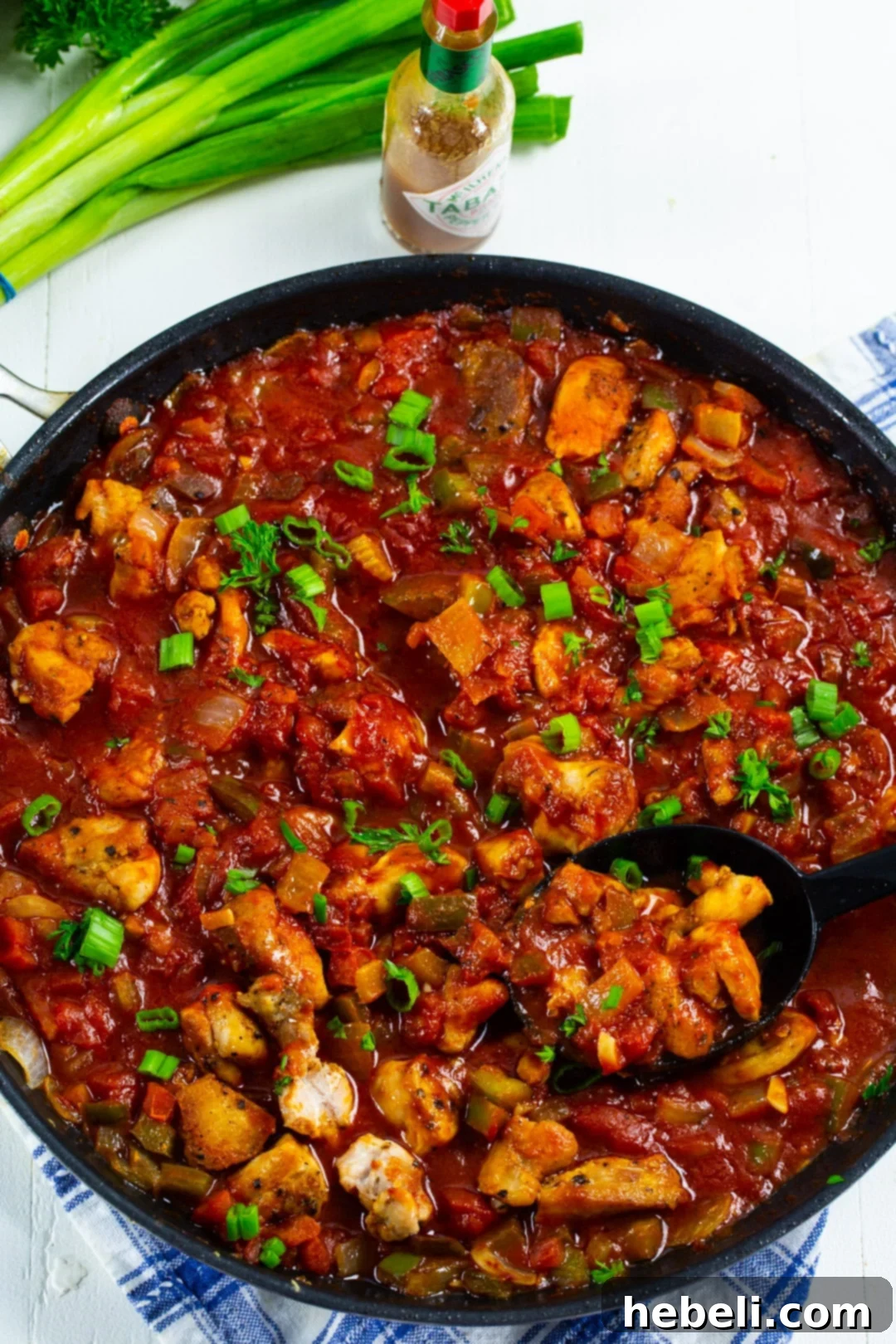
The heart and soul of an authentic Chicken Creole lie in its rich and complex tomato sauce. To achieve a depth of flavor that is both vibrant and profoundly satisfying, our recipe strategically utilizes a combination of two distinct tomato products: a whole can of tomato paste and a can of petite diced tomatoes. This thoughtful pairing ensures a multi-dimensional tomato base that is neither too thin nor overwhelmingly acidic.
- Tomato Paste: The Flavor Concentrator: The 6-ounce can of tomato paste is a powerhouse of concentrated tomato essence. When added to the sautéed vegetables and cooked for a minute or two before the liquids are introduced, it undergoes a crucial transformation. This brief cooking step, often referred to as “blooming” the tomato paste, deepens its natural sweetness and acidity while coaxing out rich umami notes. It’s a foundational step that builds an incredible depth of flavor that permeates every component of the sauce.
- Petite Diced Tomatoes: Freshness and Texture: Complementing the intensity of the paste, a 14.5-ounce can of petite diced tomatoes adds a fresher, brighter tomato flavor and essential texture. The smaller dice integrate seamlessly into the sauce as it simmers, providing bits of tender tomato without being overtly chunky. Using them undrained ensures that all their natural juices and vibrant flavors are incorporated into the Creole, contributing to its luscious consistency.
Beyond the tomatoes, the initial sautéing of the “holy trinity”—diced onion, green bell pepper, and celery—along with minced garlic, sets the aromatic stage. These vegetables are softened until fragrant, releasing their sweet and savory oils, which then become infused with the concentrated tomato flavors. The addition of chicken broth provides the necessary liquid for simmering, while a touch of Worcestershire sauce and hot sauce adds layers of tang and subtle spice, culminating in a Creole sauce that is truly exceptional.
Customizing the Heat: Make It Mild or Fiery
One of the most appealing aspects of Chicken Creole is its versatility, especially when it comes to tailoring the spice level to your preference. Our recipe, as written, uses two teaspoons of Creole seasoning and two teaspoons of hot sauce, striking a delightful balance that offers a pleasant, gentle warmth. This level of heat enhances the other flavors without overwhelming the palate, making it enjoyable for a wide range of tastes.
However, if your palate yearns for a more pronounced kick, elevating the spice is simple and effective. To transform your Chicken Creole into a dish with a bolder, more fiery character, we recommend incorporating an additional 1/4 to 1/2 teaspoon of cayenne pepper. Cayenne pepper delivers a direct and clean heat that integrates beautifully into the tomato-based sauce, providing a noticeable increase in spiciness. You can add it along with the other seasonings when you introduce the liquids.
For those who desire ultimate control over their heat experience, serving extra hot sauce on the side is a fantastic option. This allows each individual diner to customize their portion, adding a dash or two of their favorite Louisiana-style hot sauce, such as Tabasco, Crystal, or Louisiana Hot Sauce, for a personalized burst of vinegary spice. Remember, it’s always easier to add more heat than to try and mitigate it, so start with a conservative amount and adjust to taste. This flexibility ensures that your Chicken Creole will always be perfectly suited to your desired level of spice, making it a truly customizable and enjoyable meal.
The Essential Seasoning: Creole vs. Cajun Demystified
The heart of any truly authentic Louisiana dish, including Chicken Creole, lies in its seasoning blend. While “Creole seasoning” and “Cajun seasoning” are often used interchangeably, they actually represent distinct yet closely related flavor profiles that reflect the unique culinary histories of their respective regions. Understanding the nuances can help you choose the perfect blend for your dish.
- Cajun Seasoning: Generally characterized by a more rustic, spicier profile, Cajun seasoning emphasizes pungent and peppery notes. Common ingredients often include a higher proportion of cayenne pepper, paprika, garlic powder, onion powder, and black pepper. It’s designed to bring a bold, straightforward heat and flavor, reflecting the hearty, country-style cooking traditions of rural Acadiana.
- Creole Seasoning: Originating from the more cosmopolitan urban kitchens of New Orleans, Creole seasoning tends to be slightly more nuanced and herbal. While it still delivers heat and savory depth, it typically incorporates a wider array of dried herbs such as thyme, oregano, basil, and bay leaf, alongside the peppers, garlic, and onion. This blend results in a complex, aromatic flavor profile that is robust yet subtly sophisticated.
For our Chicken Creole recipe, both a high-quality Creole or Cajun seasoning blend will work wonderfully to achieve fantastic results. The key is to select a brand you trust and enjoy. Many home cooks and professional chefs alike frequently reach for Tony Chachere’s Creole seasoning, a widely acclaimed blend known for its balanced flavor and consistent quality. If you’re an adventurous cook, creating your own seasoning blend from scratch allows for ultimate customization. You can adjust the ratios of paprika (sweet or smoked), garlic powder, onion powder, dried thyme, oregano, black pepper, and cayenne to perfectly match your taste preferences, ensuring a truly personalized Chicken Creole experience that’s uniquely yours.
Expert Tips for a Flawless Chicken Creole
While Chicken Creole is a relatively straightforward dish, a few key techniques and considerations can elevate your meal from good to absolutely outstanding. Pay attention to these expert tips to ensure your Chicken Creole is bursting with authentic flavor and boasts perfectly cooked chicken every time:
- Perfect Chicken Sear: Before the chicken goes into the sauce, achieving a deep, golden-brown sear is crucial. Start by thoroughly patting the chicken pieces dry with paper towels. Excess moisture prevents browning and leads to steaming instead of searing. Don’t overcrowd the skillet; cook the chicken in batches if necessary. Allow the chicken to cook undisturbed for several minutes on each side to develop that rich crust, which significantly enhances the overall flavor of the dish through the Maillard reaction.
- Layering Aromatics: The “holy trinity” (onion, bell pepper, and celery) and garlic form the aromatic foundation. Sauté these vegetables until they are softened and fragrant before moving to the next step. Then, stir in the tomato paste and cook it for a minute or two, stirring constantly. This step, often overlooked, helps to deepen the tomato flavor and remove any raw acidity, contributing to a more complex and balanced sauce.
- Gentle Simmering: Once all the ingredients are combined in the skillet, maintain a gentle simmer. This low and slow cooking method is essential for allowing the flavors to meld beautifully and for the chicken to become incredibly tender. If the sauce becomes too thick, you can add a splash of chicken broth. Keep the lid slightly ajar to allow some steam to escape, which aids in natural thickening.
- Don’t Skimp on Fresh Garnishes: While the sauce is the star, a generous sprinkle of freshly sliced green onions and chopped fresh parsley just before serving makes a huge difference. These garnishes provide a vibrant contrast in color and add a burst of fresh, herbaceous flavor that brightens the richness of the Creole, making each bite even more enjoyable.
By incorporating these simple yet effective tips into your cooking process, you’ll ensure your Chicken Creole is not only delicious but also authentically reflective of the rich culinary traditions of Louisiana.
Enhance Your Meal: Serving Suggestions and Pairings
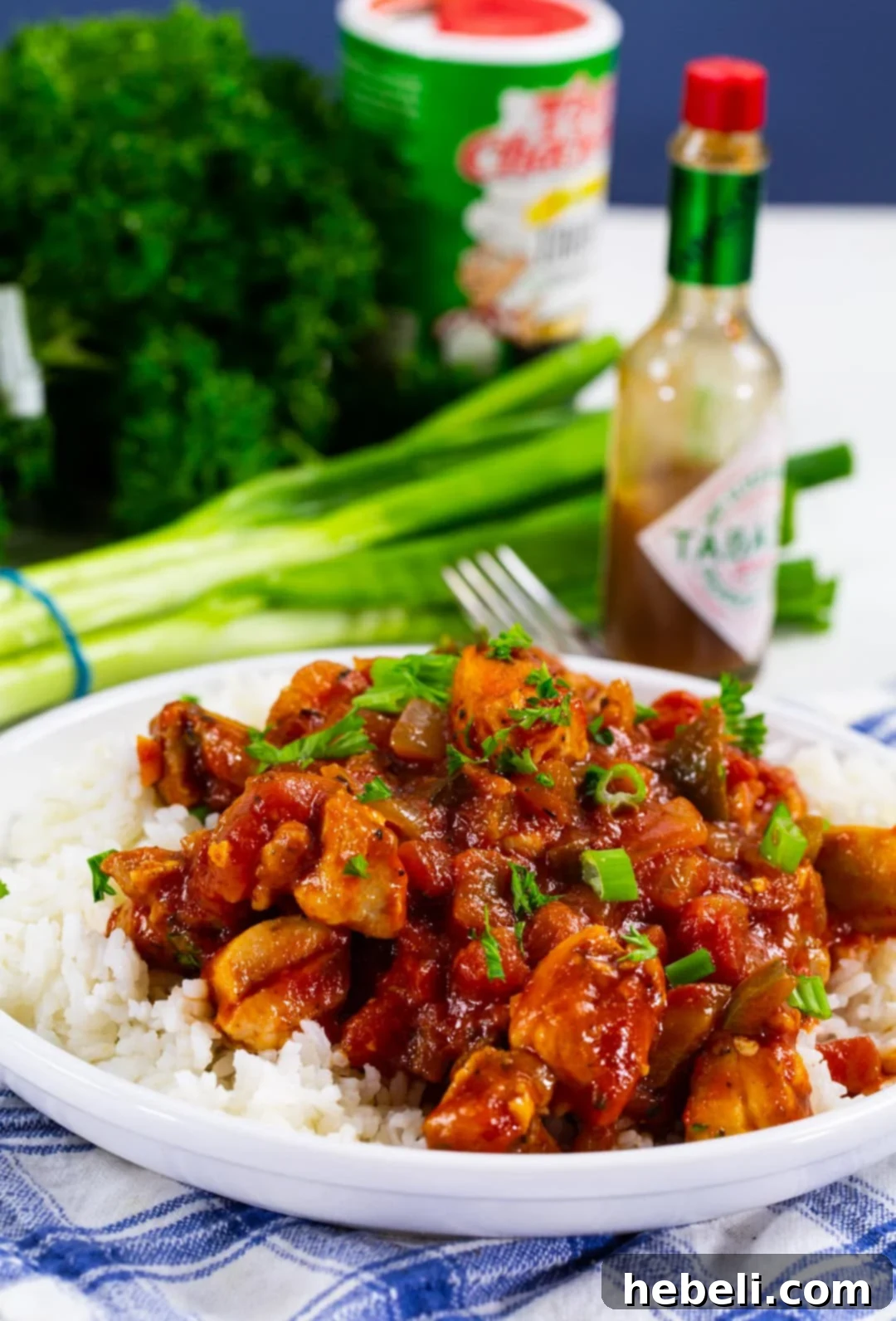
Chicken Creole is a robust and complete meal in itself, especially when served as tradition dictates: over a generous bed of fluffy white rice. The rice is not just a side; it’s an essential component, acting as the perfect canvas to absorb every drop of the rich, savory sauce. However, to truly elevate your Creole dining experience, consider these additional serving suggestions and thoughtful pairings:
- Classic White Rice: Whether long-grain, jasmine, or basmati, perfectly cooked white rice remains the undisputed champion for serving with Chicken Creole. Its neutral flavor and absorbent texture make it ideal.
- Crusty French Bread: A warm, crusty baguette is an absolute must-have. It’s perfect for scooping up any lingering sauce on your plate, ensuring not a single drop of flavor goes to waste.
- Side Salad: A simple, crisp green salad with a light vinaigrette provides a refreshing counterpoint to the richness of the Creole, offering a palate cleanser between bites.
- Southern-Style Greens: For an authentic Southern spread, pair your Chicken Creole with slow-cooked collard greens, mustard greens, or turnip greens, often simmered with a smoky ham hock.
- Cornbread: A slice of warm, slightly sweet cornbread offers a wonderful textural contrast and adds another layer of Southern comfort to your meal.
- Beverage Pairings: To complement the flavors, consider a crisp, light-bodied lager beer, a dry white wine such as Sauvignon Blanc, or a chilled rosé. For non-alcoholic options, classic sweet iced tea or sparkling water with a wedge of lemon or lime are excellent choices.
No matter how you choose to present it, Chicken Creole is a dish designed to be shared and savored, bringing a taste of Louisiana’s generous hospitality and vibrant flavors to your table.
Storage and Make-Ahead Convenience: Flavors That Deepen
One of the most appealing qualities of Chicken Creole, much like many great stews and braises, is that its flavors tend to improve and deepen overnight. This makes it an outstanding candidate for meal prepping, entertaining, or simply enjoying delicious leftovers that taste even better than the original serving.
- Refrigeration: Once your Chicken Creole has cooled to room temperature, transfer it to an airtight container. It can be safely stored in the refrigerator for up to 4 to 5 days. Ensure it’s sealed properly to maintain freshness and prevent other odors from permeating the dish.
- Reheating: For reheating, individual portions can be warmed gently in the microwave, stirring occasionally, until heated through. For larger quantities or to best preserve the texture of the chicken and richness of the sauce, reheat on the stovetop over medium-low heat. Add a splash of chicken broth or water if the sauce appears too thick, stirring frequently until it reaches your desired temperature. Avoid vigorous boiling to prevent the chicken from becoming tough.
- Freezing: Chicken Creole is an excellent candidate for freezing, allowing you to enjoy this flavorful dish months down the line. Portion the completely cooled Creole into freezer-safe containers or heavy-duty freezer bags. It can be stored in the freezer for up to 3 months. When ready to enjoy, thaw the frozen Creole overnight in the refrigerator before reheating gently on the stovetop or in the microwave.
With its impressive ability to taste even better over time and its ease of storage, Chicken Creole offers both immediate satisfaction and convenient future meals. It’s a true culinary gift that keeps on giving, ensuring you always have a taste of New Orleans ready whenever the craving strikes.
Explore More Classic Louisiana Recipes
The culinary heritage of Louisiana is incredibly diverse and rich, offering a treasure trove of flavors that tell stories of cultures converging. If you’ve fallen in love with the vibrant taste of Chicken Creole, we warmly invite you to explore more iconic dishes from this captivating region. Each recipe provides a unique glimpse into the soulful cooking traditions of the Bayou and the bustling streets of New Orleans. Expanding your repertoire with these classics is a delicious way to bring even more of Louisiana’s magic into your home kitchen:
- Easy Shrimp Creole: A seafood counterpart to our chicken dish, featuring plump shrimp simmered in a similarly aromatic, tomato-based Creole sauce.
- New Orleans-Style BBQ Shrimp: This isn’t your typical backyard barbecue! Discover succulent shrimp bathed in a rich, buttery, peppery sauce – perfect for sopping up with crusty bread.
- Homemade Beignets: Indulge in these fluffy, square French doughnuts generously dusted with powdered sugar, a quintessential New Orleans breakfast or dessert treat.
- Muffaletta Sandwich: A hearty, round Italian-American sandwich piled high with cured meats, cheeses, and a tangy olive salad, a true New Orleans original.
- Shrimp Etouffee: A comforting, thick, and richly seasoned stew, typically made with a blonde roux and brimming with tender shrimp, traditionally served over rice.
- Crawfish Jambalaya: Dive into this flavorful one-pot rice dish, loaded with crawfish, vegetables, and a medley of aromatic spices, a cornerstone of Cajun cooking.
- Seafood Gumbo: Often hailed as Louisiana’s state dish, this hearty stew is built on a dark roux and packed with various seafood, creating a deeply satisfying meal.
Each of these recipes offers a unique and delicious glimpse into the diverse culinary traditions that make Louisiana cooking so beloved worldwide. We encourage you to try them and continue your exploration of these incredible flavors!
Chicken Creole Recipe
This classic New Orleans Chicken Creole brings seasoned pieces of chicken together with a rich tomato sauce, infused with the “holy trinity” of onion, bell pepper, celery, and garlic. It’s a hearty and intensely flavorful meal, perfect when served over fluffy white rice.
Prep time: 12 minutes
Cook time: 23 minutes
Servings: 4
Ingredients
- 6 boneless, skinless chicken thighs (or 3 boneless, skinless chicken breasts)
- 2 teaspoons Creole seasoning
- 2 tablespoons olive oil or vegetable oil
- 1 medium onion, diced
- 1 green bell pepper, diced
- 2 celery ribs, diced
- 3 garlic cloves, minced
- 1 (6-ounce) can tomato paste
- 1 (14.5-ounce) can petite diced tomatoes, undrained
- 1 cup chicken broth
- 1 tablespoon Worcestershire sauce
- 2 teaspoons hot sauce (such as Tabasco or Crystal)
- ½ teaspoon black pepper
- ¼ teaspoon dried thyme
- 2 bay leaves
- Cooked white rice, for serving
- 2 green onions, sliced, for garnish
- 1 tablespoon chopped fresh parsley, for garnish
- Optional: ¼ to ½ teaspoon cayenne pepper, for extra heat
Instructions
- Prepare Chicken: Pat the chicken pieces thoroughly dry with paper towels and cut them into uniform 1-inch chunks. Season generously all over with the Creole seasoning.
- Sear Chicken: Heat the olive oil (or vegetable oil) in a large, heavy-bottomed skillet or Dutch oven over medium-high heat. Add the seasoned chicken pieces in a single layer, ensuring not to overcrowd the pan. Cook until deeply browned on all sides, about 3-4 minutes per side. The chicken does not need to be cooked through at this stage. Remove the browned chicken from the skillet and set it aside.
- Sauté Trinity: If needed, add a little more oil to the skillet. Add the diced onion, green bell pepper, and celery. Cook, stirring occasionally, until the vegetables have softened and become translucent, typically about 5 to 6 minutes.
- Add Garlic and Tomato Paste: Stir in the minced garlic and cook for an additional 1 minute until fragrant. Be careful not to burn the garlic. Next, add the entire can of tomato paste to the skillet. Stir it into the vegetables and cook for 1-2 minutes, stirring constantly, to deepen its flavor and remove any raw acidity.
- Simmer Sauce: Pour in the undrained petite diced tomatoes, chicken broth, Worcestershire sauce, hot sauce, black pepper, dried thyme, and bay leaves (and optional cayenne pepper if using). Bring the mixture to a gentle simmer, then reduce the heat to low, cover partially, and let it cook for 5 minutes, allowing all the flavors to meld.
- Combine and Finish: Return the seared chicken pieces to the skillet, ensuring they are submerged in the simmering sauce. Continue to simmer for another 5 minutes, or until the chicken is fully cooked through and the sauce has thickened slightly to your desired consistency.
- Serve: Before serving, remove and discard the bay leaves. Serve the hot Chicken Creole generously over a bed of fluffy white rice. Garnish with freshly sliced green onions and chopped fresh parsley for an extra burst of color and fresh flavor.
Nutrition information is automatically calculated and should only be used as an approximation. Individual ingredient brands and preparation methods can vary nutrient content.
If you made this delicious Chicken Creole, we’d love to hear about it! Please leave a comment below and share your photos by tagging us @spicysouthernkitchen on your favorite social media platforms!