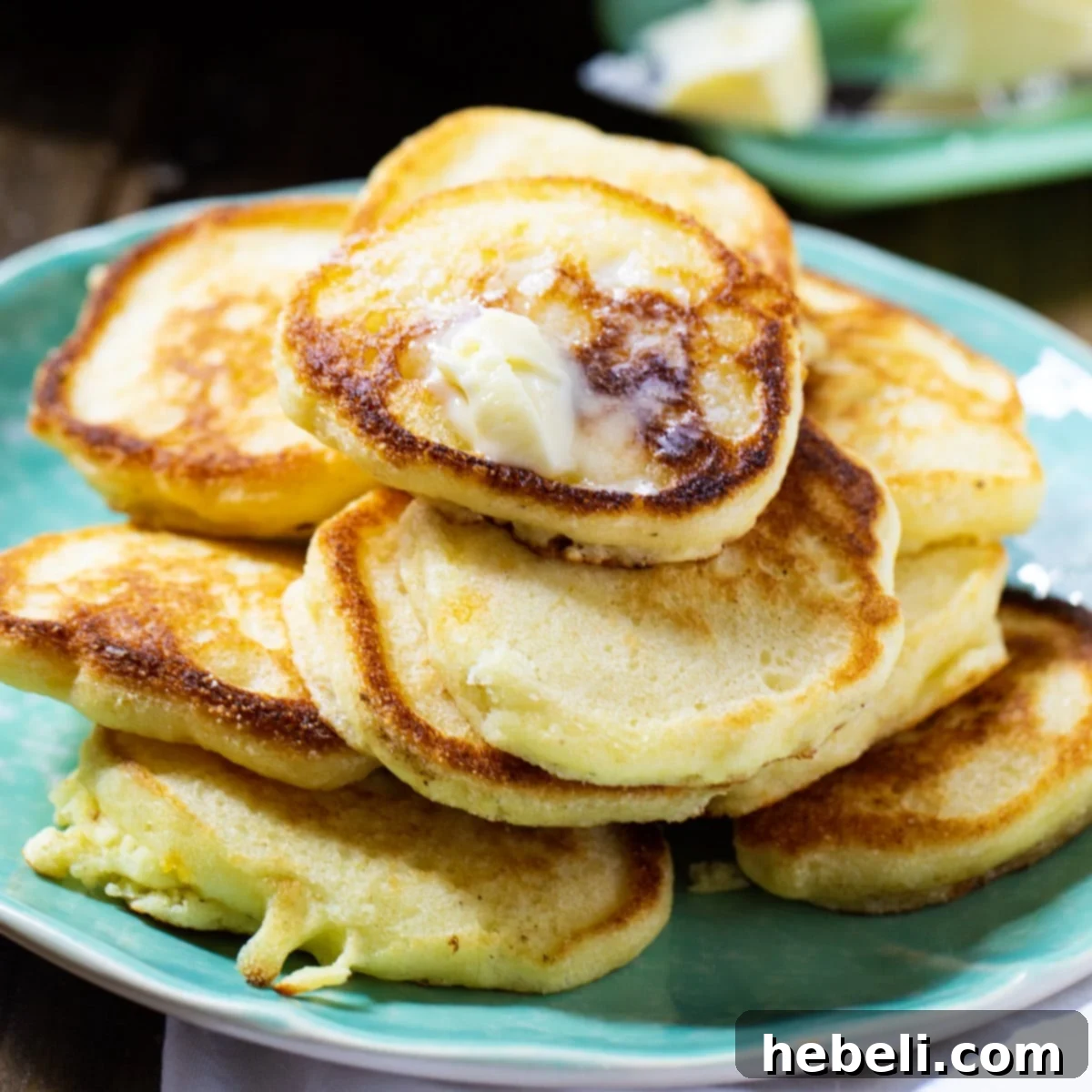
Southern Hoe Cakes: The Crispy Cornmeal Pancake Delight
Southern Hoe Cakes are small, savory cornmeal pancakes renowned for their wonderfully crispy edges and tender centers. These delightful bites are a staple of Southern comfort food, versatile enough to be served warm for a hearty breakfast, as a satisfying side dish with greens, or even as an appetizer topped with delicious pimento cheese. Learn how to recreate this classic Southern treat in your own kitchen.
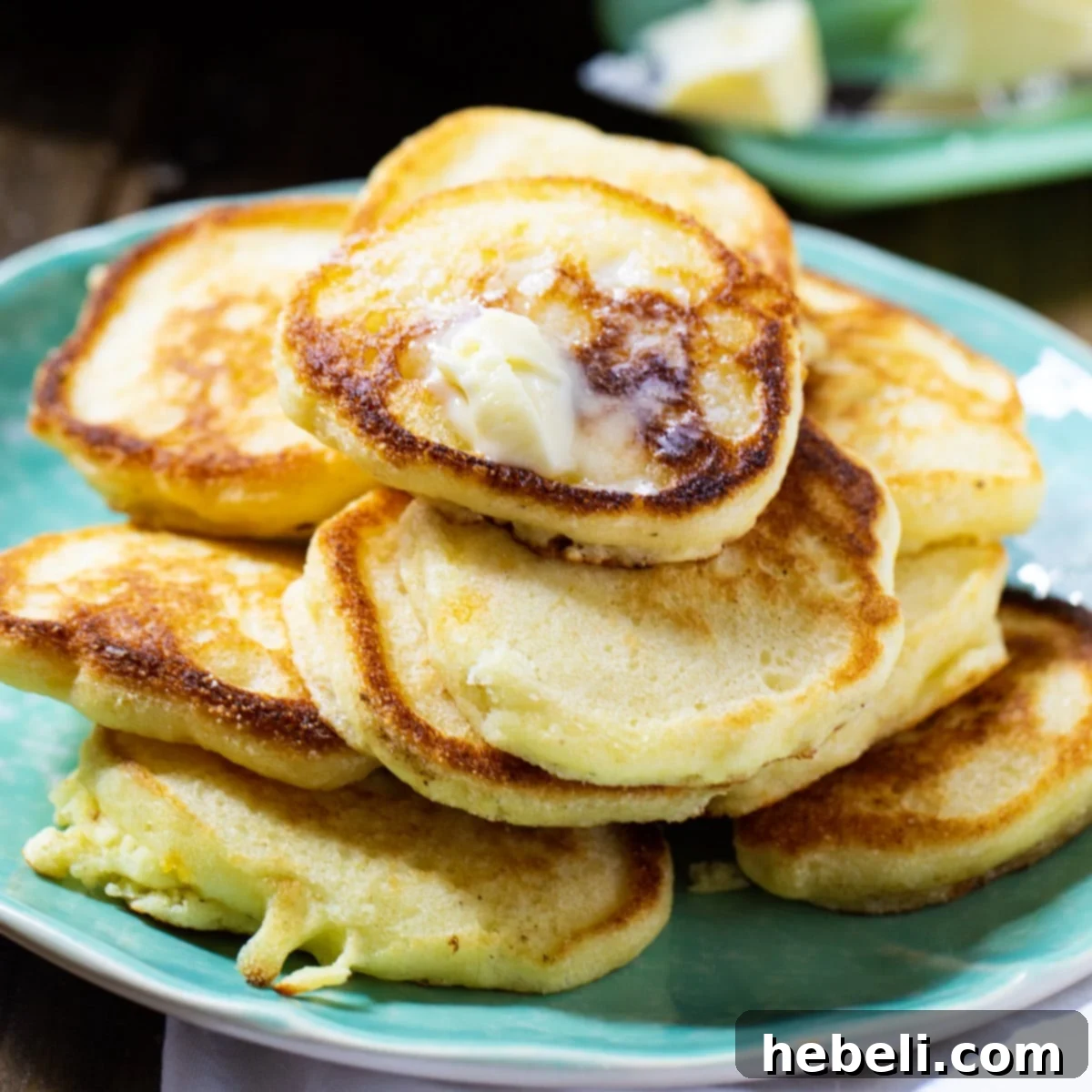
What Exactly Are Southern Hoe Cakes?
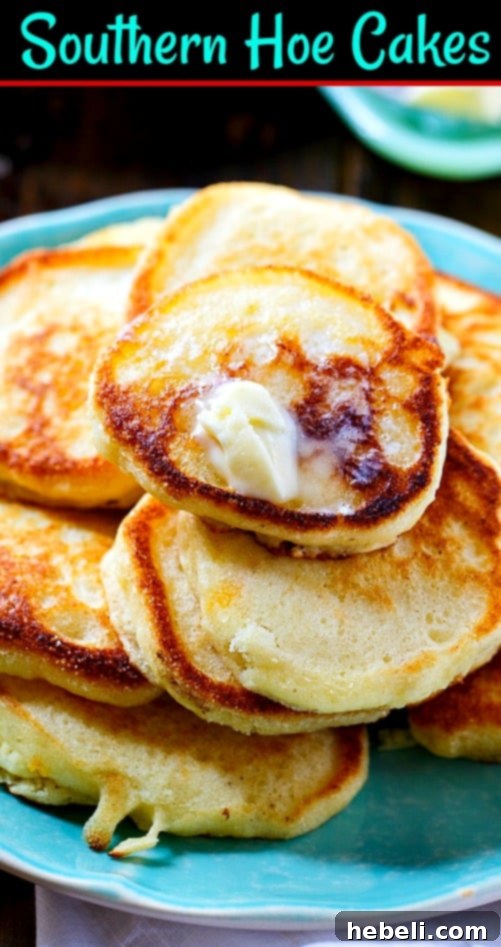
At their core, Southern Hoe Cakes are simple, griddle-fried flatbreads made primarily from cornmeal. They are often described as a delicious cross between a classic pancake and traditional cornbread, offering the best of both worlds: the griddle-fried crispiness of a pancake with the distinct, hearty flavor of cornmeal. Unlike many sweet breakfast pancakes, Hoe Cakes typically lean towards a more savory profile, though a touch of sugar in the batter can subtly enhance their flavor without making them overtly sweet. Their signature texture—a golden-brown, slightly crunchy exterior giving way to a soft, moist interior—makes them incredibly addictive and deeply satisfying.
These humble yet delicious cornmeal cakes are deeply ingrained in Southern culinary traditions. They represent a testament to resourcefulness and ingenuity, utilizing readily available ingredients to create a nourishing and incredibly satisfying meal. Whether you’re a connoisseur of Southern cuisine or new to its flavorful delights, Hoe Cakes offer a simple, authentic taste of the region’s rich food heritage, providing comfort and sustenance in every bite.
The Enduring History and Fascinating Origin of Hoe Cakes
The name “Hoe Cakes” itself sparks considerable curiosity, and its origin is deeply rooted in early American history. While a popular and somewhat romanticized theory suggests they earned their name because they were traditionally cooked on the flat blade of a garden hoe over an open fire, culinary historians now lean towards a more practical explanation. It’s more widely believed that the name derives from “hoe” as a common term for the griddle or flat metal pan used for cooking. In early American homesteads and during periods of travel, simple, portable cooking surfaces were essential for preparing meals over a hearth or campfire, and a flat metal plate, sometimes called a “hoe,” would have been ideal for these cornmeal creations.
Hoe Cakes were an essential staple in early American Southern life, particularly during colonial times and throughout the 18th and 19th centuries. Made from corn, a crop that was both readily available and easily cultivated across the South, these cakes provided a substantial and affordable source of sustenance for many. They were a cornerstone of daily diets for a diverse population, from farmers and laborers working long days in the fields to families living in remote homesteads. This deep historical significance firmly establishes their status as a beloved and iconic Southern classic, embodying resilience and tradition.
Regional Variations: More Than Just “Hoe Cakes”
While “Hoe Cakes” is a widely recognized name throughout the American South, this versatile cornmeal delicacy is known by several other titles across different regions. These alternate names often reflect local dialects, historical nuances, or even slight variations in preparation, but all point to the same comforting dish:
- Johnny Cakes: Particularly popular in New England and the Mid-Atlantic states, though also found in pockets of the South, “Johnny Cake” is another common designation. The origin of “Johnny Cake” is debated, with theories ranging from a corruption of “journey cake” (because they were easy to carry on travels) to a reference to “Shawnee cakes,” attributing their creation to Native American culinary practices.
- Corn Pone: This term generally refers to a type of cornbread often cooked without eggs or milk, traditionally baked or fried in a cast-iron skillet or oven. While similar in core ingredients to Hoe Cakes, corn pone is typically thicker and denser, often shaped into an oval or loaf and baked until golden, rather than griddle-fried into individual, thinner pancakes.
- Corn Cakes: A more generic term, “corn cakes” can encompass a wide variety of cornmeal-based flatbreads, including what we specifically call Hoe Cakes. It broadly refers to any small, cake-like item made primarily from cornmeal, highlighting its main ingredient.
Regardless of the specific name used, the essence remains the same: a comforting, cornmeal-based fried cake that embodies the simplicity, heartiness, and enduring appeal of authentic Southern cooking traditions.
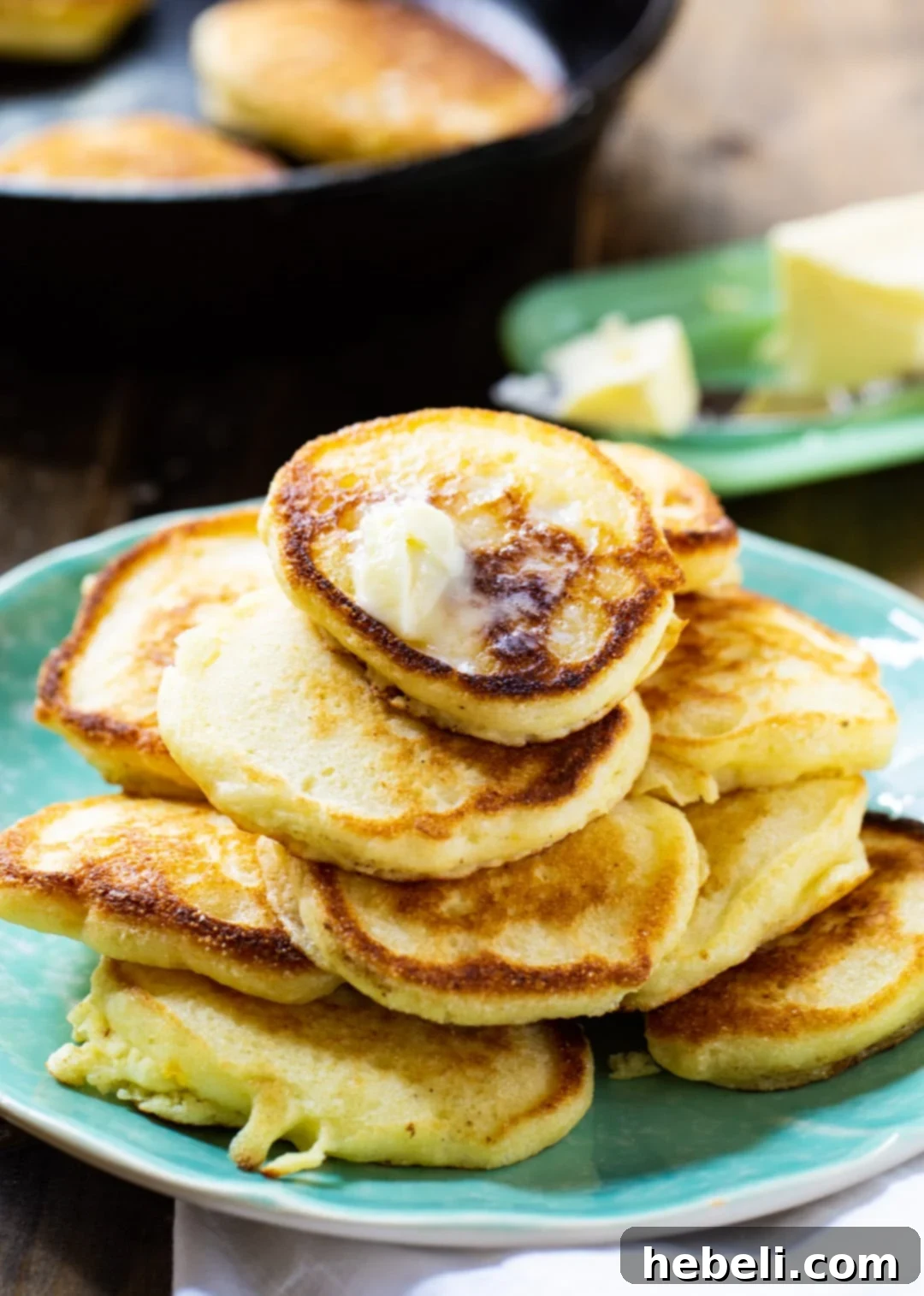
Hoe Cakes vs. Cornbread: A Delicious Comparison
The batter for Hoe Cakes is remarkably similar to a traditional cornbread batter, which is why many affectionately refer to them as “fried cornbread.” Both culinary staples share a foundational reliance on cornmeal, often augmented with flour, and frequently include enriching ingredients like buttermilk and eggs for moisture and structure. However, despite their similarities, key differences in preparation and serving distinguish them:
- Cooking Method: Classic cornbread is typically baked in a cast-iron skillet or a baking dish, usually forming a larger, cohesive loaf or square that is then cut into portions. Hoe Cakes, conversely, are cooked individually on a hot griddle or in a skillet, much like pancakes or fritters, resulting in smaller, distinct, and more personal-sized rounds.
- Texture: While both are inherently hearty and satisfying, Hoe Cakes often achieve a superior, all-around crispiness, especially along their edges, due to direct and prolonged contact with the hot, oiled cooking surface. Baked cornbread, particularly when made in a larger pan, tends to have a more uniform texture throughout, though a well-made skillet cornbread can still boast a delightful crust. The griddle-frying process gives Hoe Cakes a unique exterior crunch.
- Serving Style: Cornbread is frequently served in wedges or squares as a substantial side dish to a main meal, often broken apart and enjoyed with stews or greens. Hoe Cakes, thanks to their individual size, offer greater versatility. They are perfect for stacking as a breakfast item, ideal for dipping into flavorful sauces or pot liquor, or even serving as a convenient base for a variety of savory toppings.
Essentially, if you cherish the rich, earthy flavor of cornbread, you will undoubtedly adore Hoe Cakes. They offer a delightful and unique variation on a beloved classic, delivering that familiar, comforting taste in a uniquely crispy, golden, and pancake-like form that is hard to resist.
How to Serve Southern Hoe Cakes: Versatility on Your Plate
The true charm of Southern Hoe Cakes lies in their incredible versatility. They can effortlessly grace your breakfast table, accompany a hearty savory dinner, or even feature as a unique and delightful appetizer. Here are some of the most popular and delicious ways to enjoy them, catering to various tastes and meal times:
- Classic Breakfast Delight: Serve Hoe Cakes warm, straight from the griddle, much like traditional pancakes. Top them with a generous pat of melting butter for a simple yet profound pleasure. For those who enjoy a touch of sweetness, a drizzle of pure maple syrup, golden honey, or a light sprinkle of powdered sugar can transform them into an irresistible morning treat. For a more savory breakfast, they pair wonderfully with crispy bacon, country sausage, or perfectly fried eggs.
- The Perfect Companion to Savory Greens: A time-honored traditional Southern pairing sees Hoe Cakes served alongside a steaming bowl of collard greens, turnip greens, or mustard greens. Their sturdy yet porous texture makes them absolutely perfect for “mopping up” the delicious “pot liquor”—the intensely flavorful, nutrient-rich liquid left at the bottom of the greens pot. This combination is not just a meal; it’s a quintessential Southern comfort experience, deeply satisfying and full of heritage.
- Unique Appetizer with Pimento Cheese: For a surprisingly sophisticated and undeniably delicious appetizer that will impress any guest, try spreading homemade, tangy pimento cheese over warm Hoe Cakes. The creamy, sharp flavors of the pimento cheese beautifully complement the crispy cornmeal base, creating a fantastic and easy-to-eat party bite that celebrates Southern flavors.
- Beyond the Basics: Don’t limit your imagination! Experiment with other savory toppings and pairings. They can be excellent with a spoonful of rich fried chicken gravy, a hearty dollop of chili, or even topped with a fresh mixture of sour cream and chives for a more contemporary twist. Their neutral yet robust cornmeal flavor makes them an excellent canvas for creativity.
No matter how you choose to serve them, Southern Hoe Cakes are guaranteed to bring a taste of authentic Southern warmth, tradition, and incredible flavor to your table, making any meal feel special and comforting.
Mastering the Southern Hoe Cakes Recipe: Ingredients and Preparation
Crafting delicious Southern Hoe Cakes from scratch is a surprisingly straightforward process, requiring only a few common pantry staples. The secret to their distinct texture—crispy on the outside, tender on the inside—and their deeply satisfying flavor lies in both the quality of these simple ingredients and the careful execution of the cooking method.
Key Ingredients for Authentic Flavor:
- Self-Rising Flour: This forms part of the base, contributing to a balanced texture and helping to provide a light crumb. Its pre-mixed leavening agents ensure consistency.
- Self-Rising Cornmeal Mix: This is arguably the most crucial ingredient for traditional Hoe Cakes. Self-rising cornmeal already contains the necessary leavening agents (baking soda and salt), which react to create a light and airy texture while delivering that indispensable robust corn flavor. Ensure you’re using self-rising for the best results.
- Sugar: Just a small amount of granulated sugar is added to the batter. This isn’t to make the Hoe Cakes sweet, but rather to enhance the overall flavor profile by balancing the savory notes of the cornmeal and aiding in the beautiful golden-brown caramelization during frying.
- Salt: Essential for proper seasoning, salt brings out and amplifies all the other flavors in the batter, preventing the cakes from tasting bland.
- Buttermilk: A cornerstone of many Southern baking recipes, buttermilk plays a vital role. Its natural acidity reacts with the leavening agents in the self-rising flour and cornmeal, contributing significantly to a wonderfully tender crumb and imparting a subtle, characteristic tang that deepens the flavor.
- Large Eggs: Eggs serve multiple purposes in the batter. They act as an excellent binder, helping the cakes hold their shape during cooking, and they add richness, moisture, and structure to the final product.
- Water: Used to meticulously adjust the batter’s consistency, water ensures the mixture is perfectly pourable onto the griddle without being too thin. The right consistency is key for both ease of cooking and optimal texture.
- Vegetable Oil (for the batter): A small amount of oil is added directly into the batter to contribute to its overall richness and to help keep the cakes moist from the inside out.
- Bacon Drippings or Vegetable Oil (for frying): The choice of fat for frying profoundly impacts the ultimate flavor of your Hoe Cakes. While neutral vegetable oil is a common and perfectly acceptable choice, many devoted Southern cooks passionately advocate for bacon drippings. Bacon grease imparts an unparalleled savory depth and richness, elevating the flavor profile of your Hoe Cakes to an extraordinary level. Feel absolutely free to use either, or even a combination, based entirely on your personal preference and what you have available.
- Butter, for serving: A simple, yet essential final touch. Melting butter over warm Hoe Cakes enhances their richness and is a traditional way to enjoy them.
The Simple Preparation Process:
The steps to create these delicious cornmeal pancakes are remarkably easy, making this an ideal recipe for cooks of all skill levels, even beginners. You begin by combining all the dry ingredients—self-rising flour, self-rising cornmeal mix, sugar, and salt—in a spacious medium bowl, giving them a quick whisk to ensure they are thoroughly blended. In a separate glass measuring cup or small bowl, you’ll then whisk together the buttermilk and eggs until they are smoothly combined. This liquid mixture is then poured into the bowl containing the dry ingredients. Finally, the measured water and vegetable oil are incorporated into the mixture. Mix everything together with a whisk or spoon until just combined. The aim is a smooth, pourable batter, but it’s important not to overmix; a few small lumps are perfectly acceptable and often indicate you haven’t developed the gluten too much, which keeps the cakes tender.
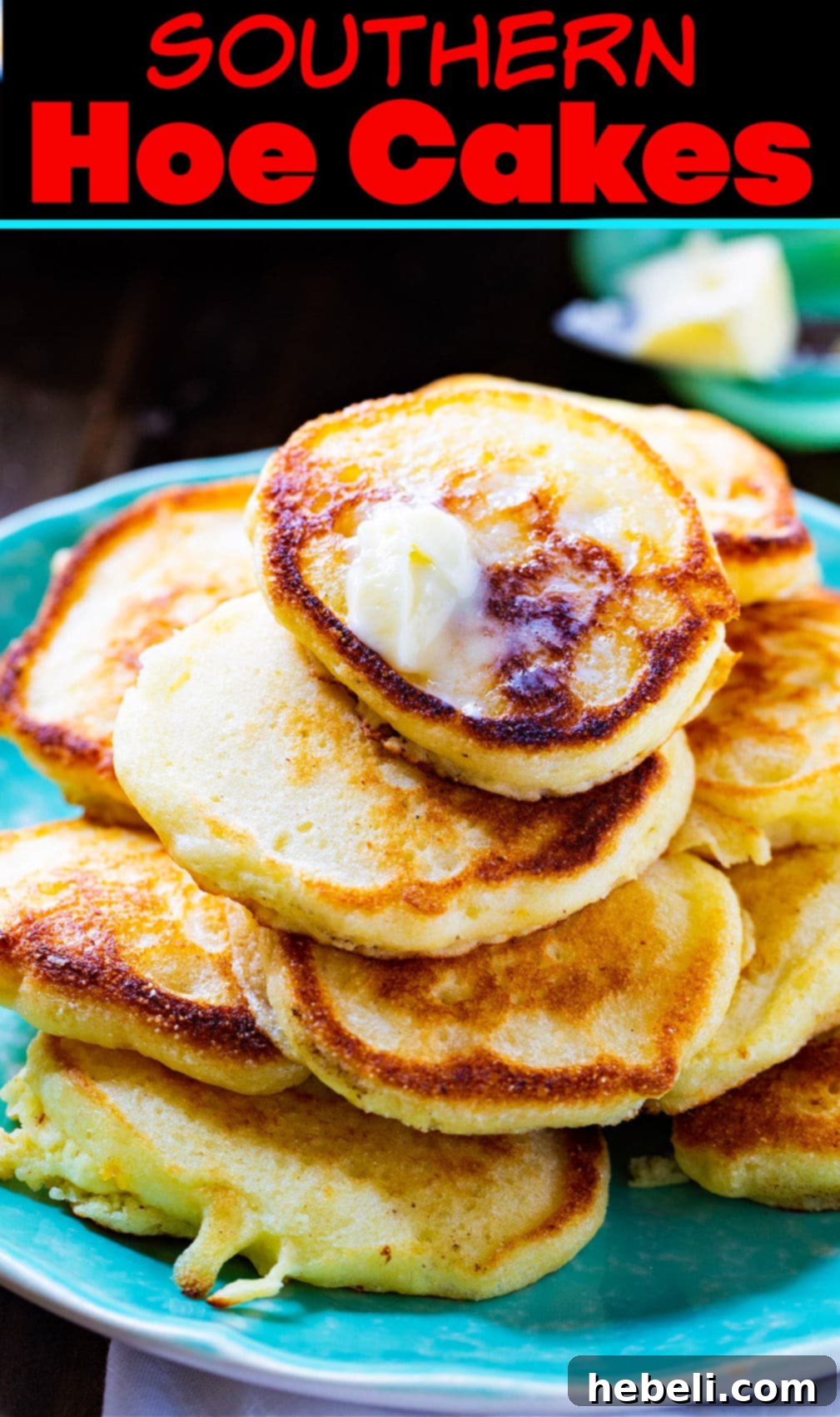
Cooking Tips for Perfectly Crispy Hoe Cakes
Achieving those signature crispy edges and a tender, fluffy interior in your Southern Hoe Cakes is all about mastering a few key cooking techniques. A well-seasoned cast iron pan or a good quality nonstick skillet or griddle is your best tool for success. Here’s how to ensure every Hoe Cake comes out perfectly golden and delicious:
- Preheat Your Pan Properly: This step is absolutely crucial. Place your pan over medium heat and allow it to preheat thoroughly for several minutes. If the pan isn’t hot enough, the cakes will absorb too much oil, resulting in a greasy texture and less crispiness. Conversely, if the pan is too hot, they’ll burn on the outside before cooking through completely on the inside. A good indicator is when a drop of water dances and evaporates quickly.
- Choose Your Frying Fat Wisely: As previously mentioned, bacon drippings are a secret weapon for adding incredible, savory depth and authentic Southern flavor. If you opt for vegetable oil, ensure there’s enough to lightly coat the bottom of the pan—you want to shallow fry, not deep fry. A quarter-cup of fat for a batch is a good starting point, but you may need to add more between batches.
- Portioning the Batter for Uniformity: For consistent Hoe Cakes that cook evenly and look appealing, use a measuring spoon or a small ladle to portion the batter. Approximately 2 tablespoons of batter per cake (or a quarter-cup measuring cup filled halfway) works wonderfully for creating cakes that are easy to manage and flip. This size also maximizes crispy surface area.
- Don’t Overcrowd the Pan: Resist the temptation to cook too many Hoe Cakes at once. Cook in small batches, leaving ample space between each cake. Overcrowding can lower the pan’s temperature, leading to steaming rather than frying, and makes flipping much more challenging.
- Look for the Bubbles: Just like traditional pancakes, the telltale sign that your Hoe Cakes are ready to flip is the formation of small bubbles on the surface. Also, observe the edges; they should appear set and slightly golden brown. This usually takes about 2-3 minutes per side.
- Achieve Golden Brown Perfection: Once you see those bubbles, carefully flip each Hoe Cake using a thin spatula. Cook for another 2-3 minutes on the second side, until both sides are a beautiful, even golden brown and boast that irresistible crispy texture.
Recipe: Classic Southern Hoe Cakes
Southern Hoe Cakes
Prep Time: 10 minutes
Cook Time: 10 minutes
Total Time: 20 minutes
Servings: 5
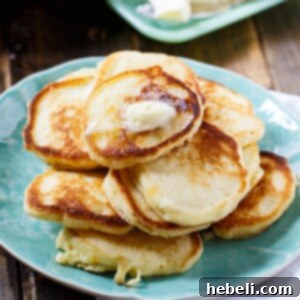
Southern Hoe Cakes are small, incredibly crispy cornmeal pancakes perfect for a satisfying breakfast or as a savory side dish. This easy-to-follow recipe delivers authentic Southern flavor with minimal effort, bringing comfort food straight to your table.
Equipment Needed
- Cast Iron Pan (or a sturdy nonstick skillet/griddle)
- Medium mixing bowl
- Whisk
- Liquid and dry measuring cups
- Measuring spoons
- Spatula for flipping
Ingredients
- 1 cup self-rising flour
- 1 cup self-rising cornmeal mix
- 1 tablespoon granulated sugar
- 1/4 teaspoon salt
- 3/4 cup buttermilk
- 2 large eggs
- 1/2 cup water
- 1/4 cup vegetable oil (for the batter)
- 1/4 cup bacon drippings (for frying, or use more vegetable oil)
- Butter, for serving (optional, but highly recommended)
Instructions
- In a medium-sized mixing bowl, combine the self-rising flour, self-rising cornmeal mix, sugar, and salt. Whisk briefly to ensure all the dry ingredients are thoroughly mixed together.
- In a separate glass measuring cup or a small bowl, whisk together the buttermilk and the two large eggs until they are well blended and smooth.
- Pour the buttermilk-egg mixture, along with the 1/2 cup water and 1/4 cup vegetable oil, into the bowl containing the dry ingredients. Mix everything together with a whisk or spoon until just combined. Be careful not to overmix; a few small lumps are perfectly fine and often contribute to a tender texture.
- Heat your cast iron pan or nonstick skillet/griddle over medium heat. Once hot, add the bacon drippings (or vegetable oil) to the pan, ensuring it evenly coats the bottom surface. The fat should be shimmering but not smoking.
- Using approximately 2 tablespoons of batter per cake (or about half a 1/4 cup measuring scoop for slightly larger cakes), pour the batter into the hot pan. Make sure to leave enough space between each Hoe Cake to allow for easy flipping and even cooking.
- Cook the Hoe Cakes for about 2-3 minutes, or until you observe small bubbles forming on the surface and the edges appear set and beautifully golden brown.
- Carefully flip each Hoe Cake using a thin spatula. Cook for another 2-3 minutes on the second side, until both sides are a rich golden brown and have achieved a desirable crispiness.
- Remove the cooked Hoe Cakes from the pan and keep them warm (e.g., on a plate loosely covered with foil) while you repeat the process with the remaining batter. Add more bacon drippings or oil to the pan as needed for each subsequent batch.
- Serve immediately while warm, ideally topped with a generous pat of butter for the ultimate Southern experience.
Notes
While I personally love to fry my Hoe Cakes in rich bacon drippings for an unparalleled depth of flavor, it is also very common and perfectly acceptable to fry them in vegetable oil. Feel free to choose whichever frying fat suits your taste and pantry best. Both methods will yield delicious results.
Nutrition Information (Approximate per serving)
Calories: 471kcal | Carbohydrates: 47g | Protein: 10g | Fat: 27g | Saturated Fat: 8g | Polyunsaturated Fat: 9g | Monounsaturated Fat: 9g | Trans Fat: 0.1g | Cholesterol: 90mg | Sodium: 650mg | Potassium: 172mg | Fiber: 3g | Sugar: 4g | Vitamin A: 265IU | Calcium: 159mg | Iron: 2mg
Nutrition information provided is an approximation, automatically calculated, and should only be used as a general guide. Individual results may vary based on exact ingredients, preparation methods, and portion sizes.
Explore More Classic Southern Recipes
If you’ve enjoyed the authentic taste and comforting simplicity of Southern Hoe Cakes, you’re sure to fall in love with these other beloved recipes from the heart of Southern cuisine. Each dish offers a unique flavor and a piece of culinary heritage:
- Hot Water Cornbread: Discover another ingenious and deeply flavorful cornmeal dish, made uniquely with boiling water for a distinctively crispy exterior and tender interior.
- Honey Cornbread: For those who appreciate a touch of sweetness with their savory, this recipe offers a delightful and moist take on traditional cornbread, enriched with the golden sweetness of honey.
- Fluffy Buttermilk Pancakes: If you enjoyed the pancake-like quality of Hoe Cakes, these classic, light, and airy buttermilk pancakes are a must-try for any breakfast or brunch.
- Crispy Hush Puppies: Dive into these small, savory fried cornmeal fritters, a staple often served alongside fried fish or other seafood dishes in the South.
- Creamiest Grits Ever: Experience the ultimate comforting side dish with this recipe for rich, smooth, and utterly delicious grits—an indispensable component of a true Southern breakfast.
- Southern Chicken and Waffles: Indulge in the iconic combination of perfectly crispy fried chicken paired with light, fluffy waffles, creating a true masterpiece of Southern brunch.
- Okra Hoecakes: A delightful and flavorful variation on the classic Hoe Cake, this recipe incorporates fresh okra into the batter, offering an interesting twist in taste and texture.
Disclosure: This post contains affiliate links. This means that if you make a purchase through one of these links, I may earn a small commission at no extra cost to you. Your support helps maintain this site and allows me to continue sharing delicious recipes!