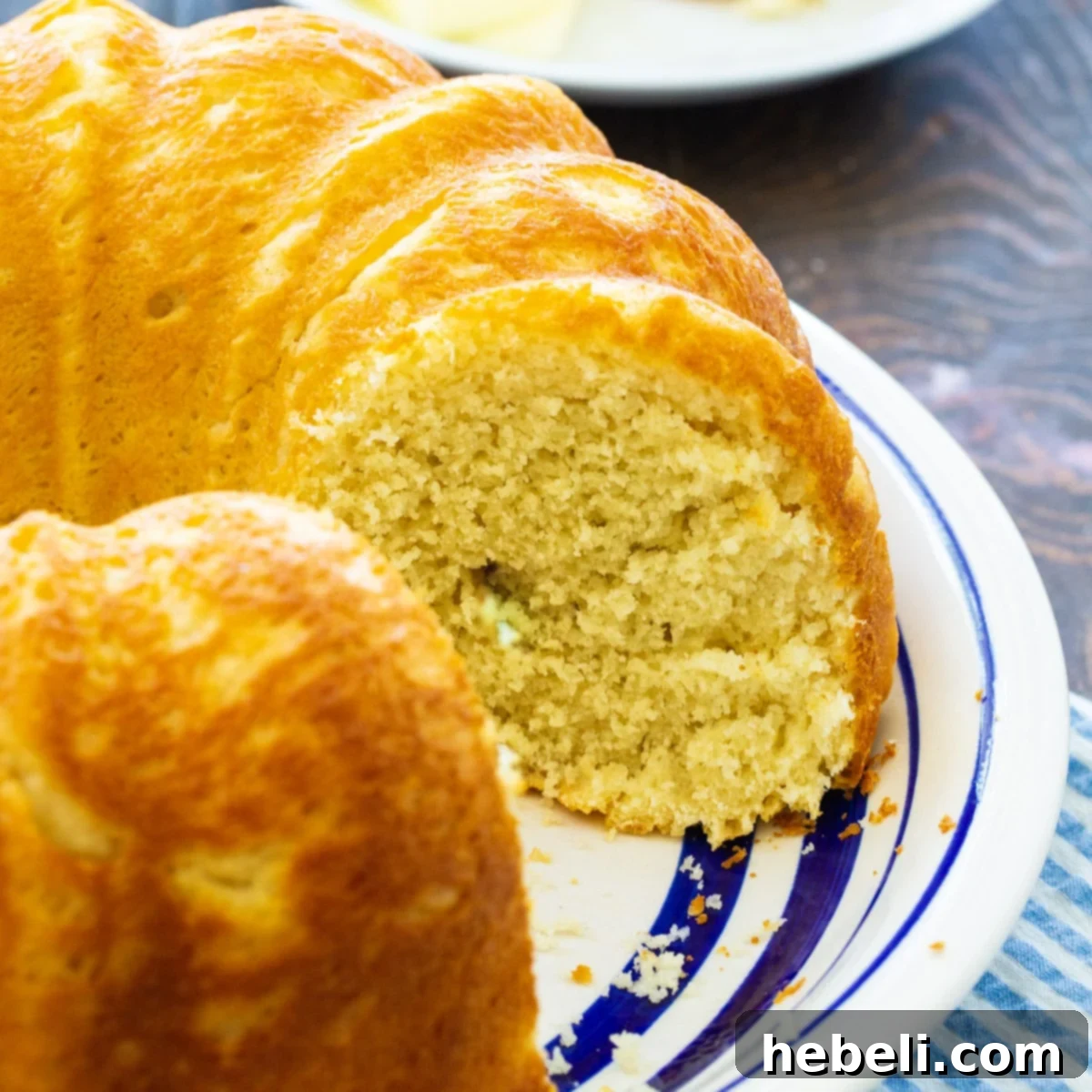
Sally Lunn Bread: A Timeless Southern Delight
Sally Lunn Bread is a cherished old-fashioned Southern yeast bread, known for its delicate sweetness and incredibly tender crumb. Baked elegantly in a bundt pan, it often draws comparisons to a pound cake due to its impressive presentation, yet its distinct flavor and airy texture firmly place it in the realm of classic yeast breads. This recipe stands out not only for its rich history but also for its surprisingly simple, no-knead preparation, making it an ideal project for bakers of all skill levels.
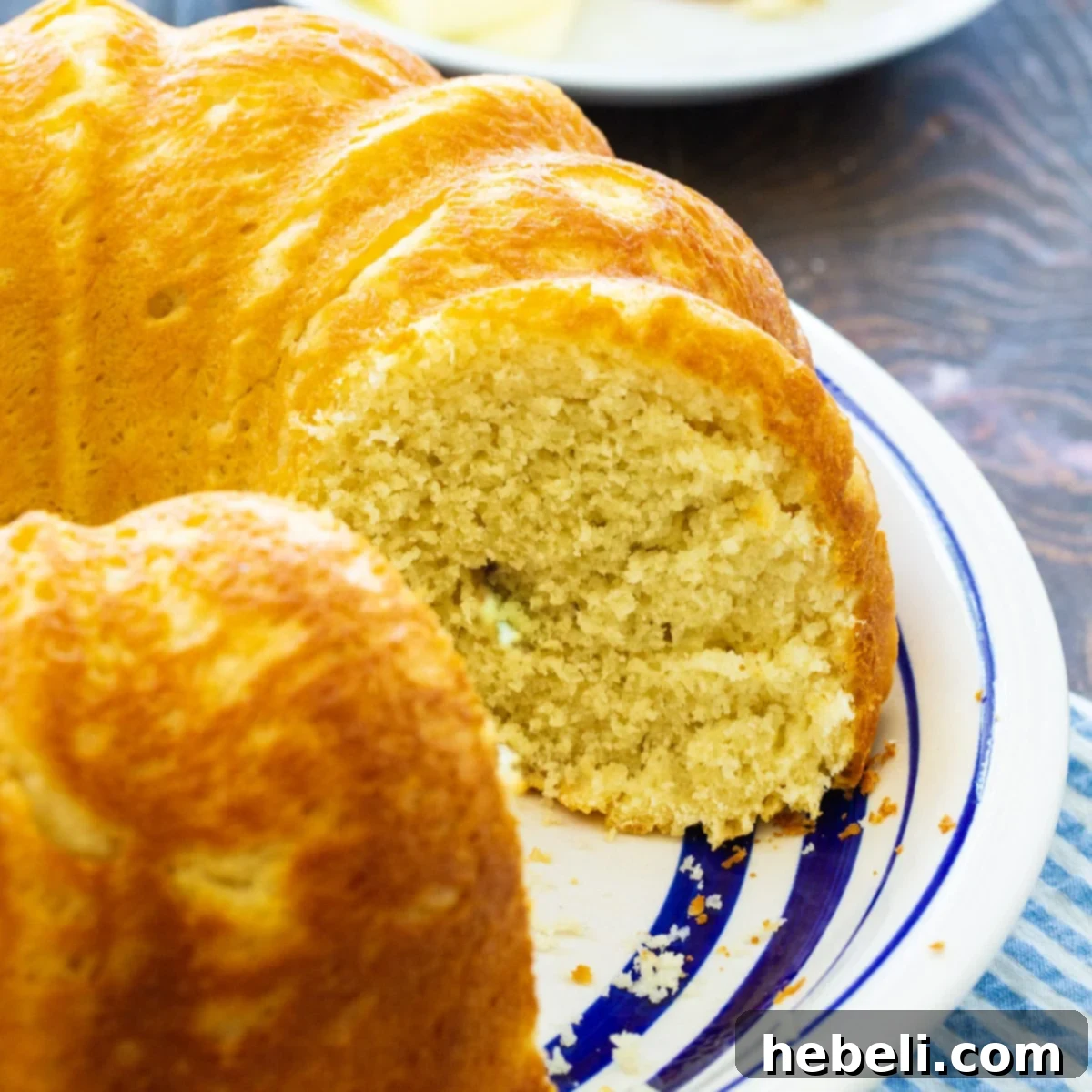
What Is Sally Lunn Bread? Unveiling Its Rich History
Sally Lunn Bread is far more than just a recipe; it’s a piece of culinary history. Tracing its roots back to the 18th century, the exact origin of this beloved bread is shrouded in charming folklore, with the most popular tale crediting an 18th-century English Huguenot refugee named Solange Luyon. Legend has it that she fled France and settled in Bath, England, where she began selling her unique, enriched brioche-like buns from a small shop. Over time, her French name “Solange Luyon” was Anglicized into the more familiar “Sally Lunn.”
Her sweet, tender bread quickly gained immense popularity, becoming a staple in Bath and eventually spreading across England and beyond, finding a special place in Southern American cuisine. This bread has truly stood the test of time, cherished for its comforting appeal and delightful taste for centuries. Unlike many traditional yeast breads, Sally Lunn offers a less demanding baking experience. It’s a delightful paradox: a bread that tastes exquisitely complex, yet requires no strenuous kneading, making it one of the easiest and most rewarding yeast breads you’ll ever bake.
The Irresistible Texture and Flavor Profile
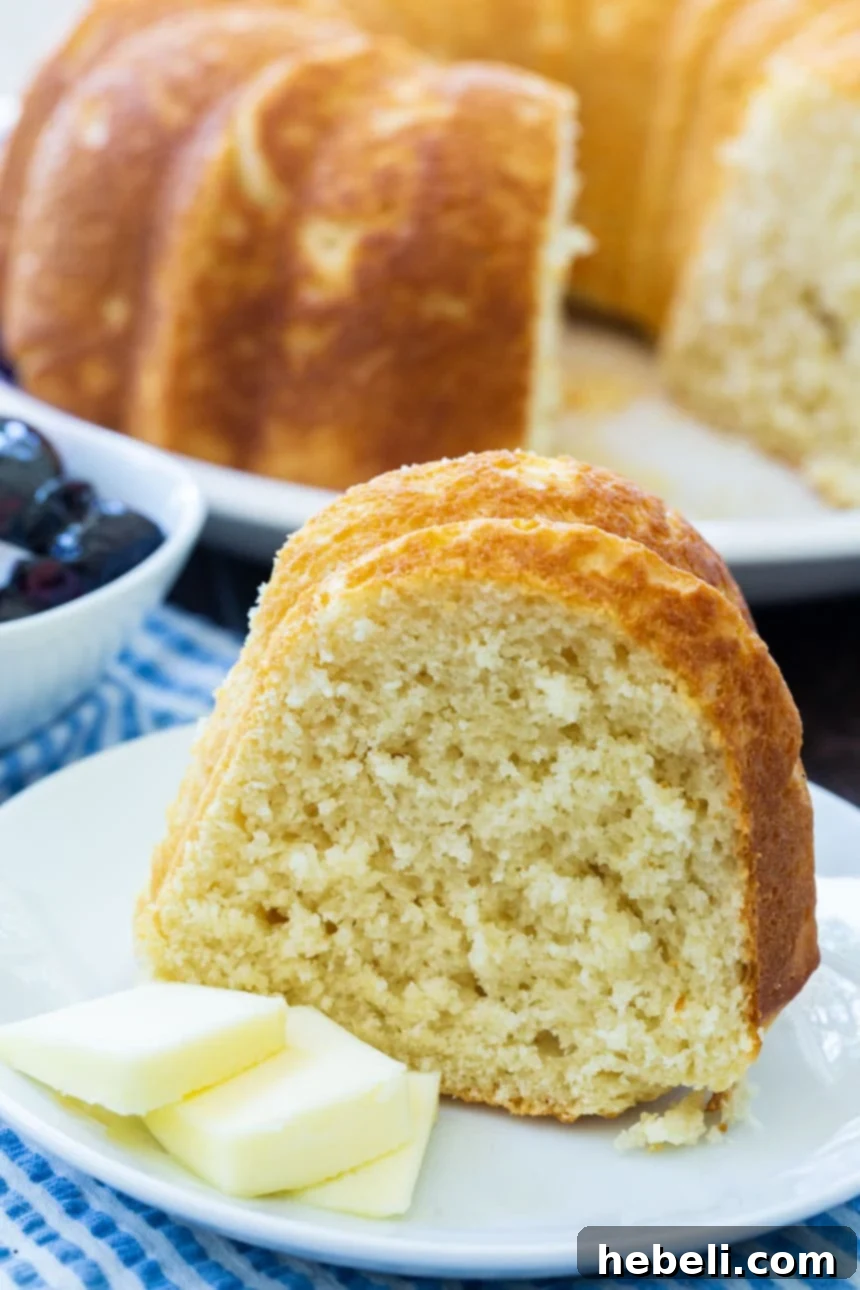
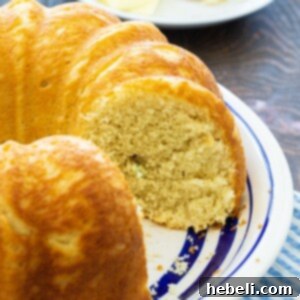
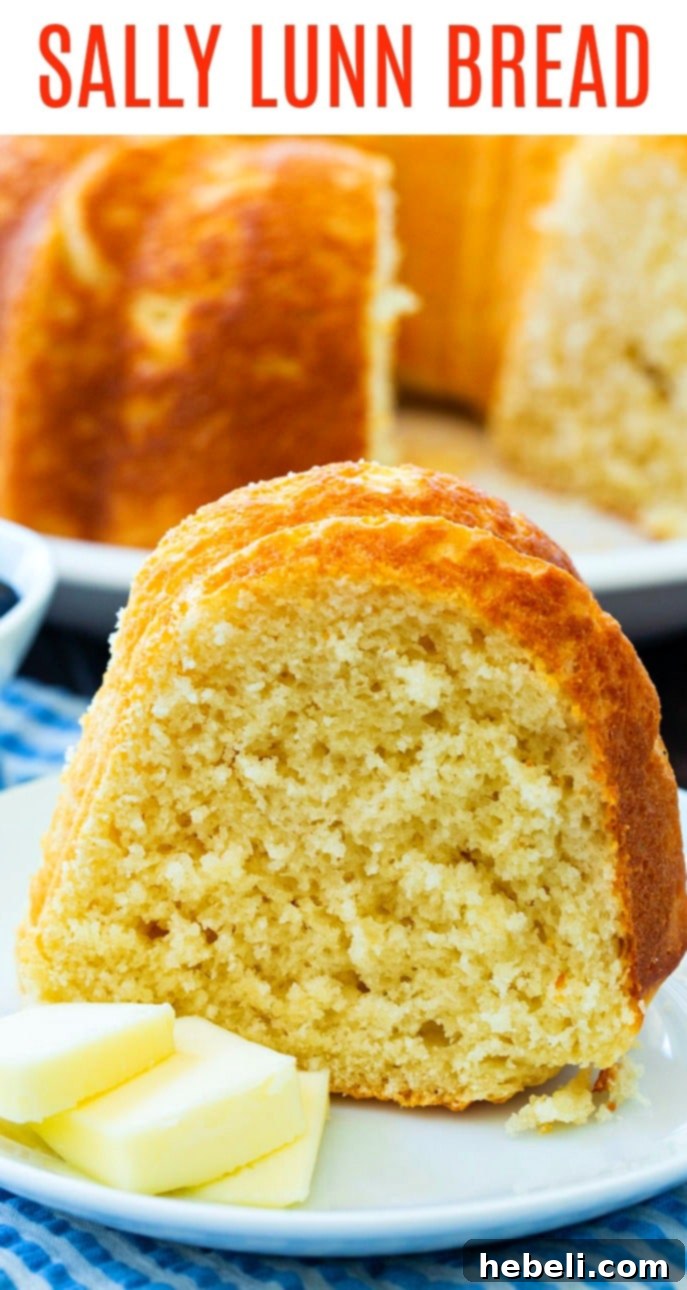
What sets Sally Lunn Bread apart is its uniquely light, airy, and wonderfully tender interior, encased in a beautiful golden-brown crust. Each slice boasts a subtly sweet, yeasty flavor, enriched by milk, butter, and eggs, which contribute to its brioche-like richness without the heavy feel. The bundt pan not only gives it a striking, elegant appearance, reminiscent of a cake, but also allows for even baking and a consistent crumb. This bread is a true testament to simple ingredients coming together to create something truly extraordinary – a perfect balance of sweetness and savory yeast notes that makes it versatile for any meal of the day.
Serving Sally Lunn Bread: Endless Possibilities
One of the joys of Sally Lunn Bread is its incredible versatility. While delicious on its own, its slightly sweet and rich profile makes it an ideal canvas for various accompaniments. For breakfast or brunch, serve warm slices generously slathered with softened butter, homemade fruit jams, or zesty marmalades. The way the butter melts into the warm, pillowy crumb is pure bliss. It also pairs wonderfully with honey or a drizzle of maple syrup for an added layer of sweetness.
Don’t let any leftover Sally Lunn Bread go to waste! Stale slices are absolutely magnificent when transformed into French toast. Its rich, porous texture absorbs the egg custard beautifully, resulting in an exceptionally fluffy and flavorful French toast that will elevate your weekend breakfast to new heights. You can also cube it and use it as the base for a decadent bread pudding, soaking up custards and spices for a comforting dessert.
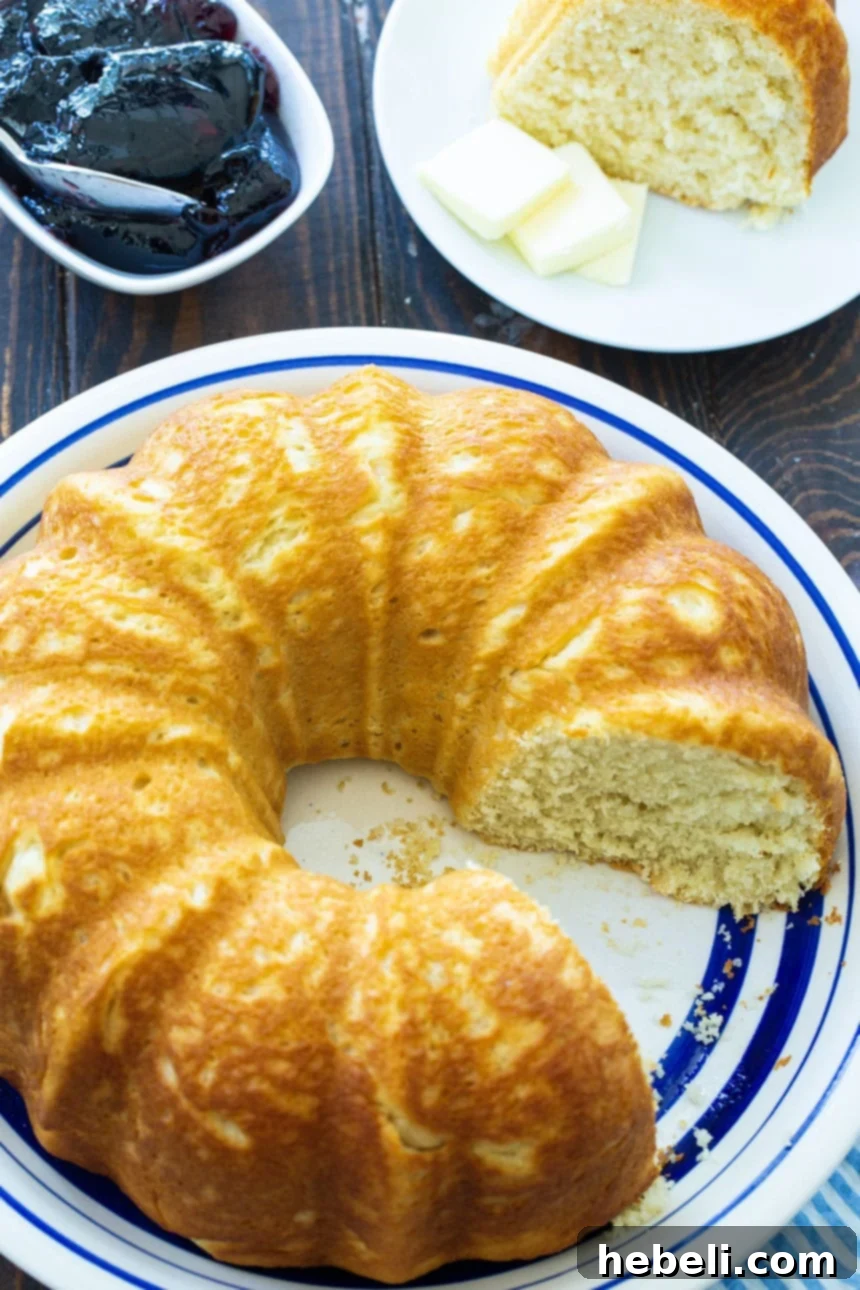
Essential Ingredients for Your Sally Lunn Loaf
One of the beauties of this old-fashioned recipe is that it relies on common pantry staples, making it accessible whenever the craving strikes. You’ll likely have most, if not all, of these ingredients readily available:
- Whole Milk: Contributes to the bread’s richness and tender texture.
- Granulated Sugar: Provides the signature subtle sweetness and feeds the yeast for optimal rise.
- Unsalted Butter: Adds moisture, flavor, and helps achieve that delightful soft crumb.
- Salt: Balances the flavors and controls yeast activity.
- Active Dry Yeast: The leavening agent that gives Sally Lunn its airy structure.
- Warm Water: Crucial for activating the yeast.
- Large Eggs: Enhance richness, flavor, and provide additional structure.
- All-Purpose Flour: The foundation of the bread, providing structure and body.
Expert Recipe Tips for a Perfect Bake
Achieving a perfect Sally Lunn Bread is simple when you follow a few key guidelines. These tips will help ensure your bread rises beautifully and develops the ideal texture and flavor:
- Temperature Control is Key: When heating the milk, sugar, butter, and salt, ensure it only warms enough to melt the butter. Crucially, let this mixture cool down to a temperature between 100°F and 110°F (38°C to 43°C) before adding it to the yeast. Water hotter than 110°F can kill the yeast, while water too cool might not activate it properly. A reliable kitchen thermometer is an invaluable tool for precise temperature measurement.
- Yeast Activation Check: After combining the active dry yeast with warm water (100-110°F/38-43°C) and letting it sit for 5 minutes, you should observe a frothy, bubbly layer forming on the surface. This indicates that your yeast is active and healthy. If no bubbles appear, it means the yeast is no longer viable, and your bread will not rise. In such a case, it’s best to discard the mixture and start with fresh yeast.
- Proper Greasing of the Bundt Pan: A well-greased bundt pan is essential for easy release and a beautiful crust. I highly recommend using a baking spray that contains flour, or thoroughly greasing the pan with butter or shortening and then dusting it with flour, tapping out any excess. This ensures every nook and cranny is coated, preventing the bread from sticking.
- Allow for Adequate Rising Time: While this is a no-knead bread, allowing the dough sufficient time to rise in a warm, draft-free environment is critical for its light texture. Don’t rush the proofing process; let it double in bulk for the first rise and rise noticeably in the bundt pan for the second.
- Don’t Overbake: Overbaking can lead to a dry loaf. The bread is done when it’s golden brown on top and a wooden skewer or cake tester inserted into the center comes out clean. If you have an instant-read thermometer, the internal temperature should be around 200-210°F (93-99°C).
Storage and Longevity: Keeping Your Bread Fresh
Proper storage ensures your Sally Lunn Bread remains fresh and delicious for as long as possible. Given its rich ingredients, it tends to stay moist longer than leaner breads.
- Countertop Storage: Once cooled completely, wrap the bread tightly in plastic wrap or aluminum foil, or store it in an airtight container at room temperature. It will stay fresh and soft for several days. It tastes absolutely wonderful toasted, even a few days after baking. If you find yourself with any leftovers after 3 days, it’s the perfect opportunity to transform it into the most incredible French toast or a comforting bread pudding.
- Freezing for Later: Sally Lunn Bread freezes exceptionally well. To freeze, ensure the bread is completely cool. Wrap it tightly in plastic wrap, then an additional layer of aluminum foil, or place it in a freezer-safe bag. It can be frozen for several months. When ready to enjoy, thaw overnight at room temperature and refresh in a warm oven for a few minutes to restore its freshly baked taste and texture.
Pin this now to find it later
Pin It
Happy Bread Baking! May your kitchen be filled with the wonderful aroma of fresh Sally Lunn Bread.
More Delicious Bread Recipes to Explore
- Cheesy Broccoli Cornbread
- Homemade Buttermilk Bread
- Irish Soda Bread
- Whole Wheat Buttermilk Bread
- Honey Oat Wheat Bread
- Jalapeno Beer Bread
- Nutella Pumpkin Bread
Sally Lunn Bread Recipe
15
35
2 50
18
Print Recipe
Equipment
-
Electric Stand Mixer
-
Bundt Pan (12-cup)
Ingredients
- 1 1/2 cups whole milk
- 3/4 cup granulated sugar
- 1/2 cup unsalted butter, softened
- 1 teaspoon salt
- 2 (1/4-ounce) packets active dry yeast
- 1/2 cup warm water (100 to 110 degrees F / 38 to 43 degrees C)
- 2 large eggs, at room temperature
- 5 cups all-purpose flour
Instructions
-
In a medium saucepan, gently heat the milk, sugar, butter, and salt until the butter is just melted. Stir well to combine all ingredients. Remove from heat and let the mixture cool to a temperature between 100°F and 110°F (38°C to 43°C). This temperature is crucial for yeast activation.
-
In a small bowl, combine the active dry yeast with the 1/2 cup warm water (100 to 110 degrees F). Let it sit undisturbed for 5 minutes. You should see a foamy layer form on top, indicating the yeast is active. If not, discard and use fresh yeast.
-
In a large mixing bowl (or the bowl of a stand mixer), combine the cooled milk mixture, the activated yeast mixture, and the two large eggs. Beat with an electric mixer on low speed until all ingredients are well blended.
-
Gradually add the all-purpose flour into the wet ingredients with the mixer still on low. Continue mixing until the flour is fully incorporated and a very sticky dough forms. Do not overmix.
-
Cover the bowl loosely with plastic wrap or a clean kitchen towel. Place it in a warm, draft-free spot and let the dough rise for approximately 1 hour, or until it has doubled in bulk.
-
Gently punch the risen dough down to release the air. Recover the bowl and let the dough rise again for another 30 minutes. This second rise contributes to a finer crumb.
-
Lightly grease a 12-cup bundt pan thoroughly with baking spray containing flour, or butter and flour. Carefully transfer the dough into the prepared bundt pan, spreading it evenly. Cover the pan loosely and let the dough rise for a final 20 to 30 minutes. Meanwhile, preheat your oven to 350°F (175°C).
-
Bake in the preheated oven for 35 to 40 minutes, or until the bread is golden brown and a wooden skewer inserted into the center comes out clean.
-
Immediately remove the bread from the oven and invert it onto a wire rack to cool slightly. Serve warm with plenty of butter, jam, or your favorite spread.
Notes
Nutrition
Carbohydrates: 36g |
Protein: 5g |
Fat: 7g |
Saturated Fat: 4g |
Polyunsaturated Fat: 0.5g |
Monounsaturated Fat: 2g |
Trans Fat: 0.2g |
Cholesterol: 37mg |
Sodium: 186mg |
Potassium: 78mg |
Fiber: 1g |
Sugar: 9g |
Vitamin A: 221IU |
Vitamin C: 0.001mg |
Calcium: 35mg |
Iron: 2mg
Nutrition information is automatically calculated, so should only be used as an approximation.
Did you make this?Leave a comment below and tag us @spicysouthernkitchen on social media!
Disclosure: This post contains affiliate links, which means we may earn a small commission if you make a purchase through these links, at no extra cost to you.