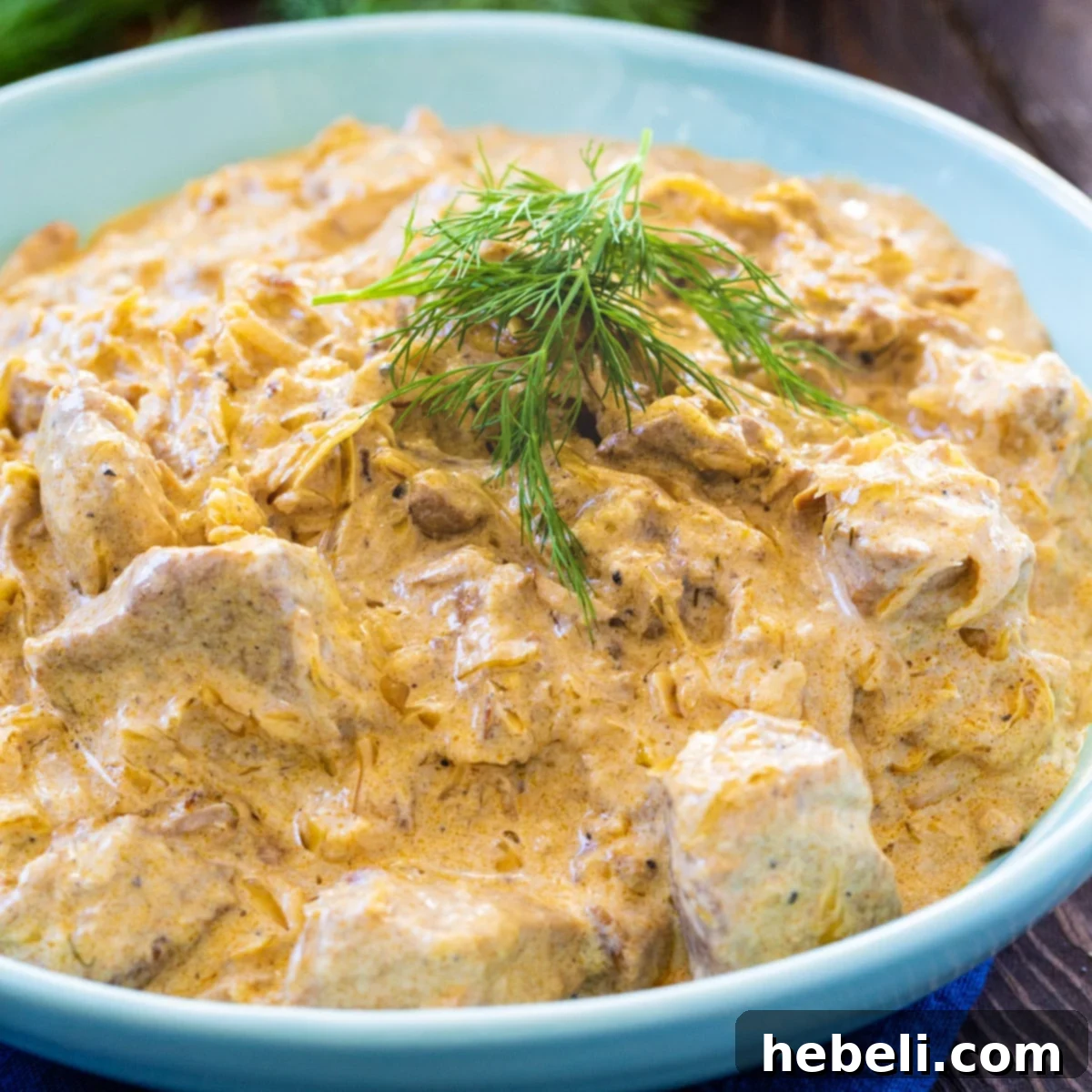
Hungarian Pork Stew is a truly classic dish, a thick and rich sour cream-based stew that captivates with its harmonious blend of sweet paprika, tangy sauerkraut, and fresh dill. Brimming with incredibly tender, meaty pork chunks, this stew stands out as a fulfilling one-dish meal, perfect for chilly evenings or family gatherings.
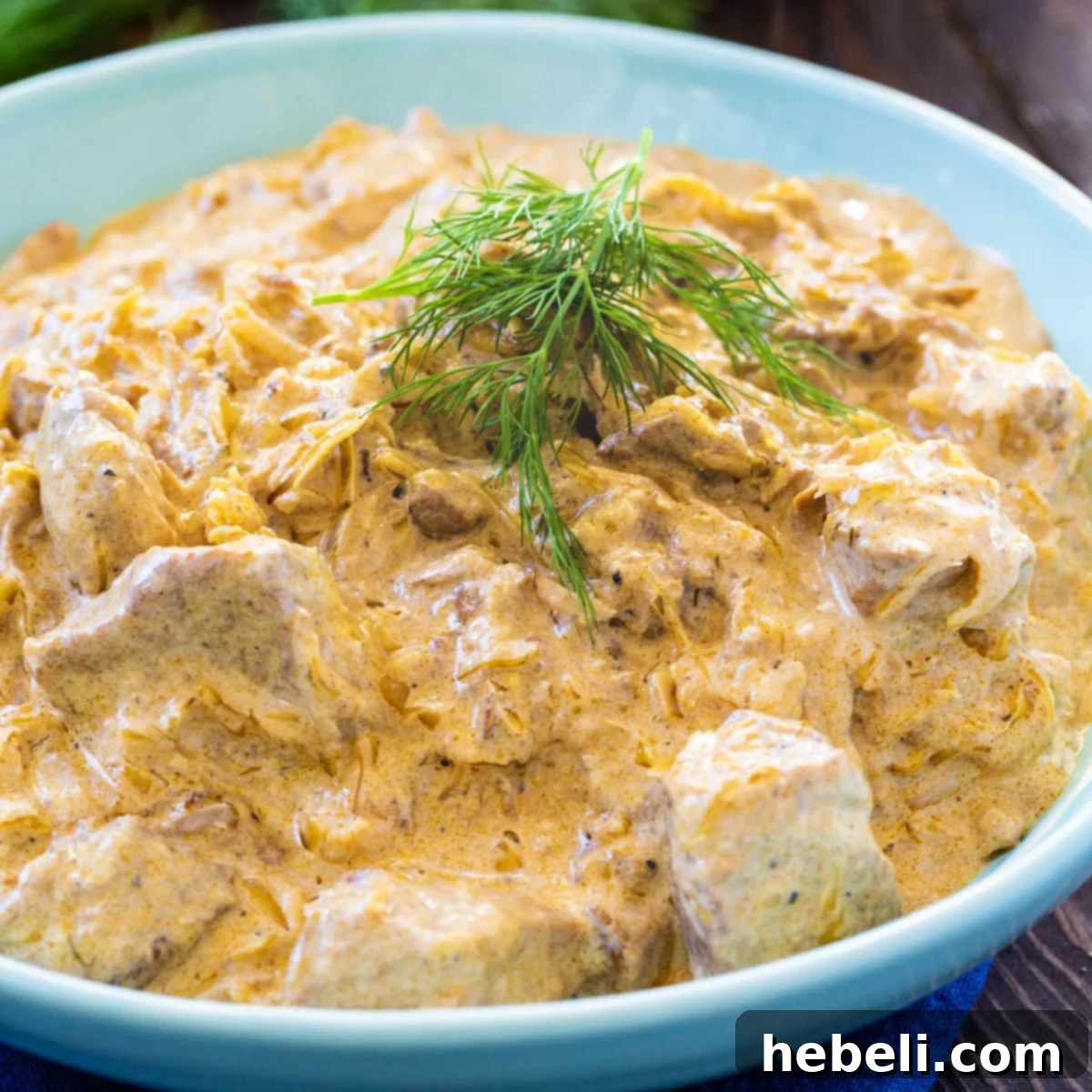
Traditionally, this savory stew finds its perfect companion in delicate pasta dumplings, often akin to spaetzle, which absorb its rich flavors beautifully. Alternatively, it can be served over wide egg noodles for a universally loved pairing, or simply enjoyed on its own for a robust, satisfying meal. The magic of this dish lies in its slow-cooking process, gently simmering in the oven. This method ensures the pork pieces achieve an unparalleled tenderness while allowing the layers of flavor from the paprika, onion, garlic, and sauerkraut to meld and deepen over time, creating a truly unforgettable culinary experience.
Why You’ll Love This Authentic Hungarian Pork Stew
There’s something uniquely comforting and deeply satisfying about a slow-cooked stew, and this Hungarian Pork Stew is no exception. It’s more than just a meal; it’s an experience that brings warmth and flavor to your table. You’ll adore this recipe for several compelling reasons. Firstly, its one-pot nature simplifies both cooking and cleanup, making it an ideal choice for busy weeknights or relaxed weekend cooking. Secondly, the flavor profile is simply extraordinary. The vibrant, smoky notes of sweet Hungarian paprika are beautifully complemented by the piquant tang of sauerkraut, all mellowed by the creamy richness of sour cream. Each bite offers a complex yet comforting taste that feels both exotic and familiar.
Furthermore, the slow-baking process in a Dutch oven transforms humble pork loin into incredibly tender, melt-in-your-mouth morsels. This method is key to developing the stew’s signature depth, allowing the ingredients ample time to infuse and create a truly cohesive and rich gravy. It’s a robust and hearty dish that feeds a crowd and leaves everyone feeling satisfied, making it a fantastic choice for family dinners or entertaining guests. The aroma alone as it simmers in your oven will have everyone eagerly awaiting dinner. Prepare to add this delightful Hungarian Pork Stew to your regular rotation!
Essential Ingredients for a Perfect Hungarian Pork Stew
Crafting an authentic Hungarian Pork Stew relies on a few key ingredients that define its distinctive flavor profile. Understanding each component’s role ensures a delicious outcome:
- Boneless Pork Loin: While pork loin is used here for its leanness and quick cooking, pork shoulder (Boston butt) is also an excellent choice, offering even more tenderness and flavor after slow cooking. Cutting it into uniform 1-inch pieces ensures even cooking.
- Salt and Pepper: Fundamental seasonings to enhance the natural flavors of the pork and the stew.
- Butter and Vegetable Oil: Used together for searing the pork. The butter adds a rich flavor, while the oil has a higher smoke point, preventing the butter from burning during the browning process.
- Large Onion: A finely chopped onion forms the aromatic base of the stew, providing sweetness and depth as it caramelizes.
- Garlic Cloves: Minced garlic adds a pungent, savory layer that is crucial to the stew’s complexity.
- Sweet Paprika (Hungarian Paprika): This is arguably the most important ingredient. Insist on authentic sweet Hungarian paprika, known for its vibrant red color and rich, slightly sweet, smoky flavor. Avoid hot paprika unless you specifically desire a spicy stew, as it will drastically alter the traditional taste.
- Low-Sodium Chicken Broth: Provides the liquid base for the stew, adding savory notes without overwhelming the other flavors. Using low-sodium allows you to control the overall saltiness.
- Fresh Dill: A quintessential herb in Hungarian cuisine, fresh dill imparts a unique herbaceous, slightly citrusy, and fresh aroma that elevates the stew. It’s a traditional pairing with sauerkraut and pork.
- Sauerkraut: Drained and rinsed sauerkraut brings a crucial tangy, fermented flavor that cuts through the richness of the pork and sour cream. Rinsing helps reduce excessive saltiness and acidity.
- Sugar: A small amount of sugar is added to balance the acidity of the sauerkraut and tomato, creating a more harmonious flavor profile.
- Sour Cream: Stirred in at the end, sour cream provides the signature creamy texture and tangy richness that defines many Hungarian stews. It should be added off the heat to prevent curdling.
How To Make Hungarian Pork Stew: A Detailed Guide
Creating this flavorful Hungarian Pork Stew is a straightforward process, primarily relying on slow cooking to develop its rich taste and tender texture. Follow these steps for a perfect result:
- Prepare Your Oven and Pork: Begin by preheating your oven to 300 degrees Fahrenheit (150°C). Pat your pork chunks thoroughly dry with paper towels. This step is crucial for achieving a good sear. Season the pork generously with salt and pepper on all sides.
- Sear the Pork: Heat the butter and vegetable oil in a large Dutch oven over medium-high heat. The butter adds flavor, while the oil helps prevent the butter from burning. Once hot, add about half of the pork pieces to the Dutch oven, ensuring not to overcrowd the pot. Brown the pork on all sides until nicely caramelized. This browning develops deep flavor through the Maillard reaction. Transfer the browned pork to a plate and repeat with the remaining batch. Set all the seared pork aside.
- Sauté Aromatics: In the same Dutch oven, using the flavorful rendered drippings, add the finely chopped onion. Cook for about 3-5 minutes, stirring occasionally, until the onion softens and becomes translucent.
- Bloom the Paprika: Add the minced garlic and sweet paprika to the softened onions. Cook for just about 30 seconds, stirring constantly. Be careful not to burn the garlic or paprika, as burnt paprika can become bitter. This brief cooking step “blooms” the paprika, intensifying its color and flavor.
- Simmer the Stew Base: Return the browned pork to the Dutch oven. Stir in the chicken broth, fresh dill, 1 teaspoon of salt, and 1/2 teaspoon of black pepper. Bring the mixture to a gentle simmer on the stovetop.
- First Oven Cook: Cover the Dutch oven tightly with its lid and transfer it to the preheated oven. Let it slow cook for 1 1/2 hours. This initial cooking phase ensures the pork becomes incredibly tender.
- Add Sauerkraut and Sugar: Carefully remove the Dutch oven from the oven. Stir in the drained and rinsed sauerkraut and the sugar. The sugar helps to balance the acidity of the sauerkraut. Cover the pot again and return it to the oven for another 45 minutes of cooking.
- Finishing Touch: Once the stew has completed its second cooking phase, remove it from the oven. Take it off the heat and gently stir in the sour cream. It’s important to add the sour cream off the heat to prevent it from curdling.
- Serve: Taste and adjust seasonings if necessary. Garnish with additional fresh dill, if desired, and serve hot.
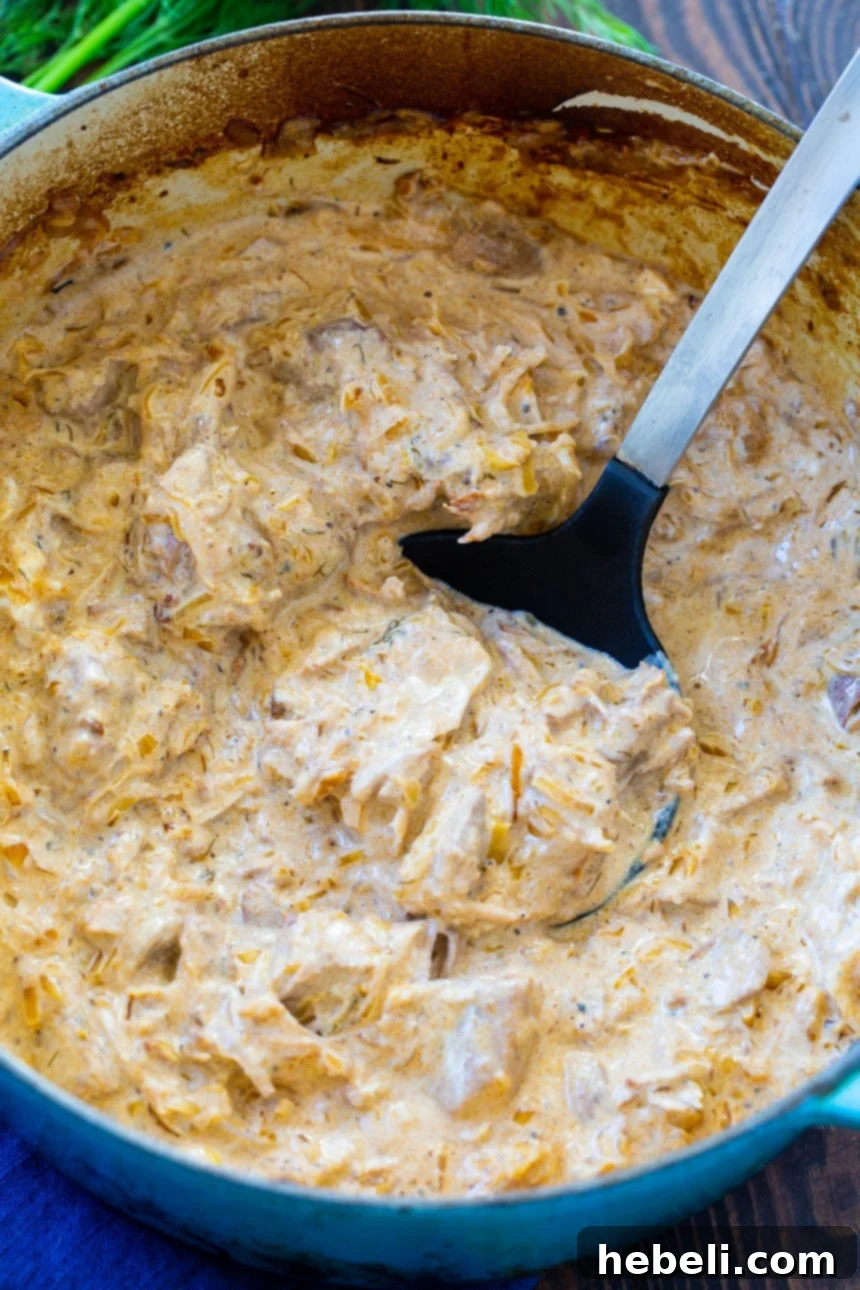
Serving Suggestions for Hungarian Pork Stew
Hungarian Pork Stew is a wonderfully versatile dish that pairs well with a variety of sides, transforming it into a complete and satisfying meal. For a truly authentic experience, serve it over homemade spaetzle, which are soft, chewy egg noodles that soak up the rich gravy beautifully. If you prefer a simpler option, wide egg noodles or even mashed potatoes are fantastic choices, providing a creamy base for the stew. Crusty bread is also an excellent accompaniment, perfect for dipping into the flavorful sauce.
For a lighter touch, a simple green salad dressed with a vinaigrette can offer a refreshing contrast to the stew’s richness. Another delightful option is serving it alongside boiled potatoes or fluffy rice. No matter your choice, this stew is hearty enough to be the star of your meal, making it an ideal candidate for a comforting dinner any night of the week.
Storage and Reheating Tips
This Hungarian Pork Stew tastes even better the next day, making it perfect for meal prepping or enjoying leftovers. To store, allow the stew to cool completely to room temperature. Transfer it to an airtight container and refrigerate for up to 4 days. The flavors will continue to meld and deepen over time.
For reheating, gently warm the stew on the stovetop over medium-low heat, stirring occasionally, until it is heated through. If the stew appears too thick, you can add a splash of chicken broth or water to achieve your desired consistency. Avoid boiling the stew vigorously, especially if it contains sour cream, to prevent separation. This stew can also be frozen for longer storage. Once completely cooled, transfer to freezer-safe containers or bags and freeze for up to 3 months. Thaw overnight in the refrigerator before reheating.
Expert Tips for a Superb Hungarian Pork Stew
Achieving a truly exceptional Hungarian Pork Stew is simple with a few insider tips:
- Choose the Right Paprika: This cannot be stressed enough – always use sweet Hungarian paprika, not hot paprika. Sweet paprika provides the characteristic mild, vibrant flavor and rich color without overwhelming spice. If you prefer a slight kick, you can add a tiny pinch of hot paprika, but the foundation should be sweet.
- Quality Sauerkraut Matters: For the best flavor and texture, opt for fresh sauerkraut found in the refrigerated section of your grocery store or from a deli, often sold in vacuum-sealed bags. It generally has a more complex, less harsh flavor than canned or jarred varieties. Be sure to drain and rinse it well to remove excess brine.
- Don’t Overcook the Paprika: When adding paprika, cook it briefly in the hot fat (about 30 seconds) to “bloom” its flavor and color, but do not burn it. Burnt paprika turns bitter and can ruin the stew’s taste.
- Add Sour Cream Off the Heat: To prevent the sour cream from curdling and separating, always stir it into the stew after it has been removed from the heat. This allows it to gently incorporate and maintain its creamy texture.
- Dill is Key: Fresh dill is a very traditional and essential flavor in this dish, offering a bright, herbaceous note that perfectly complements the rich pork and tangy sauerkraut. While it can be omitted if you truly dislike it, its inclusion elevates the stew. If you must substitute, a very small amount of fresh thyme (use sparingly, as it’s stronger) could work, but it won’t be the same traditional flavor.
- Use a Dutch Oven: A heavy-bottomed Dutch oven is ideal for this recipe. Its even heat distribution ensures the pork browns beautifully and the stew simmers consistently in the oven, preventing scorching and promoting tenderness.
- Season in Layers: Season the pork initially, then taste and adjust the seasoning (salt, pepper, and sugar if needed) after the stew has finished cooking, especially after adding the sauerkraut.

Pin this now to find it later
Pin It
Other Hearty European-Inspired Recipes To Try
If you enjoyed the rich flavors of this Hungarian Pork Stew, you’re sure to love these other European-inspired dishes that bring warmth and satisfaction to any meal:
- German Style Pigs in a Blanket: A delightful twist on a classic, perfect for appetizers or a light meal.
- German Pork Cutlets: Crispy, tender pork cutlets, often served with lemon and a variety of traditional sides.
- Bratwurst Mac and Cheese: A comforting fusion of savory bratwurst and creamy, cheesy macaroni.
- Brats in a Blanket: Another fantastic option for a quick snack or party food, wrapping flavorful bratwurst in a pastry.
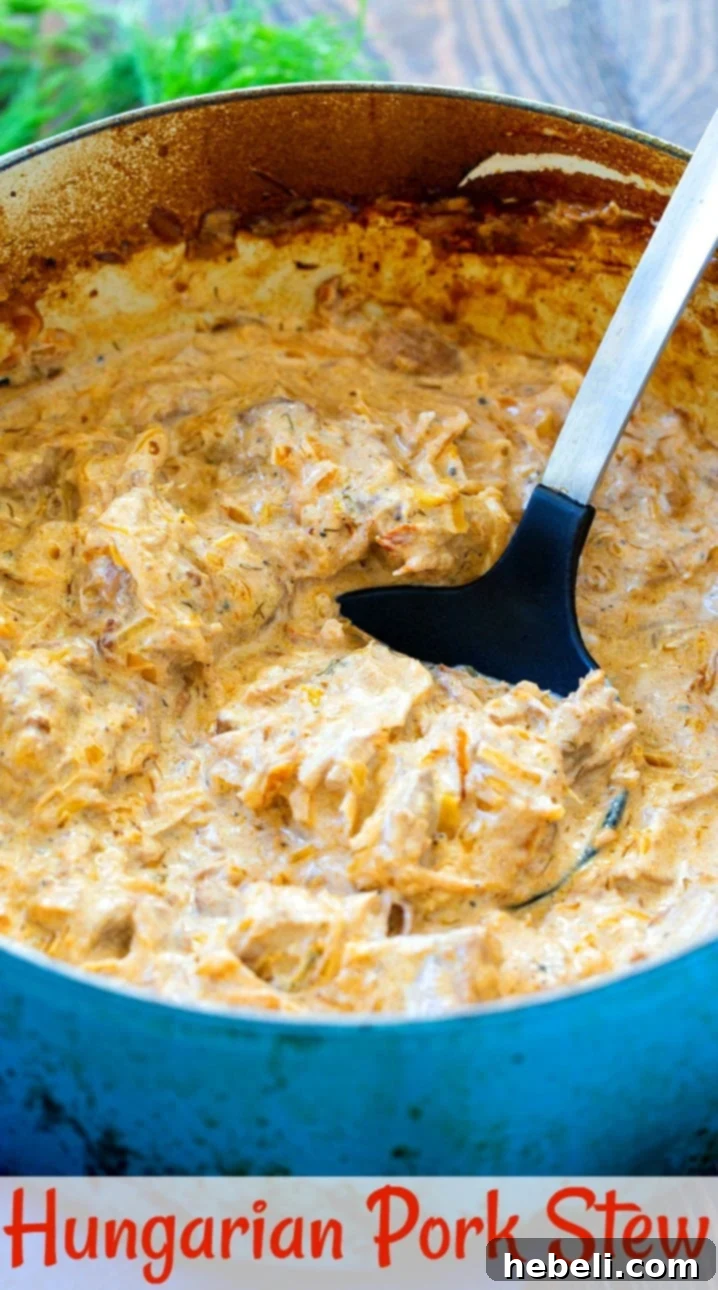
Hungarian Pork Stew

Equipment
-
Dutch Oven
Ingredients
- 2 pounds boneless pork loin, cut into 1-inch pieces
- salt and pepper
- 2 tablespoons butter
- 1 tablespoon vegetable oil
- 1 large onion, chopped fine
- 2 garlic cloves, minced
- 2 tablespoons sweet paprika
- 1 1/2 cups low-sodium chicken broth
- 1 tablespoon chopped fresh dill
- 2 pounds sauerkraut, drained and rinsed
- 2 teaspoons sugar
- 2 cups sour cream
Instructions
-
Heat oven to 300 degrees F (150 degrees C). Pat pork dry with paper towels and season with salt and pepper.
-
Heat butter and oil in a large Dutch oven over medium-high heat. When hot, add half the pork. Cook until browned on all sides. Transfer to a plate and repeat with remaining pork. Remove the second batch of pork from the Dutch oven and set aside with the first.
-
Add onion to the Dutch oven and cook for 3-5 minutes until softened and translucent, scraping up any browned bits from the bottom.
-
Add minced garlic and sweet paprika to the Dutch oven. Cook for just 30 seconds, stirring constantly, to bloom the paprika’s flavor and color. Be careful not to burn.
-
Stir in the seared pork, chicken broth, fresh dill, 1 teaspoon salt, and 1/2 teaspoon pepper. Bring the mixture to a gentle simmer on the stovetop.
-
Cover the Dutch oven and place it in the preheated oven. Cook for 1 1/2 hours until the pork is very tender.
-
Remove from oven and stir in the drained and rinsed sauerkraut and the sugar. Cover and place back in the oven for another 45 minutes to allow the flavors to meld further.
-
Once cooking is complete, remove the Dutch oven from the oven. Take it off the heat and gently stir in the sour cream until fully incorporated. Garnish with fresh dill, if desired, and serve immediately.
Notes
For the best results, try to use fresh sauerkraut from a deli or in a vacuum-sealed package rather than canned or jarred varieties. This will provide a cleaner, less acidic taste.
Nutrition
Nutrition information is automatically calculated, so should only be used as an approximation.
Did you make this?
Leave a comment below and tag us @spicysouthernkitchen on social media!
Recipe source: America’s Best Lost Recipes
Disclosure: This post contains affiliate links, meaning we may earn a small commission if you make a purchase through them, at no extra cost to you. We only recommend products we trust and believe will be beneficial to our readers.