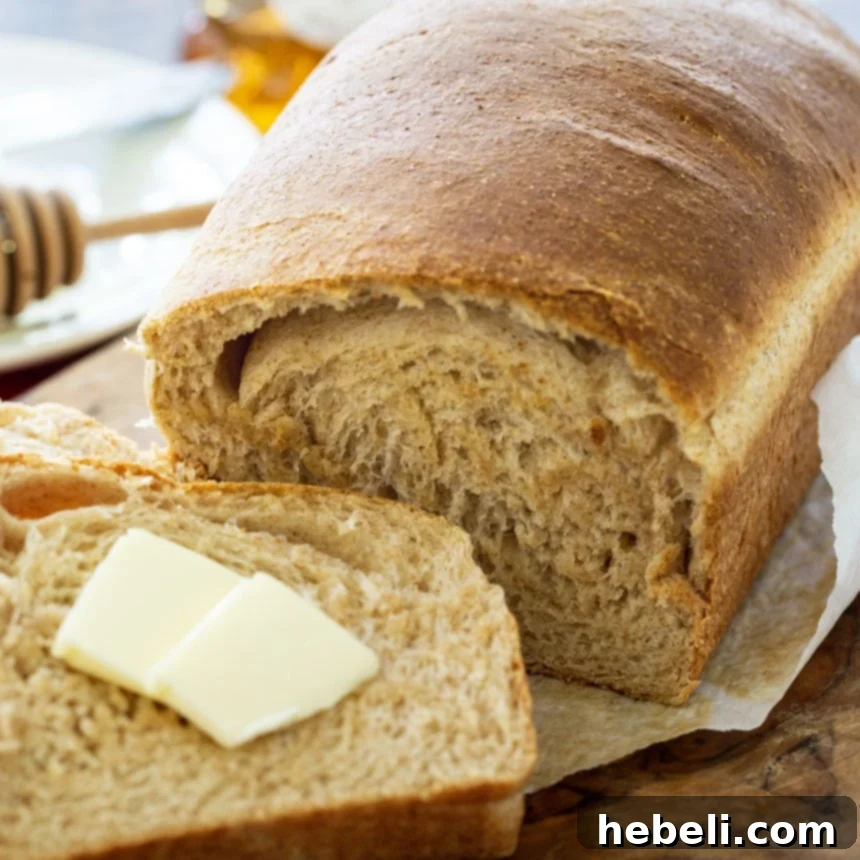
Homemade Whole Wheat Buttermilk Bread: A Rustic Recipe for Soft, Chewy Loaves
There’s nothing quite like the aroma of freshly baked bread filling your home. This Whole Wheat Buttermilk Bread recipe delivers just that – a truly delightful homemade loaf with a light, soft, and airy interior complemented by a wonderfully chewy crust. It’s the perfect canvas for your favorite sandwiches and tastes absolutely fabulous when toasted, making it an instant family favorite.
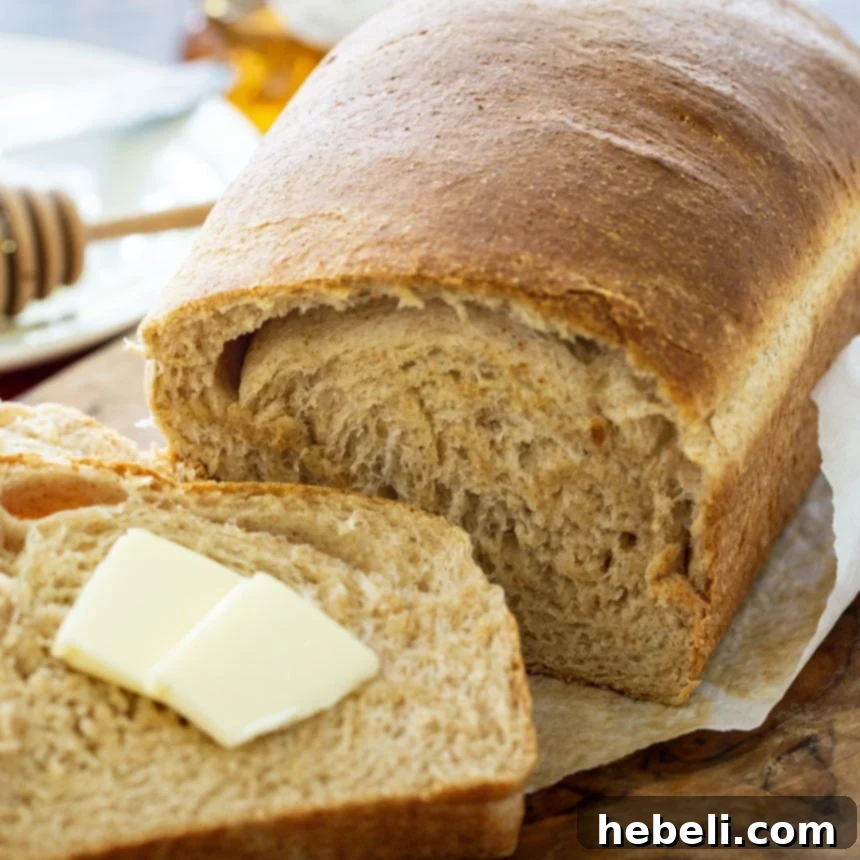
What sets this recipe apart is the subtle addition of honey, which imparts a hint of natural sweetness that beautifully enhances the earthy, wholesome flavor of the whole wheat flour. The buttermilk, a secret ingredient in many baking traditions, contributes to the bread’s incredible tenderness and a slight tangy note, creating a complex flavor profile that is both comforting and sophisticated.
This generous recipe yields two loaves of delicious bread, providing a fantastic opportunity to share the joy. You can easily gift one loaf to a friend, neighbor, or family member, or simply freeze the extra one to enjoy at a later date. Imagine having a wholesome, homemade loaf ready whenever the craving strikes!
Why Bake Whole Wheat Buttermilk Bread?
Choosing to bake with whole wheat flour and buttermilk isn’t just about delicious taste; it also brings a host of benefits that elevate your homemade bread experience. Understanding these elements can help you appreciate the magic happening in your kitchen.
The Goodness of Whole Wheat
Whole wheat flour is a nutritional powerhouse compared to its refined counterpart. It retains all parts of the wheat grain – the bran, germ, and endosperm – which means it’s packed with fiber, B vitamins, and essential minerals like iron, magnesium, and zinc. Incorporating whole wheat into your diet can support digestive health, help manage blood sugar levels, and provide sustained energy. Beyond the health benefits, whole wheat flour offers a rich, nutty, and slightly earthy flavor that adds depth and character to your bread, creating a more satisfying and hearty bite.
The Magic of Buttermilk
Buttermilk is a baker’s best friend. Its acidity reacts with leavening agents like baking soda (and in this recipe, baking powder), producing carbon dioxide that helps the dough rise and contributes to the bread’s wonderfully light and airy texture. Buttermilk also tenderizes the gluten in the dough, resulting in a softer crumb and a more delicate, less crumbly texture. Furthermore, it adds a subtle tangy flavor that complements the sweetness of honey and the earthiness of whole wheat, creating a well-rounded and complex taste. The fat content in buttermilk also ensures a moist loaf that stays fresh longer.
A Touch of Honey
Honey isn’t just a sweetener; it plays several crucial roles in this bread recipe. It provides natural sugars that feed the yeast, aiding in a robust rise and a lighter texture. The natural enzymes in honey also contribute to a beautifully golden-brown crust and help keep the bread moist for longer. Its unique floral notes perfectly balance the robust flavor of whole wheat and the tang of buttermilk, adding an extra layer of deliciousness without being overly sweet.
The Art of Making Homemade Bread: A Step-by-Step Guide
Baking bread from scratch is a deeply rewarding experience, transforming simple ingredients into a comforting staple. While it requires a bit of patience, the process itself is meditative, and the result – a warm, fragrant loaf – is unparalleled. Follow these detailed steps to master your Whole Wheat Buttermilk Bread.
1. Proofing the Yeast: Your Foundation for Success
Begin by activating your yeast. In a liquid measuring cup, combine the active dry yeast, sugar, and warm water. The water temperature is critical here; it should be between 105 and 115 degrees Fahrenheit (40-46°C). Water that’s too hot will kill the yeast, while water that’s too cold won’t activate it effectively. Let this mixture sit undisturbed for 5 minutes. After this time, the yeast should be bubbly and foamy, indicating it’s alive and ready to work. If you don’t see bubbles, your yeast might be old or the water temperature was off, and it’s best to start over with fresh yeast.
2. Mixing the Ingredients: Building Your Dough
Once your yeast is proofed, pour the bubbly mixture into the mixing bowl of a stand mixer fitted with a paddle attachment. Add the buttermilk, vegetable oil, honey, and egg. Mix these wet ingredients just long enough to ensure they are well combined. Next, incorporate the whole wheat flour, salt, and baking powder. Beat this mixture at medium speed for 2 to 3 minutes. This initial mixing helps to hydrate the flours and begin gluten development.
3. Kneading the Dough: Developing the Structure
With the mixer running on medium-low speed, gradually add the bread flour, about 1/2 cup at a time, until the dough comes together and starts to pull away from the sides of the bowl. The exact amount of bread flour may vary depending on humidity and the specific flours used, so add it cautiously until the dough is manageable but still slightly sticky. Once all the flour is incorporated, switch to a dough hook attachment if your mixer has one, or turn the dough out onto a lightly floured surface. Knead the dough for at least 8 to 10 minutes. Kneading is crucial for developing the gluten, which gives bread its structure and chewy texture. You’ll know it’s properly kneaded when it feels smooth, elastic, and passes the windowpane test (you can stretch a small piece of dough thin enough to see light through it without tearing).
4. First Rise: Patience Pays Off
Lightly grease a large bowl with a little vegetable oil. Place the kneaded dough in the bowl, turning it once to coat all sides with oil. This prevents the dough from drying out. Cover the bowl with plastic wrap or a clean kitchen towel and place it in a warm, draft-free spot. Let the dough rise until it has doubled in bulk, which typically takes about 1 ½ hours, but can vary based on ambient temperature. This first rise allows the yeast to work its magic, creating air pockets and developing flavor.
5. Shaping the Loaves: Crafting Your Masterpiece
Once the dough has doubled, gently punch it down to release the air. Turn the dough out onto a lightly floured surface and divide it into two equal pieces. For easy cleanup, you can tape a piece of parchment paper to your counter before turning out the dough. Take each piece of dough and roll it out into a rectangle, approximately 15×8 inches. Starting from one of the narrow ends, tightly roll the dough up, jelly-roll style. Once rolled, firmly pinch the seam to seal it, and then tuck the ends under to create a neat, compact loaf shape.
6. Second Rise: The Final Proof
Grease two 8½-by-4½-inch loaf pans. Carefully place each shaped loaf into a prepared pan. Cover the pans again with plastic wrap or a kitchen towel and let them rise in a warm spot for approximately 1 hour, or until the loaves have doubled in size and look puffy. This second rise, known as the “final proof,” is essential for achieving a light and airy texture in the baked bread.
7. Baking: Achieving the Perfect Golden Crust
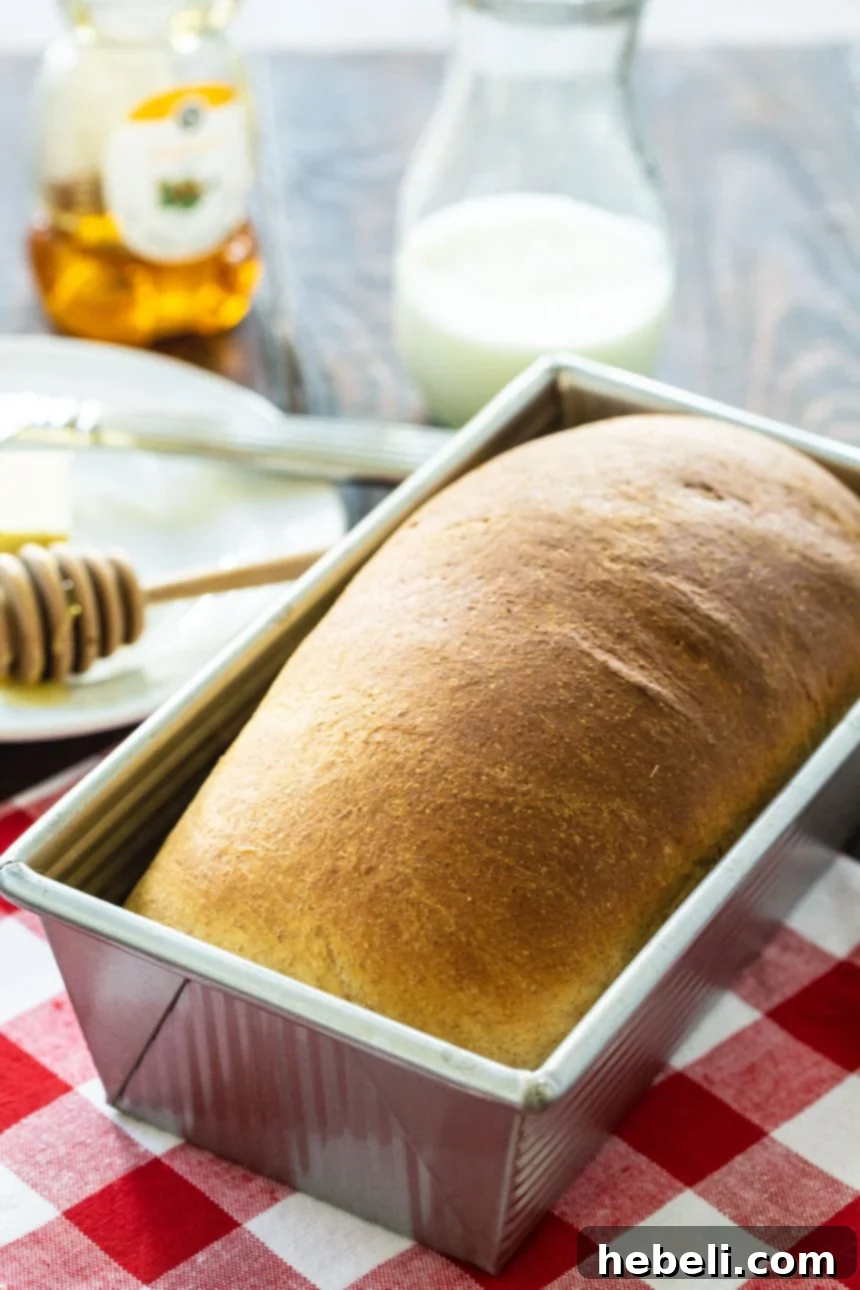
Preheat your oven to 350 degrees Fahrenheit (175°C). Bake the loaves for about 30 minutes, or until the crust is golden brown and the loaves sound hollow when tapped on the bottom. If you notice the bread browning too quickly during the last 10 minutes of baking, you can loosely cover it with aluminum foil to prevent over-browning. Once baked, remove the loaves from the pans immediately and transfer them to a wire rack to cool completely. Allowing them to cool fully prevents them from becoming soggy and helps develop their final texture and flavor.
Essential Baking Tips for Perfect Loaves
Even experienced bakers benefit from a few tried-and-true tips. Here’s how to ensure your Whole Wheat Buttermilk Bread turns out perfectly every time:
- Yeast Temperature is Key: Reiterate the importance of water temperature for yeast activation. Ensure your warm water for proofing is precisely between 105°F and 115°F (40-46°C). Anything hotter can kill the yeast, and anything colder won’t activate it effectively. Always check for bubbles after 5 minutes to confirm your yeast is active.
- Don’t Rush the Rise: Bread making requires patience. The rising times are approximate and can be affected by the temperature and humidity of your kitchen. Let the dough rise until it truly doubles in size, rather than strictly sticking to a timer. A warm, draft-free spot (like a slightly warm oven that’s turned off, or a sunny countertop) is ideal.
- Accurate Flour Measurement: For best results, measure your flours by weight using a kitchen scale. If you’re measuring by volume, spoon the flour into the measuring cup and level it off with a straight edge, rather than scooping directly from the bag, which can compact the flour and lead to adding too much.
- Adjust Flour as Needed: The amount of bread flour required can vary slightly. Factors like humidity, the brand of flour, and even the size of your egg can influence dough consistency. Add flour gradually during kneading until the dough is smooth, elastic, and no longer excessively sticky.
Storage and Enjoyment
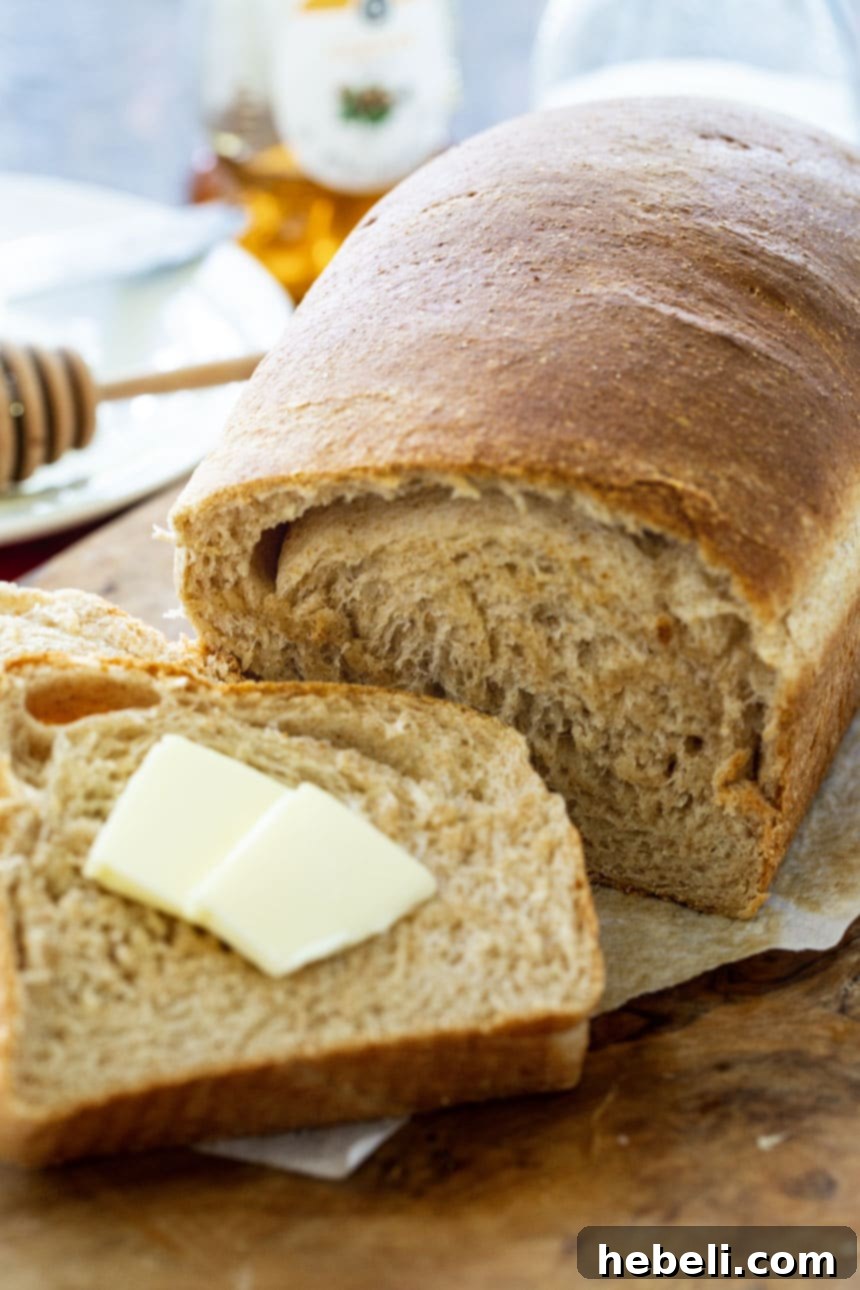
As with any homemade bread recipe, this Whole Wheat Buttermilk Bread is absolutely at its best when it’s still warm from the oven, perhaps with a pat of butter melting into its soft crumb. To maximize its fresh taste, store the bread in an airtight container at room temperature for 3 to 5 days. If you notice it starting to get a little stale, a quick toast will bring it back to life, making it perfect for sandwiches or breakfast.
For longer storage, this bread freezes beautifully. Once completely cooled, wrap each loaf tightly in plastic wrap, then again in aluminum foil, or place it in a freezer-safe bag. It will keep well in the freezer for up to 3 months. Thaw at room temperature and refresh in a warm oven for a few minutes before serving for that freshly baked experience.
Loved this recipe? Pin it now to save it for later!
Pin This Recipe!
The Whole Wheat Buttermilk Bread Recipe
Whole Wheat Buttermilk Bread
Rated 5 stars by 3 users.
Prep Time: 20 mins
Cook Time: 30 mins
Total Time: 3 hrs 20 mins
Yields: 20 servings (2 loaves)
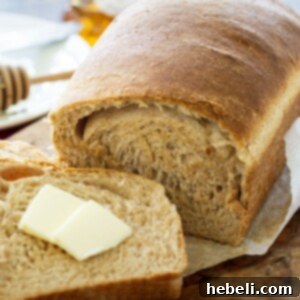
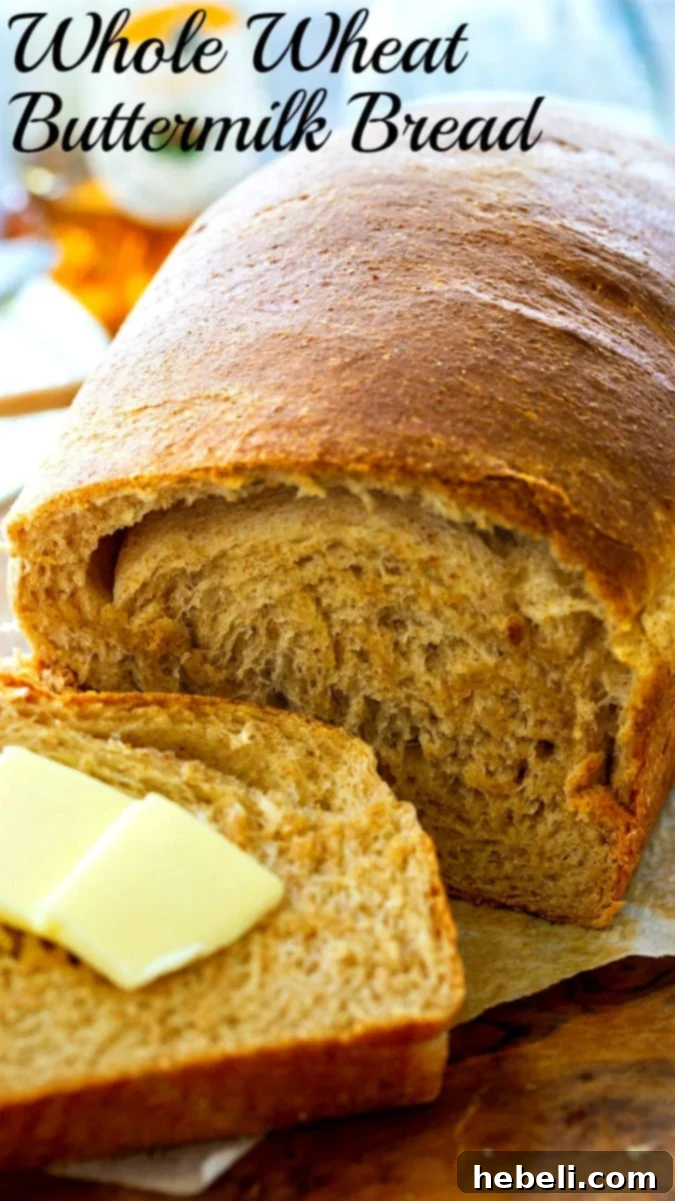
This Whole Wheat Buttermilk Bread features a light, soft, and airy inside with a delightfully chewy crust. It’s fantastic as sandwich bread and even better toasted.
Equipment
- Electric Stand Mixer
- 8×4-inch Loaf Pan (2 required for this recipe)
Ingredients
- 1 package active dry yeast
- 2 tablespoons sugar
- ½ cup warm water (105 to 115 degrees F)
- 1 cup buttermilk
- ¼ cup vegetable oil
- 3 tablespoons honey
- 1 large egg
- 1 ¾ cups whole wheat flour
- 1 teaspoon salt
- ⅛ teaspoon baking powder
- 2 ¼ to 2 ¾ cups bread flour
Instructions
- Combine the yeast, sugar, and warm water together in a liquid measuring cup. Let sit for 5 minutes until foamy.
- Pour the yeast mixture into the mixing bowl of a stand mixer (using the paddle attachment initially). Add buttermilk, oil, honey, and egg. Mix just long enough to combine.
- Add whole wheat flour, salt, and baking powder. Beat at medium speed for 2 to 3 minutes.
- With the mixer on medium-low speed, gradually add the bread flour, about ½ cup at a time, until a soft dough forms. Switch to a dough hook.
- Turn dough out onto a lightly floured surface (taping a piece of parchment paper to your counter can help with cleanup). Knead dough for 8 to 10 minutes until smooth and elastic.
- Place dough in a well-greased large bowl, turning to coat it. Cover with plastic wrap or a clean towel and let rise in a warm place until doubled in bulk, about 1 ½ hours.
- Punch dough down gently to release air and divide in half. Roll each piece out into a 15×8-inch rectangle. Starting at a narrow end, roll it up tightly. Pinch the seam to seal and tuck the ends under to form a neat loaf.
- Place each loaf in a greased 8½-by-4½-inch loaf pan. Cover and let rise until doubled, about 1 hour.
- Bake at 350 degrees F (175°C) for 30 minutes, or until the top is golden brown and the loaf sounds hollow when tapped on the bottom. If the bread is browning too much, loosely cover it with aluminum foil for the last 10 minutes of baking.
- Remove loaves from pans immediately and let cool completely on a wire rack before slicing.
Notes
This recipe makes 2 loaves of bread.
For best flavor and texture, this homemade bread is ideal when warm from the oven. Store leftovers in an airtight container for 3 to 5 days. To revive stale bread, simply toast it.
Nutrition
Calories: 92 kcal | Carbohydrates: 13g | Protein: 2g | Fat: 4g | Saturated Fat: 1g | Polyunsaturated Fat: 2g | Monounsaturated Fat: 1g | Trans Fat: 0.02g | Cholesterol: 11mg | Sodium: 136mg | Potassium: 64mg | Fiber: 1g | Sugar: 4g | Vitamin A: 34IU | Vitamin C: 0.02mg | Calcium: 21mg | Iron: 0.5mg
Nutrition information is an approximation based on standard calculations and should be used as a guideline.
More Delicious Homemade Bread Recipes
If you loved making this Whole Wheat Buttermilk Bread, you might enjoy exploring other homemade bread recipes to expand your baking repertoire:
- Honey Oat Wheat Bread
- Sally Lunn Bread
- Jalapeno Beer Bread
- Homemade Buttermilk Bread
- Bacon Cheddar Cornbread
- Sausage Spinach Bread
Did you make this recipe? We’d love to see your creations! Leave a comment below and tag us on social media using #WholeWheatButtermilkBread or @spicysouthernkitchen!
Disclosure: This post may contain affiliate links, which means we may receive a commission if you click a link and purchase something.