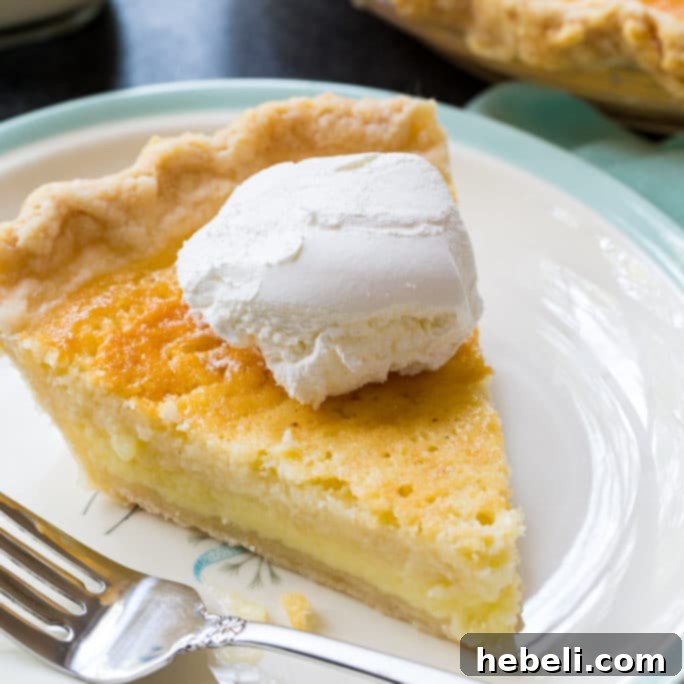
There’s a reason some recipes become timeless classics, passed down through generations. The Old-Fashioned Buttermilk Pie is undoubtedly one of them. This traditional Southern dessert is a testament to simplicity, relying on humble, everyday ingredients to create something truly extraordinary. With its smooth, creamy texture and a delightful balance of sweetness and a hint of tang, it’s a slice of pure heaven. For many, including myself, it stands out as a top-tier favorite among pies, offering a comforting taste that evokes cherished memories.
The Enduring History and Origin of Buttermilk Pie
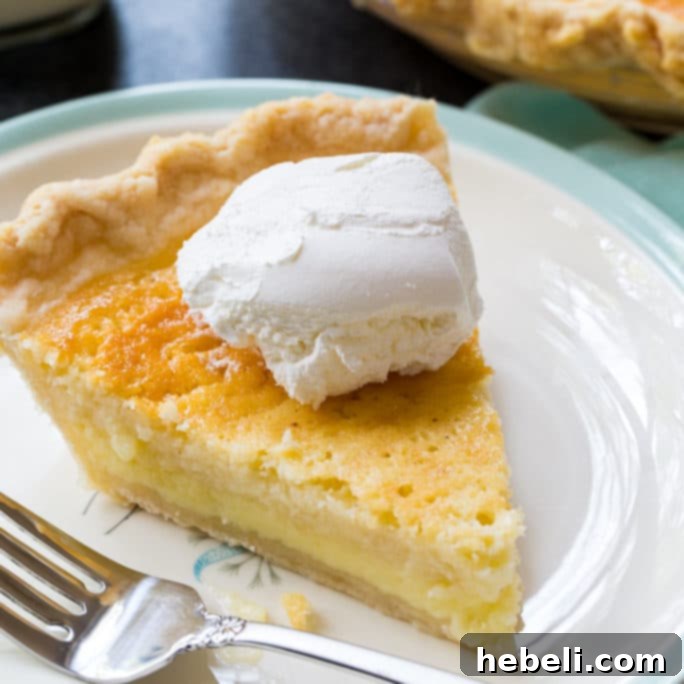
While profoundly rooted in Southern American culinary tradition, the story of Buttermilk Pie actually stretches across the Atlantic. It’s widely believed that this beloved dessert has its origins in England, where similar custard pies were a staple. Early European settlers brought these simple, thrifty recipes to America, and in the Southern states, they truly flourished. Buttermilk, a readily available byproduct of butter-making, became a common and economical ingredient in many Southern kitchens, naturally finding its way into these custard pies. Over time, the recipe evolved, adapting to local ingredients and tastes, cementing its place as a quintessential Southern comfort food. Its enduring popularity is a tribute to its delicious flavor and the resourcefulness of home cooks who turned basic ingredients into a beloved treat.
A Taste of Heaven: What to Expect from Old-Fashioned Buttermilk Pie
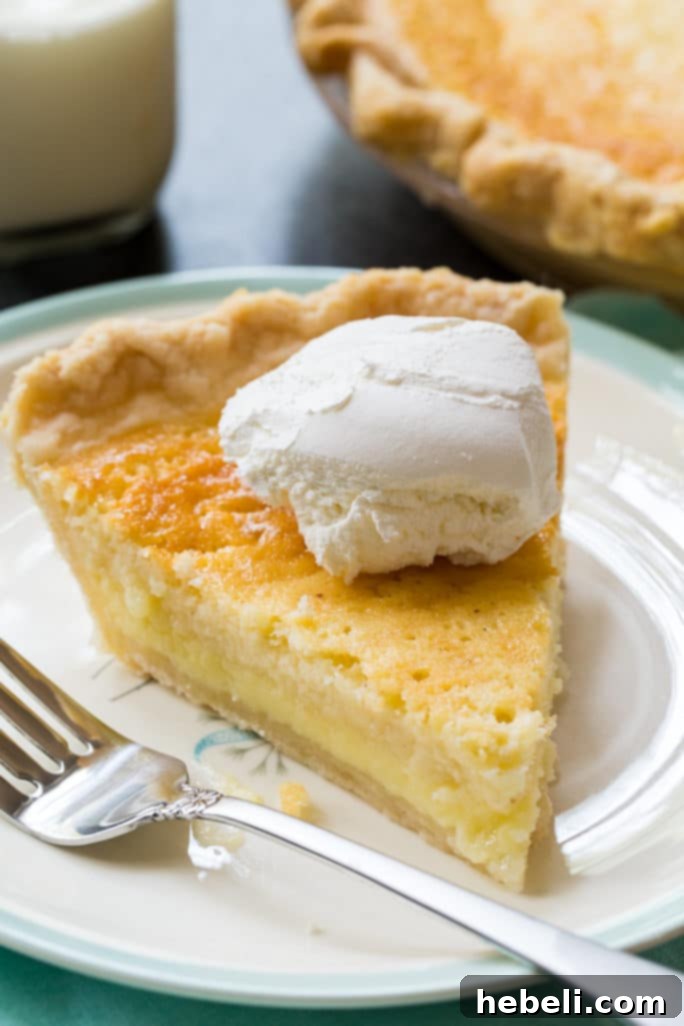
Prepare your taste buds for a truly delightful experience. Old-Fashioned Buttermilk Pie boasts a uniquely smooth, incredibly rich, and velvety custard-like filling that melts in your mouth. Its primary characteristic is an undeniable sweetness, making it an absolute dream for anyone with a serious sweet tooth. However, what truly elevates this pie is the subtle yet essential tang from the buttermilk, which provides a beautiful counterpoint to the sweetness. This delicate acidity prevents the pie from being cloyingly sweet, adding a layer of complexity and freshness that keeps you coming back for more.
The magic of this pie lies in its simple yet powerful ingredient list, which comes together in about five minutes. Key components include farm-fresh eggs for structure and richness, granulated sugar for that signature sweetness, creamy buttermilk for the characteristic tang and moisture, melted butter for a luscious, silky texture, a touch of flour to achieve the perfect thickening, and finally, a harmonious trio of lemon juice, vanilla extract, and a whisper of nutmeg to infuse the pie with warmth and aromatic depth. Each ingredient plays a crucial role in crafting this iconic dessert, delivering a flavor profile that is both comforting and sophisticated.
Buttermilk Pie vs. Chess Pie: Understanding the Nuances
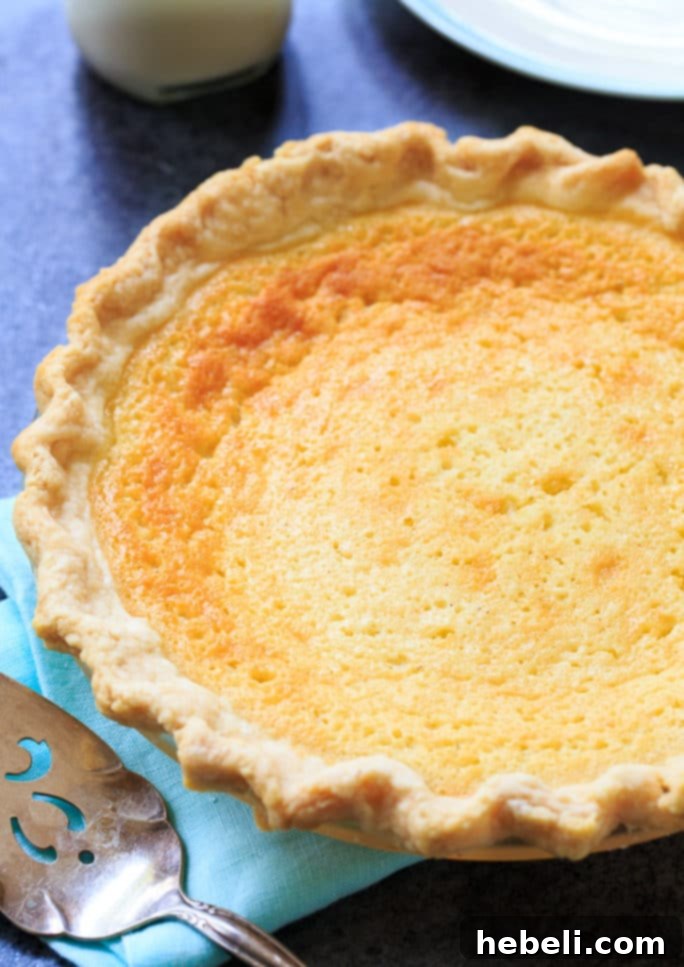
The world of Southern pies can sometimes be a delicious labyrinth, with many similar-sounding desserts. Buttermilk Pie and Chess Pie are often confused, and for good reason—they share many common characteristics and a similar custard base. Both are incredibly sweet, feature a rich, custardy filling, and typically rely on basic pantry staples like eggs, sugar, and butter. However, there’s a key distinction that sets them apart: the inclusion of cornmeal in Chess Pie.
Traditional Chess Pie recipes almost always call for a small amount of cornmeal, which gives its filling a slightly denser, grainier texture, and a distinct, almost savory undertone. This cornmeal is often responsible for the slightly “gritty” feel that some describe in Chess Pie, providing a pleasant contrast to the otherwise smooth filling. Buttermilk Pie, on the other hand, typically omits cornmeal, resulting in a filling that is uniformly smooth, incredibly creamy, and purely custard-like. While both are undeniably delicious and deeply Southern, the textural difference is the most reliable way to tell them apart. If you’re eager to explore the Chess Pie family, I highly recommend this Chocolate Chess Pie for a decadent twist or this bright Lemon Chess Pie for a zesty delight.
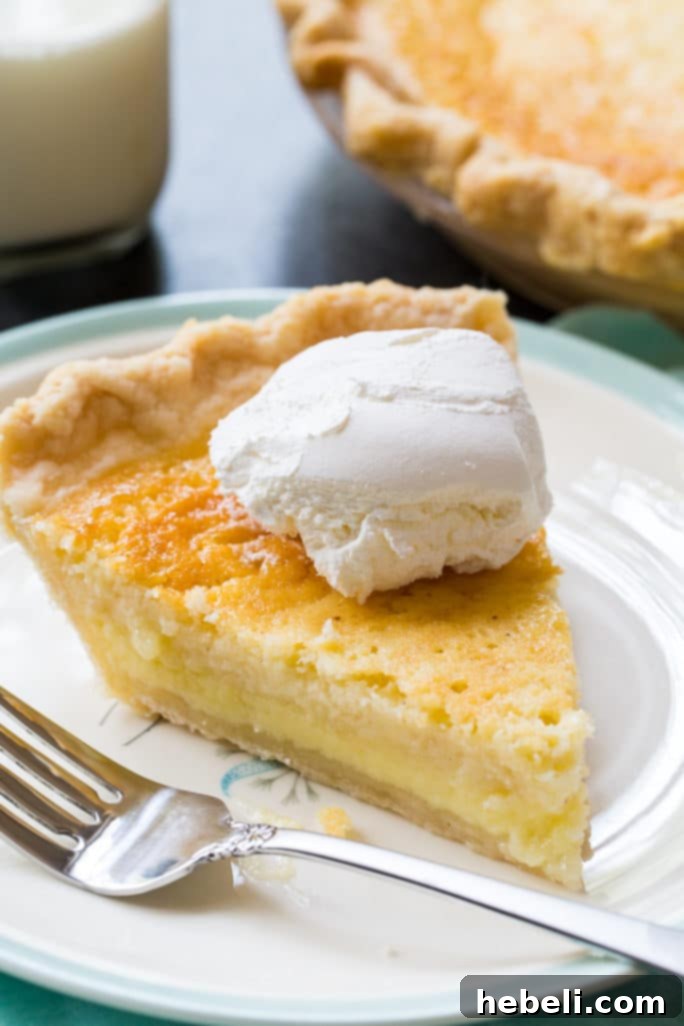
A great pie starts with a great crust. For your Old-Fashioned Buttermilk Pie, you have the flexibility to choose between a convenient store-bought pie crust or the satisfaction of crafting your own homemade version. While a pre-made crust certainly saves time, creating a homemade flaky crust adds an extra layer of love and flavor that truly elevates the entire dessert. A perfectly flaky, buttery crust provides the ideal foundation and textural contrast to the smooth, sweet filling. If you’re new to pie making or simply looking for reliable techniques, learning to make a homemade crust is a rewarding endeavor. Watch this video below to learn how to make an easy homemade Flaky Pie Crust.
Troubleshooting Your Buttermilk Pie: Why Is It Runny?
Achieving that perfect, set custard filling is key to a successful Buttermilk Pie. If you find your pie to be runny after baking, there are a few common culprits to investigate. Most frequently, a runny pie indicates that it simply hasn’t baked long enough. Custard pies require adequate time in the oven to set properly, transforming from a liquid batter into a firm, jiggly filling. The edges should be set, and the center should have a slight wobble when gently shaken, but not slosh like liquid. Another potential reason is not adding the full three tablespoons of flour, which acts as a crucial thickener in this recipe. Flour helps to stabilize the custard and provides the necessary structure.
Beyond baking time and ingredients, proper chilling is absolutely essential. Even if the pie seems set when it comes out of the oven, it continues to firm up considerably as it cools. Rushing to slice a warm pie will almost always result in a runny mess. Allow your Buttermilk Pie to cool completely at room temperature, then refrigerate it for several hours, ideally overnight, before attempting to slice and serve. This cooling period allows the custard to fully set, ensuring clean, beautiful slices every time.
Serving Suggestions for Your Buttermilk Pie
One of the beauties of Old-Fashioned Buttermilk Pie is its versatility in serving temperature. Whether you prefer it warm, at room temperature, or thoroughly chilled, it offers a delightful experience. Many enthusiasts, especially during warmer months, swear by serving it straight from the refrigerator. The chilled pie becomes incredibly cool, refreshing, and even creamier, providing a wonderfully decadent contrast to hot weather. A warm slice, perhaps with a dollop of vanilla ice cream, offers a comforting, homey feel perfect for cooler evenings. At room temperature, the flavors are often most pronounced and balanced.
To truly elevate the experience, consider pairing your Buttermilk Pie with a few simple garnishes. A dusting of powdered sugar, a swirl of freshly whipped cream, or a scattering of fresh berries (like blueberries or raspberries) can add visual appeal and an extra layer of flavor and texture. A steaming cup of coffee or a chilled glass of sweet tea makes for the perfect accompaniment.
Storage Tips for Optimal Freshness
To maintain its delicious flavor and creamy texture, Old-Fashioned Buttermilk Pie should always be refrigerated. After it has completely cooled, wrap the pie well with plastic wrap or aluminum foil to prevent it from absorbing other odors in your refrigerator and to keep it fresh. When properly stored, it will keep beautifully in the refrigerator for approximately 5 days. It’s perfectly normal for the pie to “weep” a little (release a small amount of liquid) over time, especially after a day or two; this is a natural occurrence with custard pies and does not indicate spoilage.
Can Buttermilk Pie be frozen? Absolutely! This pie freezes exceptionally well, making it a fantastic make-ahead dessert. To freeze, wrap the cooled pie tightly in several layers of plastic wrap, followed by a layer of aluminum foil. It can be frozen for up to 2 months. When you’re ready to enjoy it, thaw the pie overnight in the refrigerator before serving.
Expand Your Horizons: More Buttermilk Pie Recipes
While the classic Old-Fashioned Buttermilk Pie is perfect in its simplicity, the versatility of its base recipe allows for wonderful variations. Once you’ve mastered the traditional version, you might enjoy experimenting with these delightful twists that build upon the creamy, tangy foundation:
- Coconut Buttermilk Pie: For lovers of tropical flavors, this version introduces shredded coconut into the creamy filling, adding a chewy texture and fragrant aroma that pairs beautifully with the tangy custard.
- Blueberry Buttermilk Pie: Bursting with fresh or frozen blueberries, this pie offers a delightful fruity tartness that complements the rich sweetness of the buttermilk filling, creating a vibrant and summery dessert.
- Sweet Potato Buttermilk Pie: A true Southern fusion, this pie combines the earthy sweetness of mashed sweet potatoes with the classic buttermilk custard, resulting in a comforting, spiced, and incredibly rich pie, perfect for holiday gatherings.
Old-Fashioned Buttermilk Pie
By Christin Mahrlig

Pin
Ingredients
- 3 large eggs
- 1 1/2 cups granulated sugar
- 1/2 cup unsalted butter, melted and cooled slightly
- 3 tablespoons all-purpose flour
- 1 cup buttermilk
- 1 tablespoon fresh lemon juice
- 1 teaspoon vanilla extract
- 1/8 teaspoon ground nutmeg
- Pinch of salt
- 1 9-inch pie crust, unbaked (homemade or store-bought)
Instructions
-
Preheat your oven to 400°F (200°C).
-
In a large mixing bowl, whisk together the eggs and granulated sugar until well combined and slightly frothy. This ensures a smooth filling.
-
Gradually whisk in the cooled melted butter, flour, buttermilk, lemon juice, vanilla extract, ground nutmeg, and a pinch of salt. Continue whisking until the mixture is completely smooth and no lumps remain.
-
Carefully pour the prepared filling into your unbaked 9-inch pie crust.
-
Bake in the preheated oven at 400°F (200°C) for 10 minutes. This initial high heat helps set the crust and begin the custard setting process.
-
Reduce the oven temperature to 350°F (175°C) and continue baking for an additional 40 to 45 minutes, or until the pie’s edges are set and lightly golden, and the center has a slight wobble when gently shaken. Avoid over-baking, as this can lead to a less creamy texture.
-
Remove the pie from the oven and let it cool completely on a wire rack. For the best results and a perfectly set slice, refrigerate the pie for at least 3-4 hours, or preferably overnight, before serving.
Recipe Video
Nutrition information is automatically calculated and should only be used as an approximation.
Did you make this?
Leave a comment below and tag us @spicysouthernkitchen on social media!
A Concluding Note on this Southern Sweetheart
The Old-Fashioned Buttermilk Pie truly embodies the spirit of Southern baking: simple ingredients, heartfelt preparation, and utterly delicious results. It’s a dessert that transcends trends, offering a comforting slice of tradition with every creamy, sweet, and subtly tangy bite. Whether you’re a seasoned baker or a curious newcomer to the world of Southern sweets, this recipe is a must-try. Its ease of preparation combined with its irresistible flavor makes it a perfect addition to any meal, a delightful treat for family and friends, or simply a comforting indulgence for yourself. Enjoy the process of bringing this timeless classic to life in your own kitchen.
Disclosure: This post may contain affiliate links.