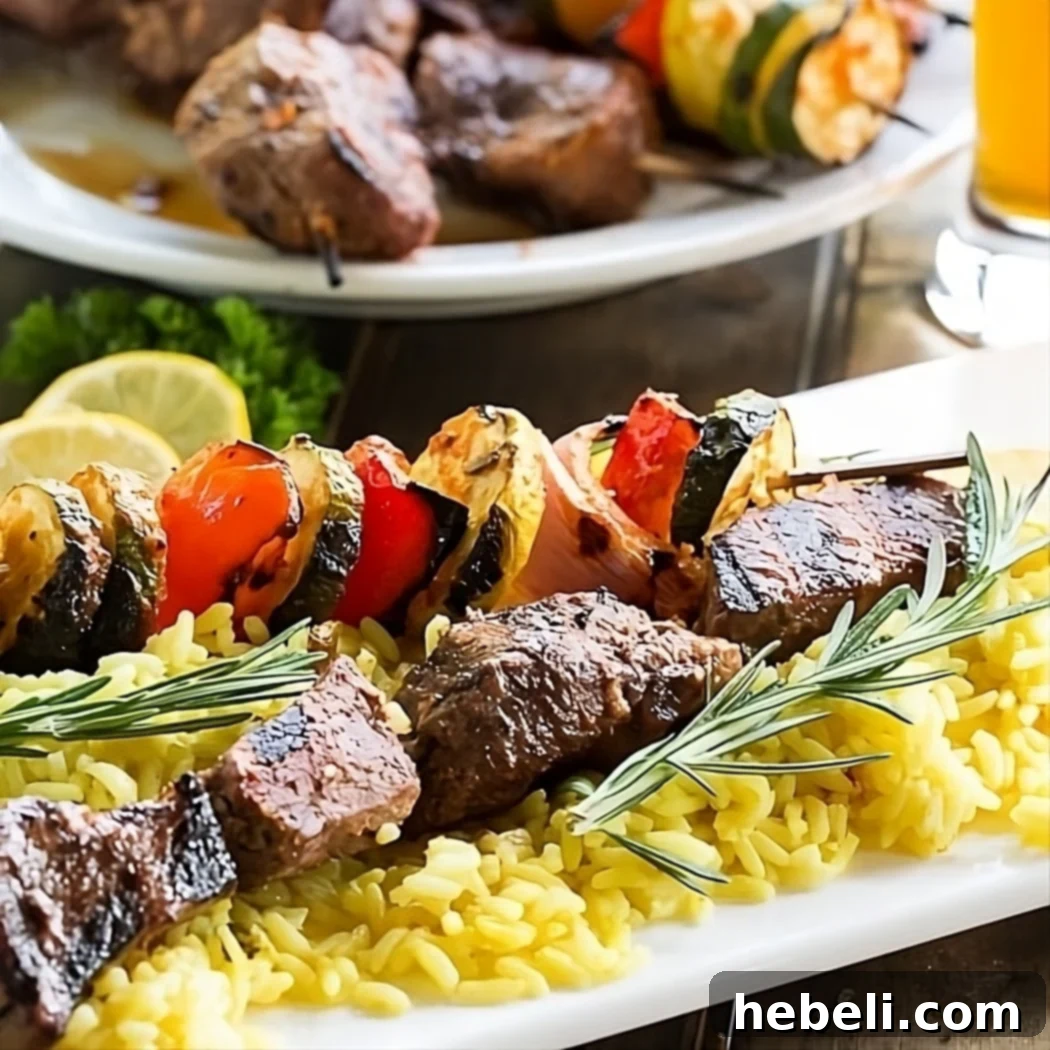
Mastering Grilled Beef Kabobs: Your Ultimate Guide to Flavorful Summer Skewers
Imagine succulent chunks of sirloin steak, tenderized and infused with a vibrant lemon and rosemary marinade, grilled to perfection alongside colorful bell peppers, red onion, and tender zucchini. These aren’t just any kabobs; they’re a symphony of flavors and textures, adorned with beautiful grill marks, promising an unforgettable outdoor dining experience.
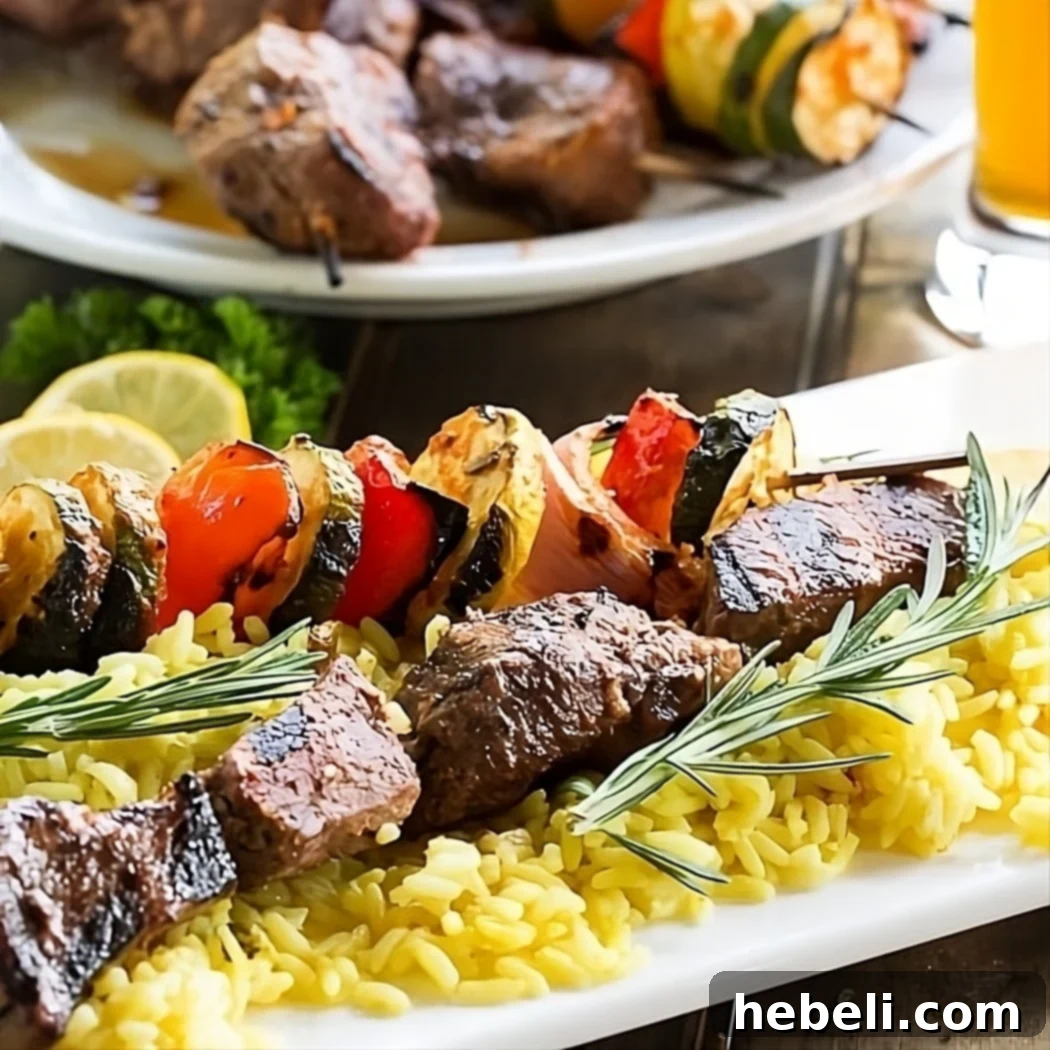
Paired with a fluffy bed of yellow or white rice, these grilled beef kabobs transform into a complete, appealing, and satisfying summer meal. They epitomize effortless elegance, allowing you to enjoy the great outdoors while savoring restaurant-quality flavors right from your backyard grill.
Why Grilled Beef Kabobs Are a Summer Staple
There’s something inherently appealing about food on a stick, especially during the warmer months. Grilled beef kabobs stand out as a quintessential summer dish for several compelling reasons. They cook quickly, are incredibly versatile, and best of all, they keep your kitchen spotless, leaving more time for relaxation and enjoyment. The act of grilling itself adds a unique smoky depth and char that simply can’t be replicated indoors, making kabobs a favorite for family gatherings, barbecues, and casual weeknight dinners.
Beyond their convenience, beef kabobs offer a balanced meal, combining protein-rich meat with an array of fresh, colorful vegetables. This recipe elevates the classic kabob by focusing on a robust, flavor-packed marinade that penetrates every piece of steak and vegetable, ensuring a tender, juicy, and aromatic bite every time. It’s a dish that looks as good as it tastes, promising a delightful culinary experience that will have everyone asking for seconds.
Crafting the Perfect Lemon Rosemary Marinade
The secret to truly exceptional beef kabobs lies in an extraordinary marinade, and this recipe delivers just that. Our ultra-thick marinade is a powerhouse of flavor, meticulously blended to coat every surface of the meat and vegetables, ensuring maximum absorption and taste. It combines aromatic components like beef broth, rich tomato paste, generous amounts of fresh garlic and onion, fragrant rosemary, and zesty lemon. Each ingredient plays a crucial role:
- Beef Broth & Tomato Paste: Provide a deep, savory base and umami richness, enhancing the beef’s natural flavor.
- Garlic & Onion: Offer pungent, aromatic notes that are fundamental to almost any savory dish, building layers of complexity.
- Fresh Rosemary: Imparts an earthy, pine-like aroma and distinctive flavor that pairs beautifully with beef and lemon.
- Lemon Zest: Delivers a bright, citrusy counterpoint, cutting through the richness of the beef and adding an invigorating freshness.
- Kosher Salt: More than just a seasoning, a generous amount of salt (two full teaspoons in this recipe) acts as a brine. It helps dissolve some of the meat’s proteins, allowing the muscle fibers to absorb and retain more moisture. This process results in noticeably juicier and more tender beef after grilling.
- Sugar & Pepper: A touch of sugar balances the acidity and promotes caramelization during grilling, while pepper adds a subtle warmth and spice.
- Dried Thyme: Contributes an additional layer of herbaceousness, complementing the rosemary without overpowering it.
All these ingredients are processed in a blender until wonderfully smooth, creating a luxurious, thick consistency that adheres perfectly to every piece of meat and vegetable. This comprehensive marinade is what transforms simple ingredients into an extraordinary dish.
Choosing the Best Beef for Your Kabobs
The quality of your beef significantly impacts the tenderness and flavor of your kabobs. While many cuts can work, some are undeniably superior for grilling on a skewer. My top recommendation, whenever available and on sale, is **ribeye**. Ribeye is renowned for its rich marbling, which translates to incredible flavor and buttery tenderness when cooked. Its fat renders beautifully on the grill, keeping the meat moist and adding depth.
If ribeye isn’t an option, **sirloin steak** is an excellent alternative. It’s leaner than ribeye but still offers great beefy flavor and good tenderness, especially when cut into appropriate chunks and marinated properly. Sirloin is a more economical choice that doesn’t compromise too much on quality, making it a popular option for kabobs.
For those looking to truly splurge and indulge in the most tender experience, **beef tenderloin** (also known as filet mignon) is the way to go. This cut is incredibly lean and exceptionally tender, almost melting in your mouth. However, it lacks the intense beefy flavor of a ribeye, so a robust marinade like ours is even more crucial to impart a rich taste.
Regardless of the cut you choose, ensure the beef is cut into uniform 2-inch chunks. This consistency is vital for even cooking, preventing some pieces from drying out while others remain undercooked. Always aim to cut against the grain where possible, which further aids in tenderness.
The Secret to Perfect Kabobs: Cook Meat and Veggies Separately
While aesthetically pleasing, combining meat and vegetables on the same skewer often leads to an unevenly cooked meal. This is a common pitfall that can easily be avoided. Beef and vegetables have vastly different cooking times and ideal doneness levels. If you skewer them together, the beef will inevitably be overcooked and dry by the time the vegetables achieve that perfect tender-crisp texture with appealing char marks.
My unwavering recommendation is to always separate them onto different skewers. This strategic approach allows you to cook each component to its individual perfection:
- Beef Skewers: Can be cooked over higher heat for a shorter duration to achieve a beautiful sear and your desired internal doneness (medium-rare to medium is often preferred for tenderness).
- Vegetable Skewers: Require a slightly longer cooking time over moderate heat to become tender and develop those desirable smoky, caramelized edges without burning. Typically, veggie kabobs will need about 5 minutes longer on the grill than their beef counterparts.
Not only does this method guarantee superior results for both the meat and the vegetables, but it also offers practical benefits. For instance, it easily accommodates different dietary preferences, like serving my vegetarian daughter without compromise. Plus, it simplifies the grilling process, allowing you to focus on managing the cooking of each specific item effectively.
Optimal Marinating Time for Tenderness and Flavor
Marinating is a crucial step for infusing flavor and tenderizing the beef, but there’s a sweet spot for how long to let it sit. For this recipe, aim to marinate the beef for at least 1 to 2 hours. This duration is sufficient for the robust lemon and rosemary marinade to penetrate the meat, delivering its complex flavors and beginning the tenderization process.
However, it’s equally important not to over-marinate. Due to the significant amount of salt and lemon (which contains acid) in this marinade, extended exposure can negatively impact the beef’s texture. Beyond 4 hours, the salt can start to “cure” the meat too much, potentially leading to a slightly firmer or even mushy texture, rather than tender. The acidity from the lemon can also begin to break down the proteins excessively if left too long. Therefore, stick to the recommended window of 1 to 4 hours for the best results – tender, flavorful, and perfectly textured beef.
Grilling Your Kabobs to Perfection
Achieving those beautiful grill marks and perfectly cooked kabobs is simpler than you might think with a few key steps:
- Prepare Your Grill: For a gas grill, preheat all burners to HIGH for about 15 minutes. This creates a super hot surface for searing. After preheating, maintain one primary burner on HIGH and adjust the other burner(s) to medium-low. This creates two heat zones: a hot zone for searing the beef and a cooler zone for gently cooking the vegetables. For charcoal grills, aim for a two-zone fire with one side very hot and the other medium.
- Clean and Oil Grates: Always start with clean grates to prevent sticking. Once hot, use a wire brush to scrape off any residue, then carefully oil the grates with a paper towel dipped in high-smoke-point oil (like vegetable or canola oil), held by tongs.
- Positioning: Place the beef kabobs over the hot side of the grill to achieve a quick sear and delicious grill marks. Position the vegetable kabobs on the cooler side to allow them to cook through without burning.
- Cook and Turn: Cover the grill to trap heat and smoke, which aids in even cooking and flavor development.
- For beef, cook for a total of 12 to 16 minutes, turning the skewers every 3 to 4 minutes to ensure even cooking and charring on all sides. Adjust cooking time based on your desired doneness (e.g., less time for medium-rare, more for well-done). An internal thermometer should read 130-135°F (54-57°C) for medium-rare.
- For vegetables, turn them every 3 to 4 minutes as well, but allow them to cook for approximately 5 minutes longer than the beef. You want them tender-crisp with some lovely charring.
- Rest: Once cooked, remove the kabobs from the grill. Let the beef rest for 5-10 minutes off the skewers before serving. This allows the juices to redistribute, ensuring maximum tenderness and flavor.
Serving Suggestions and Perfect Pairings
These grilled beef kabobs are incredibly versatile and can be served with a variety of complementary dishes to create a truly memorable meal. My personal favorite way to enjoy them is over a fragrant bed of yellow rice or simple white rice. The rice soaks up the delicious juices and marinade drippings from the kabobs, making every bite incredibly flavorful.
To round out the meal, consider serving a refreshing side salad. Here are some fantastic options:
- Marinated Tomato, Cucumber, and Onion Salad: Its bright, tangy flavors and crisp textures offer a wonderful contrast to the rich beef and grilled vegetables.
- Chipotle Corn Salad: For a touch of smoky sweetness and a hint of spice, this salad adds an exciting dimension.
- Bacon and Ranch Cauliflower Salad: If you’re looking for something a bit more indulgent and creamy, this salad provides a delightful balance.
Other excellent sides include couscous, quinoa, roasted potatoes, or a simple green salad with a light vinaigrette. Don’t forget a squeeze of fresh lemon juice over the finished kabobs right before serving to brighten all the flavors!
Storage and Make-Ahead Tips
Leftover grilled beef kabobs are just as delicious the next day! Store any uneaten kabobs in an airtight container in the refrigerator for up to 4 days. They can be reheated gently in a microwave, oven, or even quickly on a stovetop for a convenient and flavorful meal.
For make-ahead convenience, you can prepare the marinade up to 2 days in advance and store it in the refrigerator. Cut your beef and vegetables a day ahead, keeping them separate. When you’re ready to cook, simply marinate the beef and assemble the skewers!
If you’re looking for another fantastic kabob recipe to add to your grilling repertoire, be sure to try these Chicken and Bacon Kabobs. They are absolutely delicious and offer a different flavor profile for variety!
Grilled Beef Kabobs Recipe
A thick marinade made from beef broth, tomato paste, garlic, onion, lemon zest, and rosemary gives these beef and vegetable kabobs tons of flavor. Serve over yellow rice for a wonderful summer meal.
Author: Christin Mahrlig
Rating: 5 out of 5 stars (from 1 vote)
Prep Time: 1 hour 35 minutes
Cook Time: 16 minutes
Total Time: 1 hour 51 minutes
Yields: 6 servings
Equipment
- Blender
- Skewers (metal or wooden, soaked)
Ingredients
Marinade
- 1 onion, chopped
- 1/3 cup beef broth
- 1/3 cup vegetable oil
- 3 tablespoons tomato paste
- 4 cloves garlic, chopped
- 1 tablespoon chopped fresh rosemary
- 2 teaspoons grated lemon zest
- 2 teaspoons kosher salt
- 1 1/2 teaspoons sugar
- 3/4 teaspoon pepper
- 1/4 teaspoon dried thyme
Beef and Vegetables
- 2 pounds sirloin steak tips, cut into 2-inch chunks
- 1 zucchini, sliced
- 1 yellow squash, sliced
- 1 red bell pepper, cut into 1 1/2-inch pieces
- 1 red onion, cut into chunks
Instructions
- To make the marinade, process all marinade ingredients in a blender until smooth. Place 3/4 cup of the marinade in a large bowl and set aside for the vegetables.
- Place the remaining marinade in a large zip-top bag with the beef. Toss to coat thoroughly and refrigerate for at least 1 to 2 hours, but not more than 4 hours.
- Place the sliced vegetables in the bowl with the reserved marinade and toss gently to coat. Cover and let sit at room temperature for at least 30 minutes while the grill heats up.
- Remove beef from the bag and pat it dry with paper towels. This helps achieve a better sear. Thread the beef onto metal skewers or pre-soaked wooden skewers. Thread the vegetables on separate skewers.
- Heat a gas grill with all burners turned to HIGH for about 15 minutes. Once hot, leave the primary burner on HIGH and turn the other burner or burners to medium-low to create two heat zones.
- Clean and oil the hot grates. Place the beef kabobs on the hot side of the grill and the vegetable kabobs on the cooler side.
- Cover the grill and cook the beef for 12 to 16 minutes, turning the skewers every 3 to 4 minutes to ensure even cooking and beautiful grill marks.
- Turn the vegetable skewers every 3 to 4 minutes as well, but allow them to cook for approximately 5 minutes longer than the beef, or until tender-crisp with nice charring.
- Remove all kabobs from the grill. Let the beef rest for 5-10 minutes before serving.
Notes
Want to make this recipe spicy? Add half a teaspoon of crushed red pepper flakes to the marinade for an extra kick!
Recipe adapted from Cook’s Illustrated.
Nutrition
Nutrition information is an approximation per serving:
- Calories: 357 kcal
- Carbohydrates: 10g
- Protein: 35g
- Fat: 19g
- Saturated Fat: 5g
- Polyunsaturated Fat: 7g
- Monounsaturated Fat: 6g
- Trans Fat: 0.1g
- Cholesterol: 92mg
- Sodium: 980mg
- Potassium: 884mg
- Fiber: 2g
- Sugar: 6g
- Vitamin A: 878 IU
- Vitamin C: 42mg
- Calcium: 72mg
- Iron: 3mg
Nutrition information is automatically calculated, so should only be used as an approximation.
Did you make this?
Leave a comment below and tag us @spicysouthernkitchen on social media! We love seeing your creations!
Originally posted July 31, 2014. Updated and revised for clarity and SEO.