Easter Egg Bread: A Delightful & Festive Centerpiece for Your Spring Celebrations
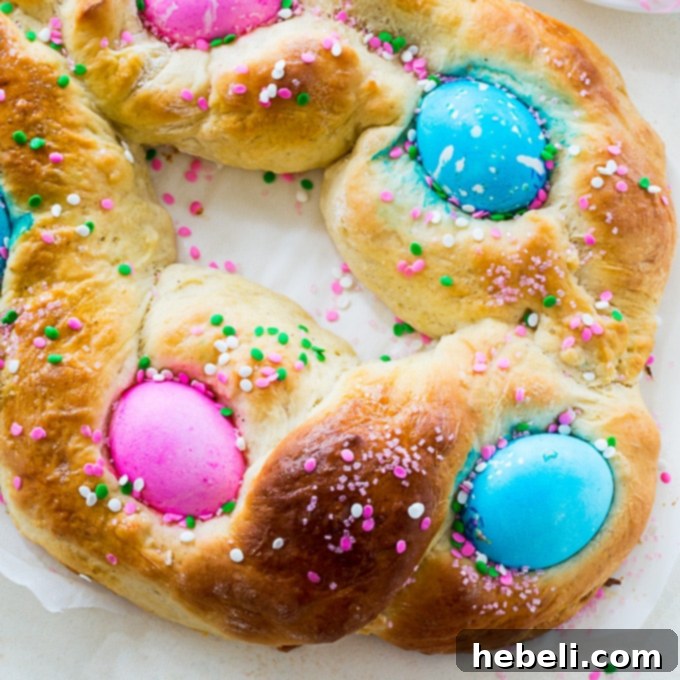
Step into the heartwarming tradition of Easter with a beautifully crafted Easter Egg Bread. This cherished sweet yeast bread is more than just a recipe; it’s a vibrant symbol of spring and renewal, making it a perfect centerpiece for your holiday table. Imagine a light, buttery brioche-like dough, subtly flavored with a hint of warm nutmeg and fragrant orange zest, cradling brightly colored, real dyed eggs right in its embrace. Each loaf is a work of art, promising both visual appeal and an utterly delicious experience. To complete this festive treat, we’ll adorn it with a sweet, glossy glaze and a scattering of cheerful sprinkles, transforming it into an unforgettable delight for family and friends. Get ready to bake a true Easter masterpiece that will capture hearts and palates alike with this traditional homemade Easter bread recipe.
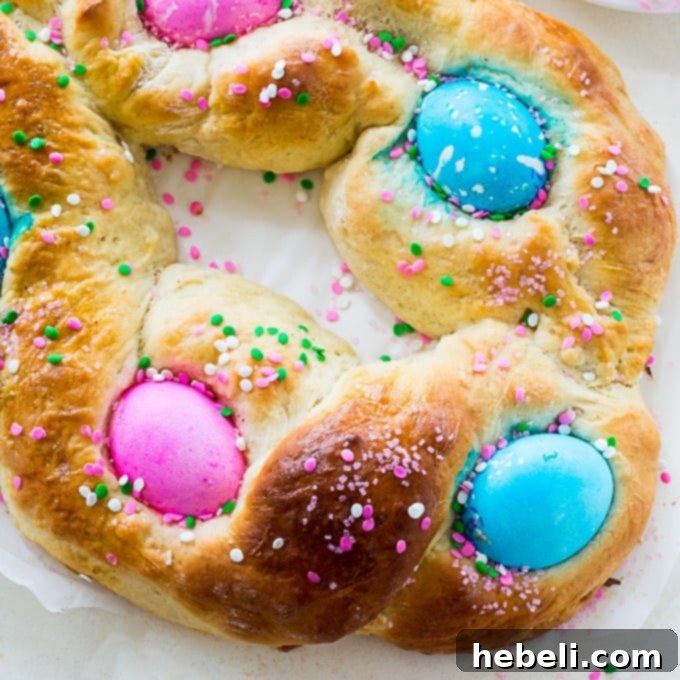
The tradition of Easter breads, often enriched with eggs, dates back centuries in many cultures. These sweet loaves symbolize new life and celebration, perfectly embodying the spirit of Easter. Our Easter Egg Bread takes this tradition and infuses it with simple, approachable baking techniques, ensuring that even novice bakers can achieve stunning results. The incorporation of real dyed eggs not only makes the bread visually striking but also offers a fun, interactive element to the baking process, especially if you involve children in the egg-dyeing step. The combination of a soft, tender crumb and the gentle sweetness makes this bread irresistible for breakfast, brunch, or a special dessert.
The Heart of the Recipe: Crafting the Perfect Sweet Dough
The magic of our homemade Easter Egg Bread truly begins with the dough. This recipe features a subtly sweet, enriched yeast dough that’s incredibly easy and satisfying to prepare. Infused with a delicate balance of warm nutmeg and bright, aromatic orange zest, the flavors are perfectly tuned for a spring celebration. One of the best parts? The dough is exceptionally cooperative, making it a dream for both experienced bakers and those new to working with yeast. While your stand mixer will do the initial heavy lifting, a brief period of hand kneading offers a wonderfully therapeutic and tactile experience, allowing you to connect with your baking creation on a deeper level. This hands-on step ensures a smooth, elastic dough, which is the secret to a perfectly light and fluffy finished bread. The richness comes from whole milk and butter, creating a tender crumb that melts in your mouth.
The Perfect Finishing Touch: A Sweet and Glossy Glaze
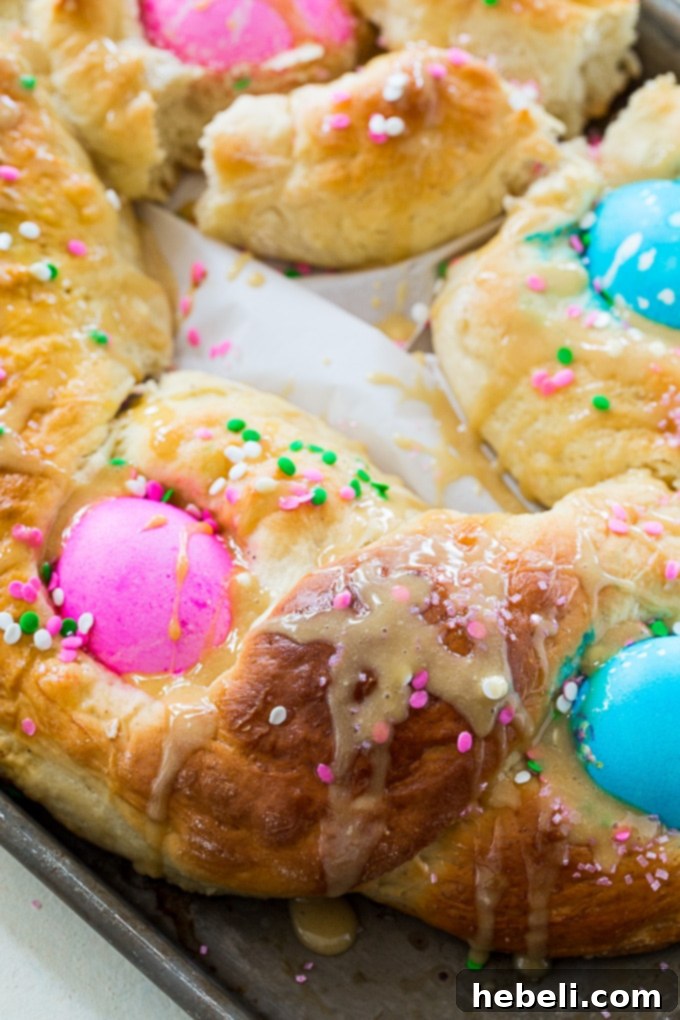
While this delightful Easter bread is absolutely scrumptious on its own, perhaps enjoyed warm with a generous smear of butter, it truly reaches its peak with our exquisite homemade glaze. This particular recipe calls for a unique glaze sweetened with cane syrup. If you haven’t encountered cane syrup before, it’s a delightful, rich sweetener that offers a depth of flavor distinct from maple or corn syrup. It brings a subtle caramel-like note that complements the bread’s spices beautifully. While it might sometimes be a little challenging to find in local grocery stores, cane syrup is readily available online and boasts an impressive versatility in your kitchen. Beyond enhancing your Easter Egg Bread, cane syrup is a star ingredient for classic Southern pecan pies, adds a sublime touch to cocktails like an Old-Fashioned or Mint Julep, and makes a fantastic drizzle for your morning pancakes or waffles. If cane syrup proves elusive, don’t worry! You can substitute it with maple syrup for a slightly different but equally delicious flavor profile, or simply increase the milk slightly to maintain consistency, as noted in our recipe tips.
Expert Tips for Baking Flawless Easter Egg Bread
Achieving a picture-perfect and delicious Easter Egg Bread is easier than you think with a few insider tips. Pay close attention to these details, and your loaf will be both beautiful and bakery-worthy, making your holiday baking a joy.
- Uncooked is Key: Remember, the eggs nestled within your dough should be dyed but completely uncooked. They will gently cook to perfection right in the oven alongside the bread, resulting in beautifully baked eggs and a wonderfully soft bread texture. This method ensures the eggs retain their vibrant color and don’t overcook.
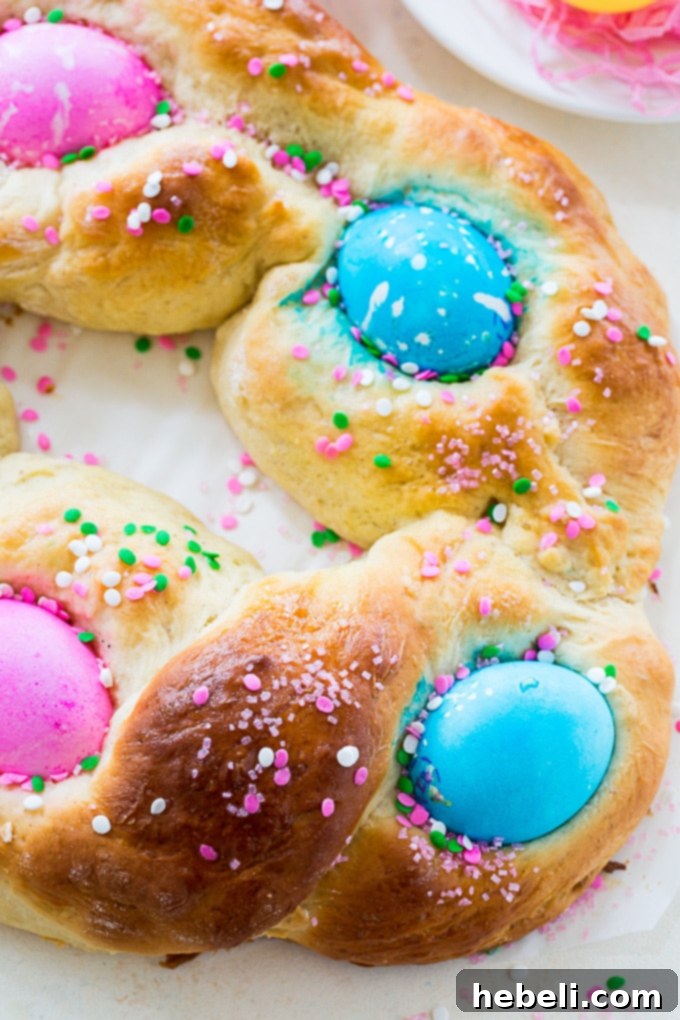
- Preventing Color Bleed: It’s natural for the vibrant dye from the eggs to slightly bleed onto the surrounding dough. To significantly minimize this, we highly recommend dyeing your eggs at least a day in advance. After dyeing, let them air dry completely and then store them in the refrigerator. This crucial drying time helps the color set and reduces transfer during baking, keeping your bread looking pristine. Always use food-safe dyes for this purpose.
- Yeast Activation Essentials: Yeast is a living organism, and its activity is crucial for a light, airy bread. When combining your warm whole milk with the yeast, ensure the milk’s temperature is precisely between 105 to 110 degrees Fahrenheit (40-43°C). Milk that is too hot will kill the yeast, preventing your dough from rising, while milk that is too cold won’t activate it effectively, leading to a dense loaf. A kitchen thermometer is your best friend here!
- Kneading for Texture: Don’t rush the kneading process. Whether you’re using a stand mixer or kneading by hand, aim for a dough that is smooth, elastic, and no longer sticky. This develops the gluten, which is essential for the bread’s structure and chewiness. If your dough feels too sticky after the initial flour addition, add the extra 1/2 cup gradually, a tablespoon at a time, until you reach the desired consistency. A well-kneaded dough will spring back when gently poked.
- Optimal Rising Environment: Yeast dough loves warmth and hates drafts. Find a cozy, draft-free spot in your kitchen for the dough to rise. A slightly warm oven (turned off, of course, after preheating for a minute or two and then cooling slightly) or a warm spot near a sunny window works wonders. Allow ample time for the dough to double in size for both rises; patience is a virtue in yeast baking and directly impacts the bread’s final texture.
- Even Browning: To achieve that beautiful golden-brown crust without over-browning, keep an eye on your bread during baking. If you notice it browning too quickly after about 15 minutes, simply tent the loaf loosely with aluminum foil. This protects the crust while allowing the interior to finish cooking thoroughly, ensuring a moist and tender inside.
Explore More Easter Recipe Favorites
Looking to complete your Easter feast with more delightful treats? Here are some wonderful recipes perfect for the spring season, ideal for pairing with your magnificent Easter Egg Bread:
- Resurrection Rolls
- Mama Dip’s Carrot Cake
- Carrot Cake Pancakes
Easter Egg Bread: The Full Recipe
Easter Egg Bread
Prep Time: 20 mins | Cook Time: 30 mins | Total Time: 50 mins
Servings: 10

This light and buttery Easter Egg Bread features dyed eggs baked right into the dough. Finish with a sweet glaze and colorful sprinkles for a truly festive treat.
Ingredients
For the Bread:
- 2/3 cup warm whole milk (105 to 110 degrees F)
- 1 (0.25-ounce) package active dry yeast
- 1/4 cup granulated sugar
- 3/4 teaspoon salt
- 1/2 teaspoon ground nutmeg (link)
- 1 teaspoon orange zest
- 2 large eggs
- 2 3/4 to 3 1/4 cups all-purpose flour
- 3 tablespoons softened butter, cut into pieces
- 1 teaspoon vanilla extract
- 5 uncooked dyed eggs
- 1 egg (for egg wash)
- 1 teaspoon milk (for egg wash)
For the Glaze:
- 1/2 cup powdered sugar
- 2 teaspoons milk
- 2 teaspoons cane syrup (link)
- Sprinkles (for garnish)
Instructions
- In the bowl of a stand mixer, combine the warm milk and yeast. Stir gently by hand until combined and let it sit for 10 minutes, allowing the yeast to activate and become frothy. This indicates the yeast is active and ready.
- Attach the paddle attachment to your stand mixer. With the mixer on medium speed, gradually add the granulated sugar, salt, ground nutmeg, orange zest, and the two large eggs. Mix until these ingredients are thoroughly combined.
- Reduce the mixer speed to low. Gradually add 2 3/4 cups of all-purpose flour to the mixture, incorporating it until a shaggy dough forms and it starts to pull away from the sides of the bowl.
- Add the softened butter pieces and vanilla extract. Continue to beat until these ingredients are fully incorporated and the dough comes together into a soft mass.
- Transfer the dough to a lightly floured surface. Knead the dough by hand for approximately 5 minutes. If the dough is still too sticky to handle easily, add up to an additional 1/2 cup of flour, one tablespoon at a time, until it becomes smooth, elastic, and supple.
- Lightly grease a large bowl. Place the dough in the bowl, turning it once to ensure all sides are coated. Cover the bowl with plastic wrap or a clean kitchen towel and let it rise in a warm, draft-free place for about 1 hour, or until the dough has doubled significantly in size.
- Once risen, gently punch the dough down to release the air. Transfer it to your work surface and divide the dough into 2 equal pieces. Roll each piece into a rope, approximately 24 inches long.
- Carefully place the two dough ropes side-by-side on a baking sheet lined with parchment paper. Loosely twist them together to form a beautiful braided loaf, pinching the ends securely to seal them and prevent unraveling during baking.
- Gently separate the twisted dough in five distinct places along the loaf, creating small “nests” or indentations. Carefully place one uncooked dyed egg into each of these holes. Cover the bread again with plastic wrap or a towel and let it rise for another 1 hour in a warm place.
- Preheat your oven to 350 degrees Fahrenheit (175°C). In a small bowl, whisk together the remaining 1 egg and 1 teaspoon of milk to create an egg wash. Lightly brush the entire surface of the risen dough with this egg wash; this will give the bread a golden, glossy finish.
- Bake for 30 minutes. After about 15 minutes of baking, if the bread is browning too quickly, loosely tent the loaf with aluminum foil to prevent excessive browning while allowing the interior to continue cooking.
- Once baked, remove the bread from the oven and let it cool completely on a wire rack. While the bread cools, whisk together the powdered sugar, 2 teaspoons of milk, and cane syrup (or substitute) until you have a smooth, pourable glaze.
- Drizzle the prepared glaze generously over the cooled Easter Egg Bread. Immediately follow with a scattering of festive sprinkles before the glaze sets, adding a final touch of color and whimsy.
Recipe Notes
If you cannot find cane syrup, maple syrup makes a delicious substitute, offering a similar sweetness with its own distinct flavor. Alternatively, you can omit the syrup entirely and simply increase the amount of milk in the glaze for a simpler, less rich option.
Nutrition information is automatically calculated and should only be used as an approximation.

We hope you enjoy baking and sharing this beautiful and delicious Easter Egg Bread. It’s a wonderful way to bring a touch of tradition, joy, and homemade goodness to your holiday celebrations. The aroma of freshly baked bread filling your home, coupled with the festive visual of the colored eggs, creates truly special memories. This versatile bread can be served as a delightful breakfast, a festive brunch item, or a sweet finish to your Easter meal. Happy baking!
Disclosure: This post contains affiliate links, which means we may earn a small commission if you make a purchase through them, at no extra cost to you. These links help support our content creation.