The Ultimate Classic Chocolate Layer Cake: Moist, Rich, and Irresistible
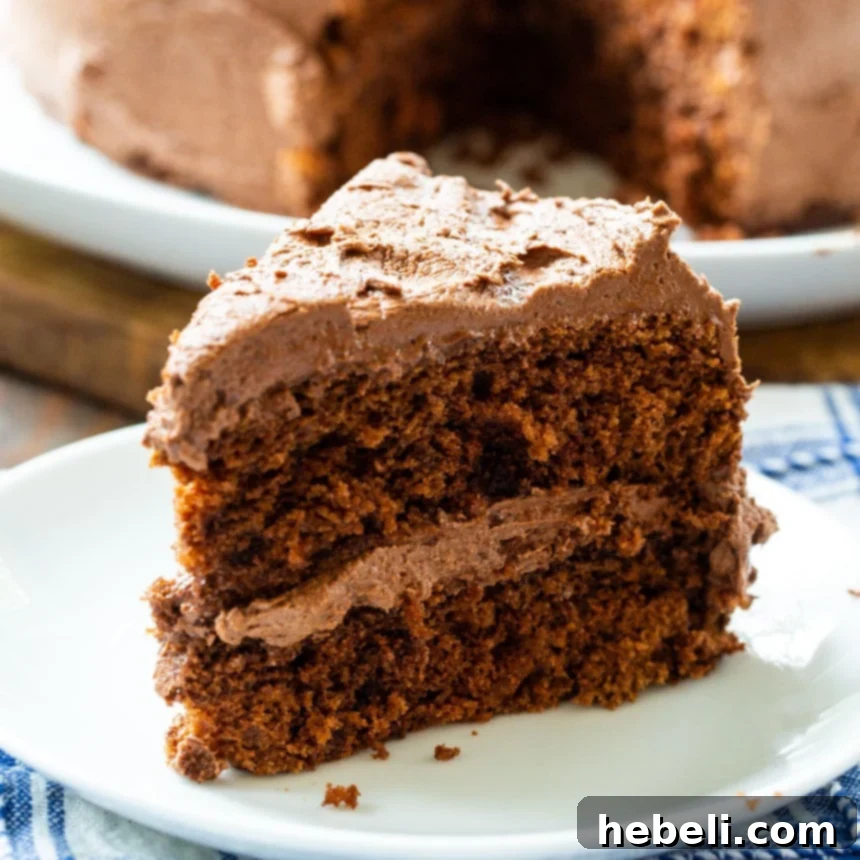
Indulge in the timeless delight of a homemade Chocolate Layer Cake. This old-fashioned recipe celebrates deep, intense chocolate flavor, delivering a wonderfully rich and incredibly moist experience with every bite. Featuring two perfectly baked chocolate layers generously enrobed in a velvety, thick buttercream frosting, it’s a dessert that promises to be the centerpiece of any gathering and a treat for every palate. Whether for a special occasion or a simple weekend indulgence, this classic cake is sure to become a cherished favorite.
Why This Classic Chocolate Layer Cake Stands Out
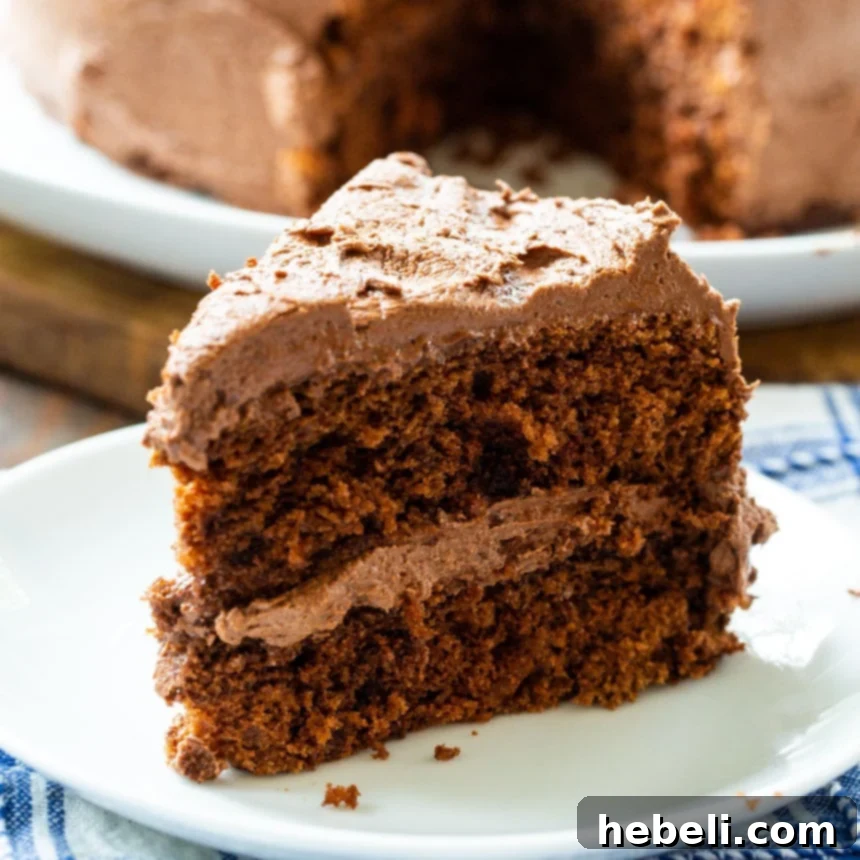
There’s an undeniable allure to a perfectly crafted chocolate layer cake. It evokes feelings of nostalgia, comfort, and pure indulgence. While countless chocolate cake recipes exist, this particular rendition stands a cut above the rest, thanks to its exceptional richness, unparalleled moistness, and a depth of chocolate flavor that is truly profound. It’s a testament to traditional baking techniques and the thoughtful selection of ingredients.
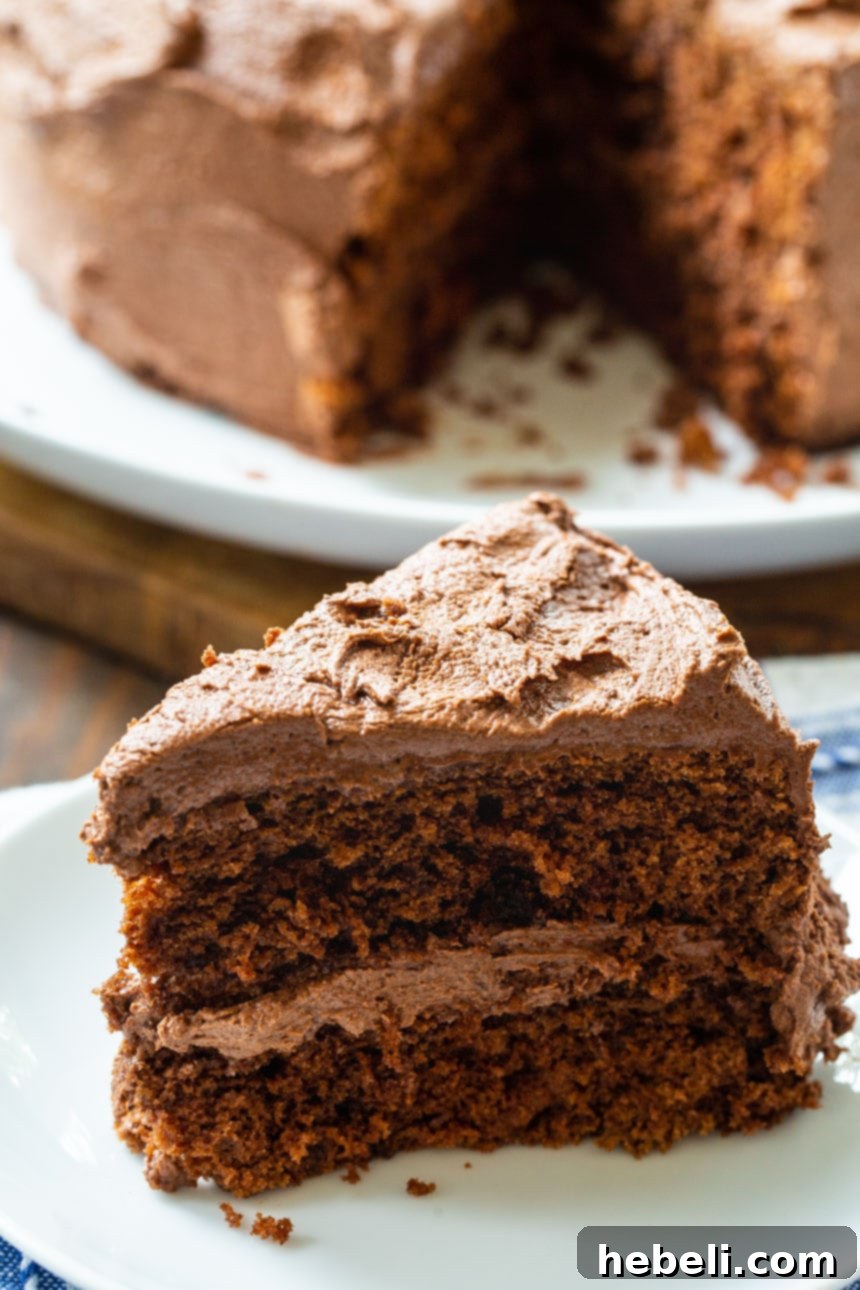
Many chocolate cakes can fall short, sometimes turning out dry, dense, or overly sweet. Our recipe, however, achieves a beautiful balance. The cake layers are tender, airy, and infused with an intense chocolate essence, providing a robust foundation. This delectable base is then crowned with a velvety, intensely chocolatey buttercream frosting that is both smooth and deeply satisfying. This isn’t just a dessert; it’s an experience, a celebration of chocolate in its finest form. It’s the kind of cake that makes people ask for the recipe, every single time.
Crafting the Perfect Chocolate Cake Batter
The journey to an exceptionally moist and flavorful chocolate layer cake begins with its meticulously balanced batter. Each ingredient plays a pivotal role in achieving that rich chocolate taste and wonderfully tender crumb. Understanding these components and their functions will elevate your baking prowess and ensure a successful cake every time.
Our batter is built upon foundational baking staples: all-purpose flour, baking soda, a hint of salt, unsalted butter, granulated sugar, eggs, and pure vanilla extract. However, what truly distinguishes this recipe and contributes to its deep chocolate character are two specific ingredients:
- Unsweetened Chocolate: Rather than relying solely on cocoa powder, we incorporate melted unsweetened chocolate. This choice provides a significantly deeper, more complex, and authentic chocolate flavor. It also adds to the cake’s luxurious, melt-in-your-mouth texture, making it undeniably rich and satisfying.
- Buttermilk: This tangy, cultured dairy product is a true game-changer in cake baking. Its acidity reacts beautifully with the baking soda, creating carbon dioxide gas. These tiny gas bubbles are crucial for giving the cake its magnificent lift, resulting in an incredibly light, airy, and tender crumb. Buttermilk also imparts a subtle tanginess that expertly balances the sweetness, adding a sophisticated depth to the overall flavor profile.
Achieving the right batter consistency is paramount. Always ensure your butter and eggs are at proper room temperature before you begin. This allows them to emulsify optimally, leading to a smoother, more uniform batter and ultimately a finer-textured cake. The creaming method – beating butter and sugar together until light and fluffy – is vital for incorporating air, which is essential for a light and airy structure. When incorporating the dry and wet ingredients, add them alternately, starting and ending with the dry. This technique helps prevent overmixing, which can lead to a tough cake, and ensures all components are perfectly integrated for a tender, moist result.
The Luxurious Chocolate Buttercream Frosting
A classic chocolate layer cake would simply not be complete without a truly decadent frosting, and our chocolate buttercream is specifically designed to impress. This thick, velvety, and intensely chocolatey frosting perfectly complements the rich cake layers, adding another layer of profound chocolate flavor and a stunning, professional-looking finish.
The secret to this buttercream’s exceptional taste lies in its generous use of high-quality unsweetened chocolate, which guarantees a profound depth of chocolate flavor that truly sings. This rich base is then beautifully enhanced by a touch of pure vanilla extract, which brightens the chocolate notes and adds a warm, inviting aroma. The combination results in a frosting that is both robust in flavor and wonderfully smooth, making it a joy to eat.
For a truly exceptional buttercream, pay attention to the details. Ensure your unsalted butter is softened to room temperature, but crucially, not melted. This allows it to cream properly with the confectioners’ sugar, creating a light, airy, and fluffy base. Gradually adding the melted and cooled unsweetened chocolate, along with a touch of room temperature milk, helps achieve that perfect, spreadable consistency. This ideal texture makes frosting a cake a breeze, allowing you to create smooth sides and elegant swirls with ease. The final result is a buttercream that is easy to work with, irresistibly delicious, and provides a gorgeous contrast to the moist chocolate cake layers.
The Magic of Buttermilk in Baking
Buttermilk is often hailed as a true baking MVP, and for good reason, especially when it comes to crafting tender and flavorful cakes. Its unique properties contribute significantly to the overall success of this chocolate layer cake, making it an indispensable ingredient that every baker should appreciate.
The primary benefit of buttermilk stems from its inherent acidity. When buttermilk reacts with baking soda – a common chemical leavening agent – it creates a powerful effervescence of carbon dioxide gas. These tiny gas bubbles become trapped within the cake batter, expanding during the baking process to give the cake its magnificent lift and characteristic light, airy, and wonderfully tender crumb. This crucial chemical reaction ensures your cake rises beautifully and avoids a dense, heavy texture.
Beyond its leavening power, buttermilk also plays a vital role in tenderizing the gluten in the flour. The lactic acid present in buttermilk works to gently break down some of the gluten strands. This action results in a cake that is exceptionally soft, moist, and almost melt-in-your-mouth tender. Furthermore, buttermilk imparts a subtle, pleasant tanginess that expertly balances the sweetness of the sugar and the richness of the chocolate. This delicate acidity adds a depth of flavor that plain milk simply cannot replicate, elevating the cake’s overall taste profile.
What if you find yourself without buttermilk on hand? Don’t worry! You can easily create a homemade substitute that works remarkably well in a pinch. For every 1 cup of buttermilk required in a recipe, simply add 1 tablespoon of fresh lemon juice or white vinegar to a liquid measuring cup. Then, fill the rest of the cup with regular milk (dairy or even most non-dairy alternatives will work) until it reaches the 1-cup mark. Give it a gentle stir and let it sit undisturbed for 5-10 minutes. During this time, the milk will slightly curdle and thicken, becoming an acceptable substitute for real buttermilk. While this homemade version is effective, it’s worth noting that using authentic buttermilk will always yield the most superior results in terms of both flavor and texture for your cakes.
Essential Equipment for Baking Your Chocolate Layer Cake
Having the right tools at your disposal can significantly enhance your baking experience, ensuring smoother preparation and consistently perfect results. For this decadent chocolate layer cake, a few key pieces of equipment are highly recommended to make the process enjoyable and successful:
- Electric Stand Mixer with Paddle Attachment: A robust stand mixer, such as a Kitchenaid Stand Mixer, is an invaluable asset in any kitchen. It makes creaming butter and sugar, incorporating eggs, and mixing the batter incredibly efficient and effortless. The paddle attachment ensures even mixing without overworking the gluten in the flour. If a stand mixer isn’t available, a good quality electric hand mixer will also work effectively, though it might require a bit more manual effort.
- Two 9-Inch Round Cake Pans: Using two identically sized, high-quality cake pans is absolutely crucial for even baking and creating beautifully stacked layers. Opt for sturdy, light-colored aluminum pans, as they promote uniform heat distribution and help prevent the cake edges from over-browning. Properly preparing these pans – by greasing and flouring them thoroughly, or by using baking spray with flour, and lining the bottoms with parchment paper circles – is essential for easy cake release and preventing sticking.
- Offset Spatula: An offset spatula is a baker’s secret weapon, particularly for frosting cakes. Its uniquely angled blade keeps your knuckles clear of the cake surface, allowing for precise, smooth, and effortless application of frosting over layers and sides. It’s perfect for achieving that professional, polished finish.
- Large Mixing Bowls: You’ll need several spacious mixing bowls for various stages of preparation, including sifting dry ingredients, melting chocolate, and holding your prepared cake batter and frosting components.
- Fine-Mesh Sieve: Essential for sifting flour, baking soda, and salt. This step ensures there are no lumps in your dry ingredients, leading to a lighter, more uniform cake texture. It’s also invaluable for sifting confectioners’ sugar for your buttercream, preventing grainy frosting.
- Rubber Spatula: An indispensable tool for scraping down the sides of the mixing bowl, ensuring all ingredients are fully incorporated and nothing is left unmixed at the bottom.
- Wire Cooling Racks: Crucial for allowing your freshly baked cake layers to cool completely and evenly. Cooling cakes on a wire rack prevents condensation from building up on the bottom, which could lead to soggy layers.
- Measuring Cups and Spoons: Accurate measurements are vital in baking. Have a full set of dry measuring cups, liquid measuring cups, and measuring spoons readily available.
Storage Tips for Your Chocolate Layer Cake
To ensure your delicious chocolate layer cake remains fresh, moist, and utterly delightful for as long as possible, proper storage is absolutely essential. Here’s how to best store your masterpiece, ensuring every slice is as perfect as the first:
- Room Temperature Storage: For optimal flavor and texture, especially for cakes frosted with buttercream, storing the cake at room temperature is often preferred. The buttercream will maintain its creamy consistency and the cake will remain incredibly moist. To protect it from drying out and absorbing ambient odors, cover the cake loosely with a cake dome or plastic wrap. When stored this way, your cake will stay wonderfully fresh and delicious for up to 3 days.
- Refrigerator Storage: If you live in a particularly warm or humid climate, or if you simply prefer a firmer frosting, you can store the cake in the refrigerator. Before placing it in the fridge, ensure it’s in an airtight container or tightly wrapped with multiple layers of plastic wrap. This prevents it from absorbing any unwanted refrigerator odors and helps maintain its moisture. Stored in the refrigerator, the cake will remain fresh for up to 5 days. For the best taste and texture, remember to let refrigerated cake come to room temperature for about 30-60 minutes before serving.
- Freezing Unfrosted Cake Layers: To prepare your cake in advance or to extend its shelf life, you can freeze individual unfrosted cake layers. Once the cake layers are completely cooled (this is critical!), wrap each layer tightly in plastic wrap, then wrap them again in aluminum foil to prevent freezer burn. They can be safely frozen for up to 2-3 months. When ready to use, thaw them in the refrigerator overnight or at room temperature for a few hours before you plan to frost and assemble.
- Freezing Frosted Cake: Yes, you can even freeze a fully frosted cake! To do so, place the entire frosted cake (uncovered) in the freezer for about an hour, or until the frosting is completely firm to the touch. Once frozen solid, wrap the cake tightly in plastic wrap, and then again with a layer of aluminum foil. This double wrapping protects it from freezer burn. A fully frosted cake can be frozen for up to 1 month. To thaw, transfer the wrapped cake to the refrigerator overnight. Once thawed, unwrap it and let it come to room temperature for a couple of hours before slicing and serving.
Other Irresistible Chocolate Cake Recipes You’ll Love
If you’ve fallen head over heels for this classic chocolate layer cake, you’ll be thrilled to explore more chocolatey delights from our kitchen. Expand your baking repertoire and satisfy your chocolate cravings with these equally tempting and delicious recipes:
- Chocolate Cake with Cream Filling: A delightful twist on a classic, featuring a luscious, sweet cream filling nestled between rich chocolate layers.
- Midnight Chocolate Cake: Designed for those who crave an intensely dark, deeply rich, and truly decadent chocolate experience.
- Nutella Chocolate Cake: A dreamy combination of hazelnut and chocolate, this cake is an irresistible treat for any Nutella lover.
- Easy Death By Chocolate Cake: The ultimate indulgence for serious chocolate enthusiasts, loaded with chocolate in every conceivable way.
- Chocolate Poke Cake: A moist and flavorful cake with a sweet, surprising liquid filling absorbed into every pore.
- Classic Coca Cola Cake: A unique Southern classic, this cake boasts a subtle, delightful cola flavor that adds an unexpected depth.
- Samoa Bundt Cake: Inspired by the beloved Girl Scout cookie, this bundt cake features delicious layers of coconut, caramel, and chocolate.
Classic Chocolate Layer Cake Recipe
Prep Time: 20 minutes
Cook Time: 30 minutes
Total Time: 50 minutes
Yields: 16 servings
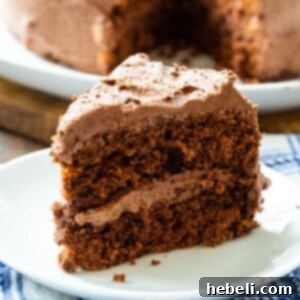
This old-fashioned Chocolate Layer Cake recipe is a true celebration of rich, deep chocolate flavor. Wonderfully moist, incredibly tender, and generously covered in a thick, velvety chocolate buttercream frosting, it’s a dessert that will delight everyone and become a treasured family recipe.
Ingredients
For the Cake Batter:
- 2 1/4 cups all-purpose flour
- 1 teaspoon baking soda
- 1/2 teaspoon salt
- 12 tablespoons (1 1/2 sticks) unsalted butter, softened to room temperature
- 1 3/4 cups granulated sugar
- 3 large eggs, at room temperature
- 1 1/2 teaspoons pure vanilla extract
- 3 ounces unsweetened chocolate, melted and cooled to lukewarm
- 1 1/4 cups buttermilk, at room temperature
For the Chocolate Buttercream:
- 4 1/2 cups confectioners’ sugar, sifted
- 1/8 teaspoon salt
- 5 ounces unsweetened chocolate, melted and cooled to lukewarm
- 2 teaspoons pure vanilla extract
- 7 tablespoons milk (whole or 2%), warmed to room temperature
- 8 tablespoons (1 stick) unsalted butter, cut into chunks and softened to room temperature
Instructions
- Prepare Oven and Pans: Preheat your oven to 350°F (175°C). Prepare two 9-inch round cake pans by greasing them thoroughly, then flouring them, or by using a baking spray with flour. For extra insurance against sticking, you can also line the bottoms of the pans with parchment paper circles.
- Combine Dry Ingredients: In a medium bowl, whisk together the all-purpose flour, baking soda, and salt until well combined. Set this mixture aside.
- Cream Butter: In the large bowl of an electric stand mixer fitted with the paddle attachment, beat the softened unsalted butter at medium speed for about 3 minutes until it becomes light, fluffy, and pale in color.
- Add Sugar Gradually: With the mixer running, gradually add the granulated sugar to the creamed butter in three separate additions, beating for 1 minute after each addition. After each sugar addition, pause to scrape down the sides of the bowl thoroughly with a rubber spatula to ensure all ingredients are well incorporated.
- Incorporate Eggs: Add the large eggs one at a time, beating well after each addition until it is fully incorporated before adding the next one. Continue to scrape down the sides of the bowl as needed to maintain a smooth mixture.
- Add Flavorings: Beat in the pure vanilla extract and the cooled melted unsweetened chocolate until they are just combined and the mixture is uniform.
- Alternate Wet and Dry Ingredients: With the mixer set to its lowest speed, begin adding the flour mixture and the buttermilk alternately to the wet ingredients. Start with a third of the flour mixture, mix briefly, then add half of the buttermilk, mix, then another third of the flour, the remaining buttermilk, and finally the last third of the flour. Mix only until just combined. Be careful not to overmix the batter; overmixing can develop gluten too much, resulting in a tough cake. Scrape down the sides of the bowl a few times to ensure a uniform batter without any streaks of unmixed ingredients.
- Bake Cake Layers: Divide the prepared cake batter evenly between the two prepared cake pans, spreading it out smoothly with an offset spatula or the back of a spoon to ensure even thickness. Bake for approximately 30 minutes, or until a wooden skewer or toothpick inserted into the center of the cakes comes out clean.
- Cool Cakes: Allow the baked cakes to cool in their pans on a wire rack for 5-10 minutes. This allows them to firm up slightly. After this initial cooling, carefully invert the cakes onto the wire rack to cool completely. Ensure the cake layers are entirely cool to the touch before attempting to frost them; otherwise, the buttercream will melt.
- Prepare Buttercream: To make the frosting, place the sifted confectioners’ sugar, salt, cooled melted unsweetened chocolate, and room temperature milk into the clean bowl of an electric stand mixer fitted with the paddle attachment. Scatter the softened butter chunks on top of these ingredients.
- Mix Frosting: Begin beating the ingredients on medium-low speed for about 2 minutes to initially combine everything without creating a cloud of sugar. Once combined, increase the speed to medium and beat for another 2 minutes until the frosting appears smooth and light. Stop the mixer, scrape down the sides of the bowl thoroughly, and then beat on high speed for a final 2 minutes. This high-speed beating incorporates air, resulting in a wonderfully fluffy and smooth consistency. If the frosting seems too thick, you can add a tiny bit more milk (1 teaspoon at a time) until it reaches your desired spreadable consistency.
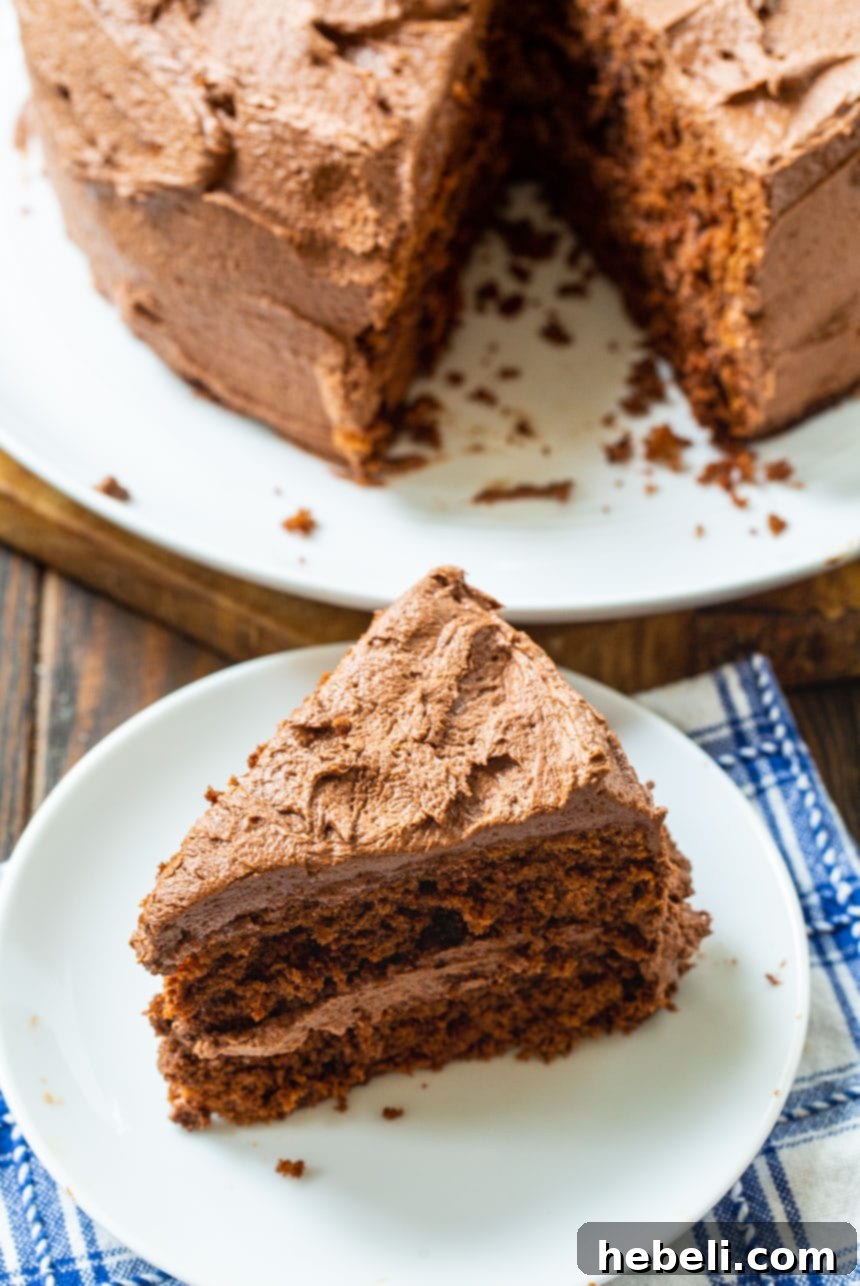
- Assemble Cake: Once the cake layers are completely cooled, place one layer onto your chosen serving plate or cake stand. Spread a generous and even layer of the rich chocolate buttercream over the top of this first cake layer. Carefully place the second cake layer directly on top. Then, proceed to cover the entire cake – both the top and all sides – with the remaining chocolate buttercream. Use your offset spatula to smooth the frosting for a clean finish or create decorative swirls.
- Serve and Enjoy: Your magnificent Classic Chocolate Layer Cake is now ready! Slice and serve immediately.
Notes and Expert Tips
- Salted Butter Alternative: While unsalted butter is specified for better control over sodium levels, if you only have salted butter on hand, you can use it. However, if you do, consider reducing the amount of added salt in both the cake batter and the frosting to about 1/4 teaspoon each to avoid an overly salty flavor.
- Room Temperature Ingredients are Key: For both the cake batter and the buttercream frosting, ensuring your butter, eggs, and buttermilk (or milk) are at proper room temperature is paramount. This allows for optimal emulsification, which leads to a smooth, cohesive batter and a light, fluffy frosting. Cold ingredients do not blend as well and can result in a lumpy texture.
- Do Not Overmix the Batter: It’s a common baking pitfall! Overmixing cake batter can develop the gluten in the flour too much, leading to a cake that is tough, dense, and less tender. Mix only until the ingredients are just combined and no streaks of flour remain.
- Cool Cake Layers Completely: Patience is a virtue in baking! Attempting to frost a cake that is still warm is a recipe for disaster, as the heat will melt your beautiful buttercream, causing it to slide right off. Always wait until your cake layers are completely cool to the touch before applying any frosting.
- Sift Dry Ingredients and Confectioners’ Sugar: Sifting ensures a lump-free mixture, which translates to a smoother cake batter and a velvety buttercream. Don’t skip this step for the best results.
Nutrition Information (Estimated Per Serving)
Calories: 507kcal | Carbohydrates: 75g | Protein: 6g | Fat: 24g | Saturated Fat: 14g | Polyunsaturated Fat: 1g | Monounsaturated Fat: 7g | Trans Fat: 1g | Cholesterol: 75mg | Sodium: 201mg | Potassium: 191mg | Fiber: 3g | Sugar: 56g | Vitamin A: 530IU | Calcium: 57mg | Iron: 3mg
Nutrition information is automatically calculated as an estimate only and will vary based on brands of products used and exact ingredient quantities. This information is not intended for specific dietary needs and should be used as an approximation.
Recipe adapted from “Chocolate Chocolate”