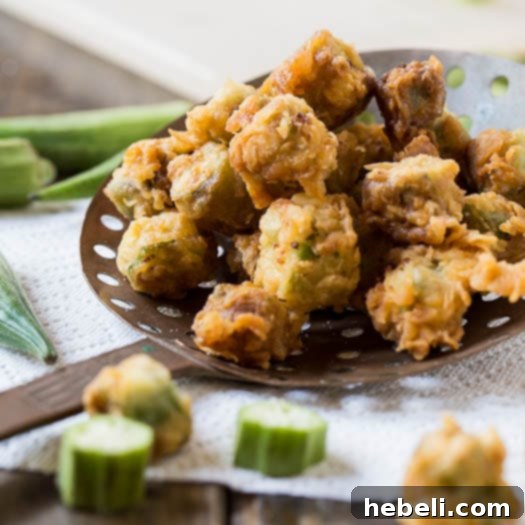
Ultimate Southern Fried Okra: A Crispy, Golden Delight
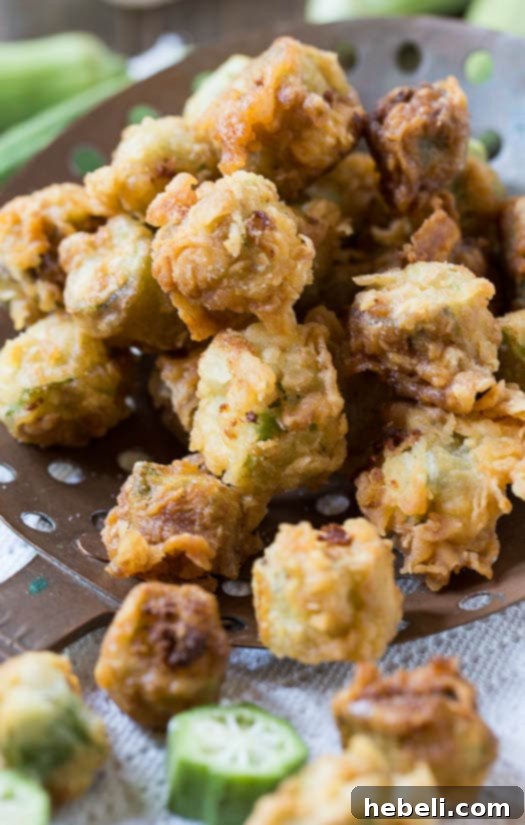
No summer feast is truly complete without the irresistible allure of homemade fried okra. These delightful nuggets, perfectly dredged in a light flour coating and fried to a magnificent golden crisp, are a testament to simple Southern comfort. With subtle hints of green peeking through their crunchy exterior, they are incredibly flavorful on their own, needing nothing more than a delicate dusting of salt to enhance their natural goodness.
Okra is a cornerstone of Southern cuisine, cherished for its unique texture and versatility. Whether it’s grilled to a smoky char, roasted until tender, simmered in a rich gumbo, or smothered with ripe tomatoes, I find joy in every preparation. I even recently discovered the delightful Okra Parmigiana, which has quickly earned a spot among my favorites.
However, for pure, unadulterated pleasure, nothing quite surpasses the straightforward simplicity of classic fried okra. It’s a dish so addictive, you’ll find yourself continuously reaching for another piece, leading to its endearing nickname: “Southern popcorn.” The fact that I reserve frying for only a few special occasions each year makes every batch of fried okra an exceptionally cherished treat, a true celebration of summer’’s bounty.
Why Fried Okra is a Southern Staple
Fried okra holds a special place in the hearts of many Southerners, not just as a side dish, but as a culinary tradition passed down through generations. Its unique taste and texture evoke memories of family gatherings, summer evenings, and the simple pleasures of homegrown produce. The delicate crispness of the exterior gives way to the tender, slightly viscous interior of the okra, creating a delightful contrast that is truly irresistible. It’s a dish that embodies the soul of Southern cooking – humble ingredients transformed into something extraordinary through love and a little bit of frying magic.
The Secret to a Light and Crispy Coating
While many Southern cooks opt for cornmeal, or a combination of cornmeal and flour, when frying okra, I find that a light coating of just flour truly allows the okra’s natural flavor to shine. Sometimes, a heavy cornmeal coating can overshadow the delicate taste of the okra itself, making the dish feel heavier. Using only flour results in a crisp, golden crust that complements, rather than competes with, the tender vegetable within. This simple choice makes a significant difference in the final texture and taste of your fried okra, delivering that perfect “southern popcorn” experience.
Essential Equipment for Perfect Frying
The Cast Iron Skillet Advantage
For frying, a sturdy large cast iron skillet is my preferred tool. Cast iron excels at retaining and distributing heat evenly, which is crucial for achieving uniformly golden and crispy okra. The consistent temperature helps prevent soggy results and ensures each piece cooks perfectly. However, if a cast iron skillet isn’t available, any heavy-bottomed skillet or even a Dutch oven will perform admirably, as long as it can maintain a stable oil temperature.
Monitoring Oil Temperature for Success
Accurate oil temperature is paramount for perfect fried okra. A reliable deep-fry thermometer is an invaluable tool to ensure your oil stays within the optimal range. When you first begin frying, the oil should be around 370 to 375 degrees Fahrenheit. As you add the okra, the temperature will naturally drop. It’s important to monitor this drop and adjust your heat to keep the oil from falling below 350 to 360 degrees Fahrenheit. Maintaining this temperature range prevents the okra from absorbing too much oil and becoming greasy, while still allowing it to cook through and become delightfully crispy.
If you don’t have a thermometer, a simple trick is to drop a tiny pinch of flour into the hot oil. If it sizzles immediately and vigorously, your oil is hot enough to start frying. If it merely sinks or barely bubbles, the oil needs more time to heat up.
How To Select the Best Okra for Frying
The quality of your fried okra starts with selecting the freshest pods. Always choose smaller okra pods, ideally no more than 3 to 4 inches in length, that are uniformly vibrant green. Smaller pods tend to be more tender and less fibrous. Avoid any okra with black specks or discoloration, as these are indicators that the pods are not fresh. Larger okra pods, while tempting, can often be tough and stringy, which will detract from the overall enjoyment of your fried dish. Fresh, young okra will yield the most delicious and tender results.
For quickly and easily coating your okra, a clean paper bag is surprisingly effective. This method allows for thorough and even coating with minimal mess, ensuring each piece is ready for the fryer.
Add a Spicy Kick to Your Okra
If you prefer your fried okra with a bit of a spicy edge, it’s incredibly easy to add some heat. Simply whisk 1/2 teaspoon of cayenne pepper into your flour mixture along with the salt and pepper. This small addition will infuse your okra with a pleasant warmth, elevating the flavor profile without overwhelming it. Feel free to adjust the amount of cayenne to suit your personal preference for spice.
Pro Tips for Flawless Fried Okra
Frying okra requires attention and swift action, especially when using a heat-efficient cast iron skillet. Okra can transition from perfectly golden to burnt in a matter of moments. You’ll need to be quick when flipping them, which can sometimes lead to splashing hot oil. Just remember, the delicious outcome is well worth the effort! Be sure to stay focused while frying and have a paper towel-lined plate or cooling rack ready nearby to drain the cooked okra immediately.
Never overcrowd the pan. Frying too many pieces at once will significantly drop the oil temperature, leading to greasy, soggy okra rather than crispy perfection. Fry in small batches to maintain consistent oil temperature and ensure even cooking and optimal crispiness. A spider strainer is an indispensable tool for quickly and safely removing the cooked okra from the hot oil, allowing excess oil to drain away before transferring to the paper towels.
Beyond the Fryer: More Okra Recipes to Explore
While fried okra holds a special place, the versatility of this vibrant vegetable knows no bounds. If you’re looking to explore other delicious ways to incorporate okra into your meals, here are some fantastic recipes that celebrate its unique flavor and texture:
- Okra Hoecakes: A savory twist on classic hoecakes, featuring tender okra.
- Okra Hush Puppies: Crispy, flavorful fritters perfect as a side or appetizer.
- Corn Okra Creole: A vibrant and zesty dish, bursting with Southern flavors.
- Pecan Crusted Fried Okra: An elevated version of fried okra with a delightful nutty crust.
- Stewed Okra and Tomatoes: A comforting and hearty classic, perfect for a lighter meal.
- Baked Fried Okra: A healthier alternative that still delivers on crunch and flavor.
The Ultimate Southern Fried Okra Recipe
Southern Fried Okra
Fresh summer okra, sliced and coated with a light flour mixture, then fried until perfectly golden and irresistibly crispy.
By Christin Mahrlig
Prep Time: 12 mins
Cook Time: 8 mins
Servings: 6
Equipment
- 12-inch cast iron pan
- Deep-Frying Thermometer (optional, but recommended)
- Spider Strainer
Ingredients
- 1 to 1 1/2 pounds okra, caps cut off and sliced into 1/2-inch rounds
- 1 cup all-purpose flour
- 1/2 teaspoon salt, plus more for seasoning after frying
- 1/4 teaspoon black pepper
- 1 large egg
- 1/4 cup milk
- Vegetable oil, for frying (approximately 1 inch deep in skillet)
Instructions
- In a pie plate or a large paper lunch bag, thoroughly mix together the flour, 1/2 teaspoon of salt, and 1/4 teaspoon of black pepper until well combined.
- In a separate small bowl, whisk together the egg and milk until a smooth mixture forms.
- Working in small batches to avoid overcrowding, place the sliced okra into the egg mixture and toss until each piece is well coated.
- Transfer the wet okra directly into the flour mixture (either in the pie plate or paper bag). Shake or toss gently until all okra pieces are evenly coated with the flour mixture. Set aside on a plate while you prepare the oil.
- Pour approximately 1 inch of vegetable oil into a large cast iron skillet or Dutch oven. Heat the oil over medium-high heat until it reaches about 370-375 degrees Fahrenheit. If you don’t have a thermometer, drop a tiny pinch of flour into the oil; it should sizzle immediately.
- Carefully place a single layer of coated okra into the hot oil. Avoid overcrowding the pan to maintain oil temperature and ensure even crisping. Cook for 2-3 minutes until the bottom side is golden brown.
- Using a spoon or a spider strainer, quickly flip the okra pieces to cook the other side. This step requires swift action to prevent any pieces from burning, especially in a hot cast iron skillet. Cook for another 2-3 minutes, or until both sides are golden brown and crispy.
- Once golden brown on both sides, use a spider strainer or slotted spoon to promptly remove the fried okra from the oil. Transfer the cooked okra to a plate lined with paper towels to drain any excess oil.
- Immediately after removing from the oil, lightly sprinkle the fried okra with additional salt to taste. This enhances the flavor and helps maintain crispness.
- Add more oil to the pan if necessary, allow it to reheat to the proper temperature, and continue frying the remaining okra in batches. Serve the fried okra warm for the best taste and texture.
Nutrition Information
Calories: 224 kcal (per serving)
Nutrition information is automatically calculated and should be used as an approximation.
There’s truly nothing quite like a plate of freshly fried okra, especially when it’s made at home with care. This recipe ensures a wonderfully crispy, flavorful result that will quickly become a cherished favorite in your kitchen. Enjoy the taste of Southern hospitality!
Never miss a recipe! Follow Spicy Southern Kitchen on Pinterest and Instagram for more delicious Southern dishes.
Originally posted July 22, 2014.