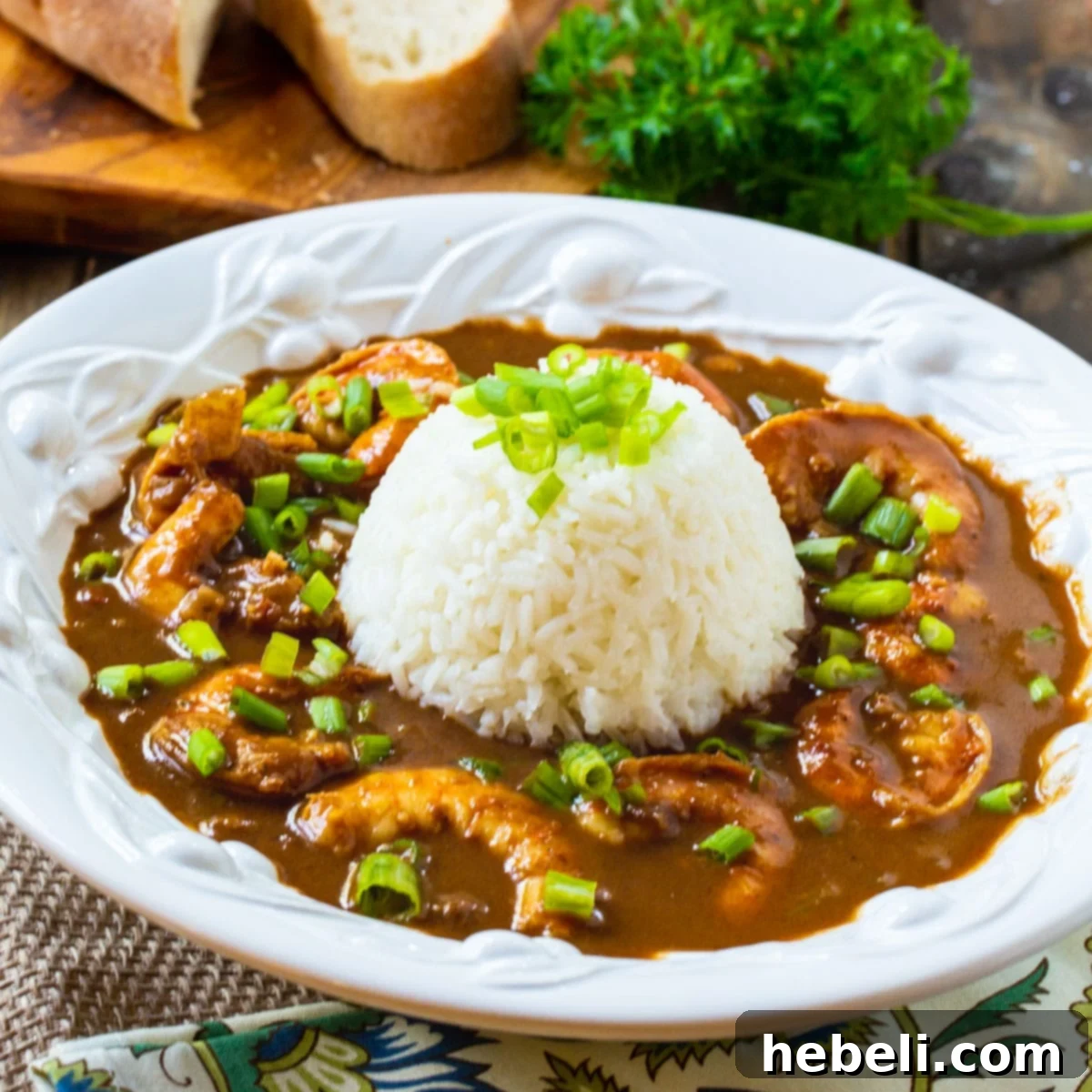
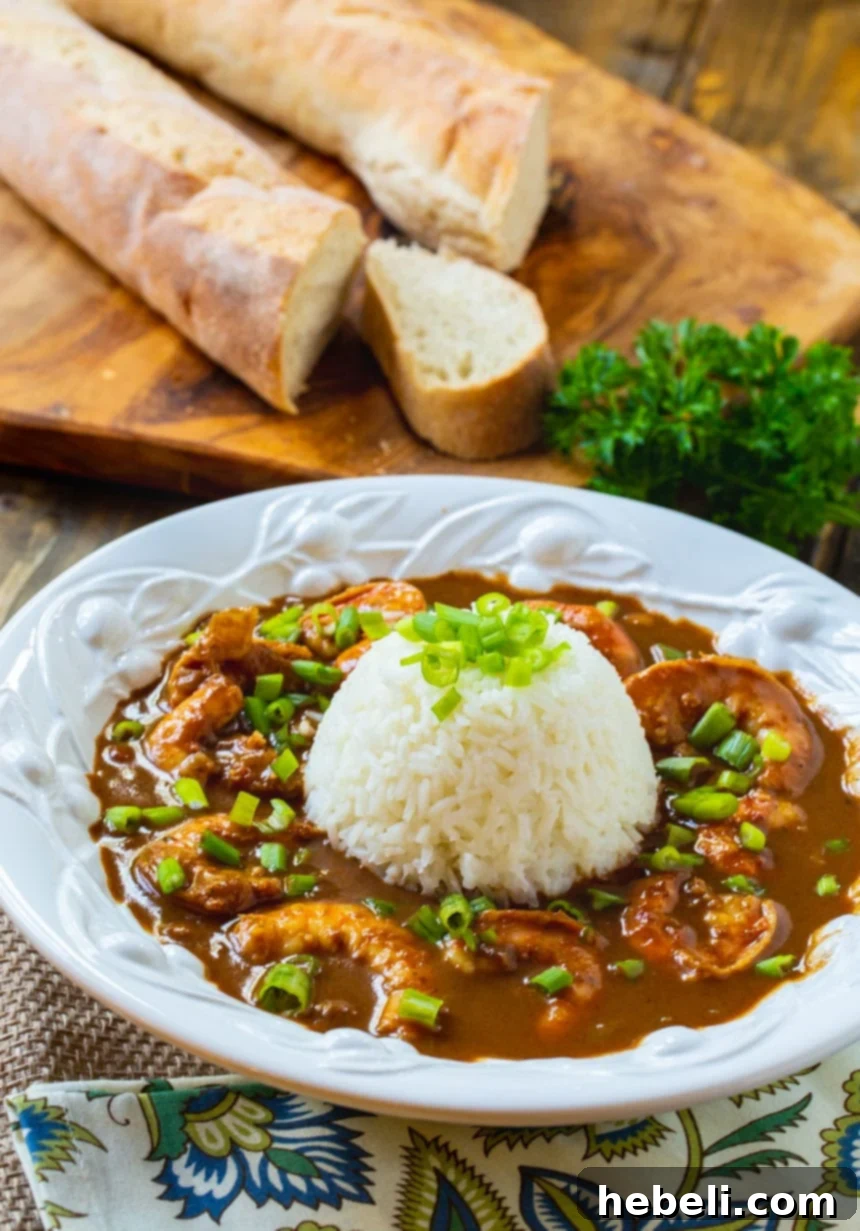
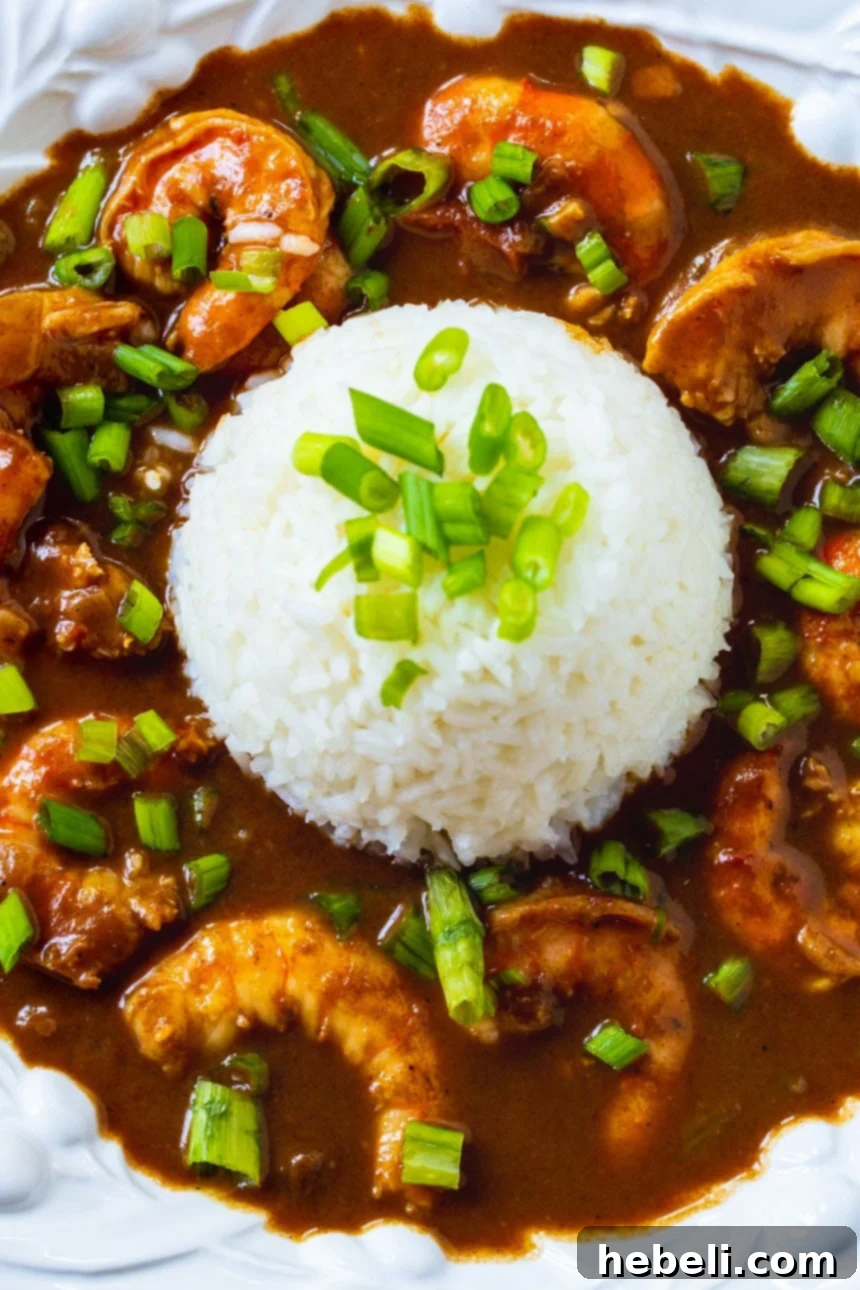
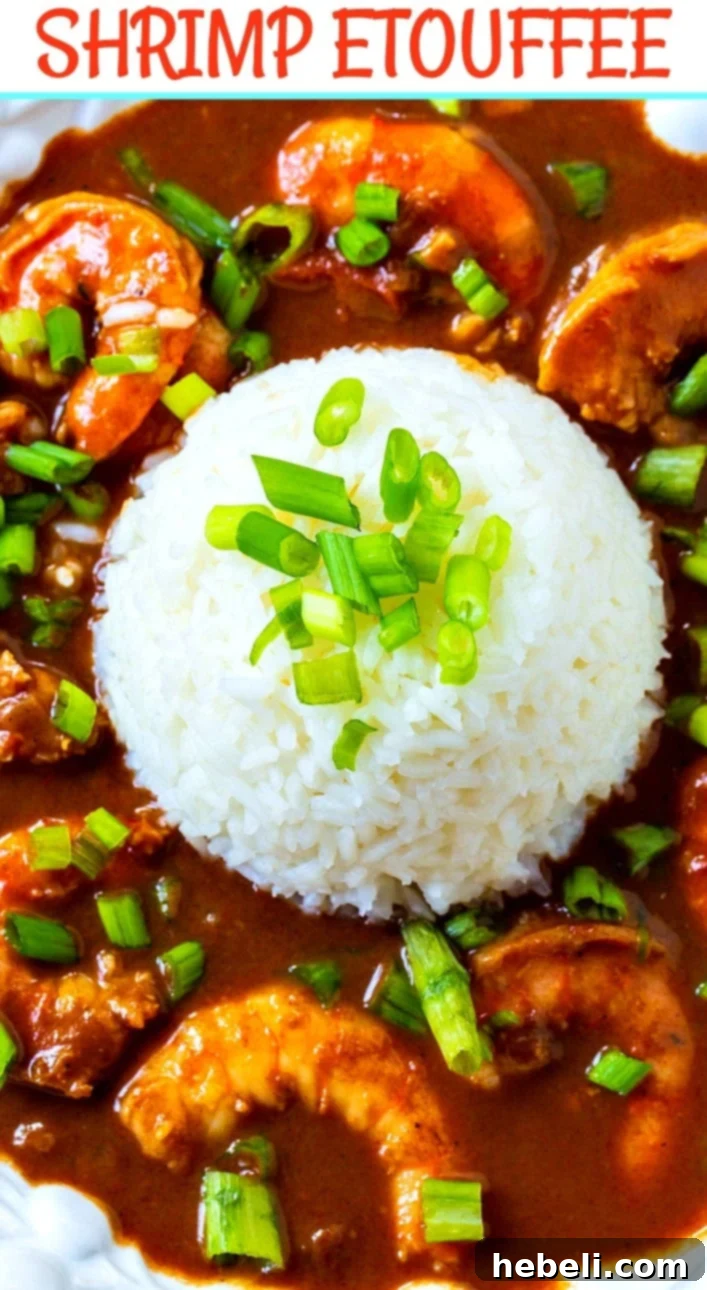
This rich and flavorful Shrimp Etouffee, crafted with a deep, dark roux and a perfect blend of spices, served generously over fluffy rice, will transport the vibrant essence of The Big Easy directly into your home kitchen. While mastering the roux requires a touch of patience and practice, the overall process of preparing this iconic dish is surprisingly straightforward, making it an ideal meal for family gatherings or a comforting weeknight treat.
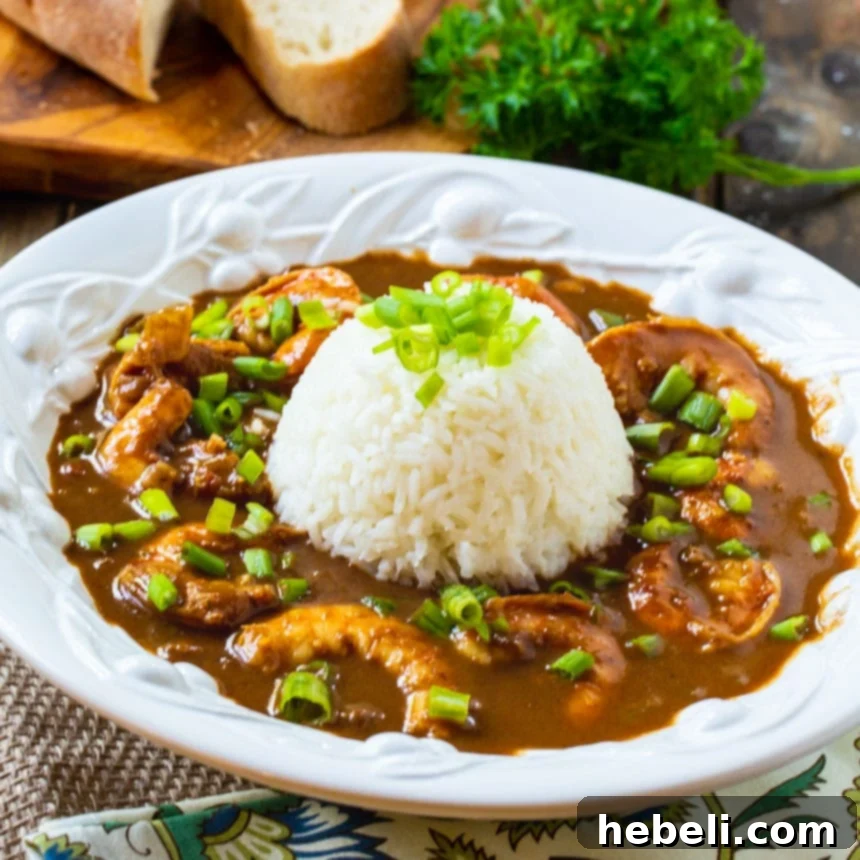
Mastering Authentic Shrimp Etouffee: Your Guide to a Cajun Classic
Dive into the heart of Louisiana cooking with this incredible Shrimp Etouffee recipe. “Etouffee,” derived from the French word meaning “smothered,” perfectly describes this hearty, richly flavored stew where ingredients are gently cooked down in a thick, savory sauce. Typically, etouffee features a foundational roux, the aromatic “Holy Trinity” of onion, celery, and bell pepper, pungent garlic, a kick of hot sauce, and a choice of protein – most commonly shrimp, crawfish, or chicken. My personal twist often includes diced tomatoes, which add a touch of acidity and brightness, though many traditional etouffee recipes maintain a tomato-free base. The beauty of etouffee lies in its adaptability and the profound depth of flavor achieved through careful preparation.
The Indispensable Roux: The Soul of Your Etouffee
The true essence of a magnificent etouffee hinges entirely on the roux. This seemingly simple mixture of fat and flour is, in reality, a culinary art form that demands both attention and intuition. While some prefer a lighter, blond roux for a more delicate touch, I wholeheartedly advocate for the robust, full-bodied flavor that only a dark roux can provide. A dark roux infuses the etouffee with an unparalleled richness and a deep, nutty aroma that defines authentic Cajun and Creole cuisine. Achieving this ideal shade—a beautiful milk chocolate or peanut butter color—requires a slow, deliberate cooking process over medium to medium-low heat.
The Art of Patience: Cooking Your Roux to Perfection
Let me be clear: making a dark roux is not a task for the impatient. It’s a meditative culinary journey that can easily take 20 to 30 minutes, sometimes even longer, depending on your heat source and pan. Resist the urge to crank up the heat to speed things along. Too high a temperature, or a momentary lapse in stirring, and your precious roux will burn. The consequences are dire: not only will you have to discard it and start from scratch, but your kitchen will be filled with a truly awful, acrid smell that lingers. Trust me, I speak from experience – we’ve all been there!
Learning to cook a perfect roux is much like learning to ride a bike; a few tumbles (or burns) are almost inevitable, especially without the guiding hand of a seasoned chef or a Louisiana grandmother by your side. It’s an integral part of the learning curve. You must develop a keen sense of observation, relying on your eyes to judge the gradual change in color and your nose to detect the developing nutty aroma, indicating that your roux is progressing at the correct, unhurried pace.
The Golden Rule: Never Stop Stirring
And here’s perhaps the most critical commandment of roux-making: DO NOT STOP STIRRING. Not even for a few seconds. This isn’t a leisurely stir; you must continuously move the mixture, ensuring your whisk or wooden spoon scrapes every inch of the pan’s bottom and edges. This constant movement prevents scorching and ensures even cooking. Be mindful, however, of the hot oil! It can splash, so maintain a safe distance and handle your utensils carefully. This sustained effort might feel like a minor arm workout, but the exquisite flavor payoff is absolutely worth every minute.
As your roux approaches its desired color, remember that it will continue to darken slightly once you add the vegetables. Immediately reduce the heat to low before incorporating your diced onions, bell peppers, and celery. Expect a lively sizzle and pop as the cooler vegetables meet the hot roux – a perfectly normal reaction! Stir vigorously to combine them thoroughly, ensuring they are well coated and begin to soften. This initial burst of steam and sound will quickly subside, leaving you with the aromatic foundation for your etouffee.
Essential Equipment: The Right Pot Makes All the Difference
The choice of cookware for your roux is surprisingly critical. While the shape, size, or even the material of the pot might seem secondary, one feature is paramount: a heavy bottom. A pot with a thin bottom will heat unevenly and quickly, making it incredibly challenging to prevent the roux from burning. A sturdy cast iron pot or pan is absolutely ideal for this task, providing superior heat retention and distribution. Personally, I swear by a good Dutch Oven. Models like the Lodge Pre-Seasoned Cast-Iron Dutch Oven or the Lodge Color Enameled Cast Iron Dutch Oven are incredibly versatile, reasonably priced, and will serve you well for countless culinary adventures, from deep frying to slow-cooking. They are kitchen workhorses that, with proper care, will likely outlast you!
Embracing the challenge of cooking a truly exceptional roux is an investment in your culinary skills. Master this fundamental technique, and you unlock the authentic flavors of New Orleans, bringing a piece of Louisiana’s rich gastronomic heritage right into your home kitchen.
Shrimp Etouffee Recipe
Shrimp Etouffee
Rating: 4.74 from 38 votes
By Christin Mahrlig
Prep Time: 10 mins
Cook Time: 45 mins
Total Time: 55 mins
Servings: 4

Pin Recipe
Print Recipe
A rich and flavorful Shrimp Etouffee made with a dark roux will bring a little taste of New Orleans to your kitchen.
Ingredients
- 1/2 cup Vegetable oil
- 1/2 cup all-purpose flour
- 1 1/2 cups diced onion
- 1/2 cup diced green bell pepper
- 1/2 cup diced celery
- 2 large garlic cloves, minced
- 1 (8-ounce) jar clam juice
- 1 (14-ounce) can diced tomatoes, undrained
- 1 1/2 teaspoons Cajun seasoning
- 1 teaspoon Worcestershire sauce
- 1/2 teaspoon black pepper
- 1/2 teaspoon cayenne pepper
- 1/2 teaspoon salt
- 1/4 teaspoon white pepper
- 1/4 teaspoon dried thyme
- 1/4 teaspoon Tabasco sauce
- 2 pounds shrimp, peeled and deveined
- 2 tablespoons butter
- Green onions, sliced (for garnish)
- White rice for serving
Instructions
- Prepare the Roux: In a large, heavy-bottomed saucepan (cast iron or a Dutch oven is perfect), whisk together the vegetable oil and all-purpose flour over medium to medium-low heat. Once combined, switch to a sturdy wooden spoon for continuous stirring. Stir without stopping for at least 20 minutes, or until the mixture transforms into a rich, dark caramel color, akin to milk chocolate or peanut butter. This darkening should happen very slowly. If it darkens too rapidly, reduce the heat immediately. Remember, if the heat is too high or you cease stirring, the roux will burn and become unusable. Ensure you scrape the bottom and edges of the pot constantly to prevent any part of the mixture from scorching.
- Sauté the Holy Trinity: Once your roux reaches the desired dark caramel color, reduce the heat to low. Carefully add the diced onion, green bell pepper, and celery to the roux. The mixture will sizzle loudly and may darken slightly further. Continue to cook, stirring frequently, for about 5 minutes, or until the vegetables have softened.
- Add Garlic: Stir in the minced garlic and cook for an additional 30 seconds, allowing its fragrant aroma to release. Be careful not to burn the garlic.
- Simmer the Base: Pour in the clam juice and add the undrained diced tomatoes, Cajun seasoning, Worcestershire sauce, black pepper, white pepper, cayenne pepper, salt, dried thyme, and Tabasco sauce. Bring the mixture to a gentle boil, then reduce the heat and simmer for 15 minutes, allowing the flavors to meld and deepen.
- Cook the Shrimp: Add the peeled and deveined shrimp to the simmering sauce. Cook for only 2 to 3 minutes, or until the shrimp turn pink and opaque. Overcooking the shrimp will make them tough. Turn off the heat and stir in the butter until it is fully melted and incorporated, adding a final touch of richness.
- Serve: Ladle the hot Shrimp Etouffee generously over a bed of fluffy white rice. Garnish with freshly sliced green onions and offer additional hot sauce on the side for those who prefer an extra kick.
Notes
- For a deeper seafood flavor, instead of bottled clam juice, you can make your own shrimp stock by boiling the shrimp peels and heads in water for about 20-30 minutes, then straining the liquid.
- Always use a heavy-bottomed pan or pot when making the roux. Cast iron is highly recommended for its even heat distribution and retention, which is crucial for preventing burning.
Nutrition
Calories: 547kcal
Nutrition information is automatically calculated and should only be used as an approximation.
Did you make this? Leave a comment below and tag us @spicysouthernkitchen on social media!
Originally published September 7, 2104.
Disclosure: This post contains affiliate links.