
Easy Make-Ahead Eggs Benedict Casserole: The Ultimate Brunch Delight
Transform your brunch experience with this incredible Eggs Benedict Casserole! This fuss-free, make-ahead breakfast casserole captures all the beloved flavors of traditional Eggs Benedict in a convenient, crowd-pleasing dish. Featuring savory English muffins, Canadian bacon, fresh asparagus, and a rich Hollandaise sauce, this easy recipe consistently earns rave reviews from everyone who tries it.

Overnight Eggs Benedict Casserole: Brunch Made Effortless
Imagine waking up on a special morning, knowing that a decadent Eggs Benedict-inspired meal is mostly prepared and waiting for you. That’s the magic of this Overnight Eggs Benedict Casserole. This savory bread pudding is ingeniously designed to deliver the iconic taste of Eggs Benedict without any of the last-minute stress. While classic Eggs Benedict, with its perfectly poached eggs and delicate Hollandaise, is undeniably a culinary delight, preparing it for a group can be a time-consuming endeavor, especially the notoriously tricky poached eggs. This casserole eliminates that challenge entirely, allowing you to enjoy a leisurely morning.
Who doesn’t adore Eggs Benedict? It always feels like a luxurious treat, whether ordered at a charming restaurant or prepared at home for a special occasion. Many find the individual components – perfectly toasted English muffins, crispy Canadian bacon, expertly poached eggs, and a velvety Hollandaise sauce – to be a labor of love. The most daunting part for many home cooks is often the poaching of eggs, which requires precision and careful timing to achieve that coveted runny yolk.
Here’s the good news: with this Eggs Benedict Casserole recipe, you can say goodbye to the egg-poaching dilemma! There’s absolutely no need to poach or pre-cook the eggs. Instead, they are simply whisked together with milk and seasonings, then poured directly over the casserole layers. As the casserole bakes slowly in the oven, the eggs cook beautifully, setting into a creamy, custardy texture that miraculously retains that signature “poached egg” flavor profile. This method not only simplifies the process but also ensures consistent results every time.

Deconstructing the Perfect Eggs Benedict Casserole
This casserole builds on a foundation of classic ingredients, each playing a crucial role in replicating the authentic Eggs Benedict experience. English muffins, preferably slightly stale or dried for better absorption, are cut into bite-sized pieces, forming the comforting bread base that soaks up all the rich flavors of the egg mixture. These muffin pieces are then layered generously with chopped Canadian bacon, offering that signature salty, smoky flavor profile. While Canadian bacon is traditional, you can explore other savory additions for a unique twist (more on variations later!).
A delightful addition to this casserole is fresh asparagus, cut into vibrant, tender pieces. The crisp-tender texture and slightly earthy flavor of asparagus perfectly complement the richness of the eggs and Hollandaise sauce. While entirely optional, incorporating asparagus adds a wonderful pop of color, fresh flavor, and a touch of elegance, making this dish feel even more like a gourmet brunch item. For those who love the classic combination of asparagus and Hollandaise, this is an effortless way to enjoy it.
How to Make Eggs Benedict Casserole: Step-by-Step Guide
Creating this magnificent make-ahead breakfast casserole is surprisingly straightforward. Follow these simple steps for a truly unforgettable brunch centerpiece. (Detailed measurements and instructions are available in the recipe section below).
- Prepare the Base Layer: Begin by lightly greasing a 9×13-inch baking dish. This prevents sticking and ensures easy serving. Next, spread half of your cubed English muffins evenly across the bottom of the prepared dish. These will absorb the flavorful egg mixture overnight, creating a tender, savory bread pudding texture.
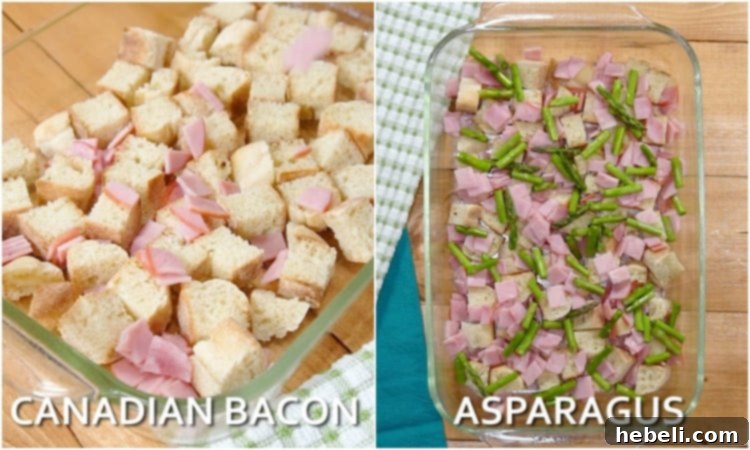
- Add Savory Fillings: Over the layer of English muffins, evenly scatter half of the chopped fresh asparagus and Canadian bacon pieces. The asparagus adds a lovely freshness and subtle crunch, while the Canadian bacon brings that essential salty, meaty component that defines Eggs Benedict.
- Introduce the Cheese Element: Generously scatter thin strips of baby Swiss cheese over the asparagus and Canadian bacon. Swiss cheese melts beautifully, adding a creamy, nutty depth that perfectly complements the other ingredients.
- Repeat Layers: For a robust and visually appealing casserole, repeat the layering process. Add the remaining English muffin cubes, followed by the rest of the Canadian bacon and asparagus. This ensures every bite is packed with flavor and texture.
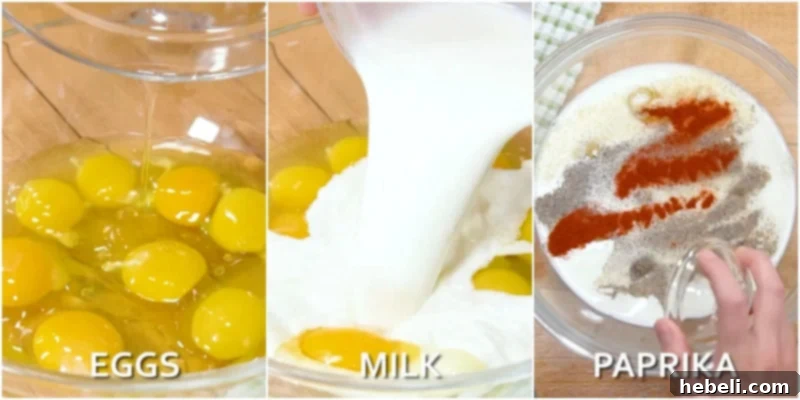
- Whisk the Egg Mixture: In a separate medium-sized bowl, whisk together the large eggs, whole milk, salt, pepper, onion powder, and paprika until well combined. This mixture is the heart of your casserole, transforming the dry ingredients into a custardy, savory delight. The spices add warmth and depth to the overall flavor.
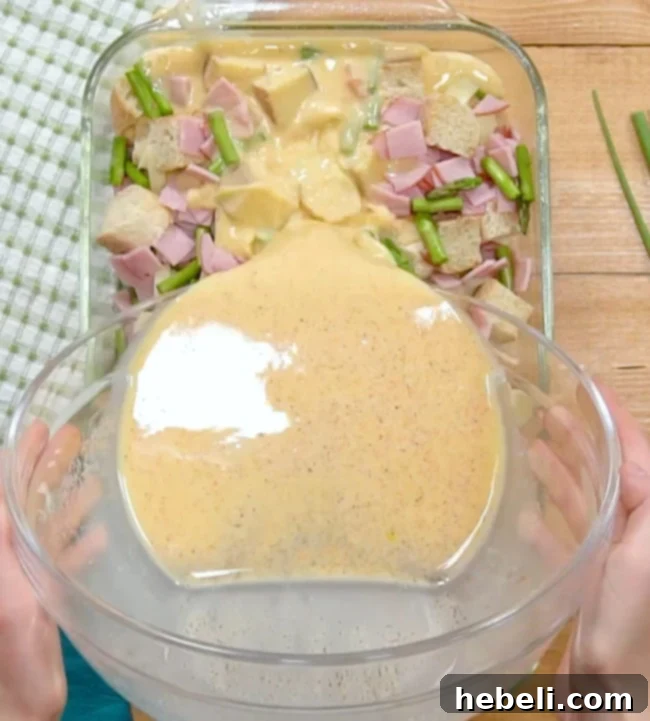
- Pour and Refrigerate: Carefully pour the whisked egg mixture evenly over the entire casserole, ensuring all the English muffin pieces are adequately saturated. Cover the baking dish tightly with plastic wrap or aluminum foil and refrigerate it overnight, or for at least 8 hours, and up to 24 hours. This crucial step allows the bread to fully absorb the egg mixture, leading to a moist and flavorful result.
- Bake to Perfection: The next morning, preheat your oven to 350°F (175°C). Remove the casserole from the refrigerator and bake it, covered, for approximately 40 minutes. This initial covered baking helps the casserole cook through evenly and prevents the top from browning too quickly.
- Final Touches: After 40 minutes, uncover the casserole. Sprinkle the shredded mozzarella cheese and freshly chopped green onions over the top. Return the casserole to the oven and bake uncovered for another 10 minutes, or until the cheese is melted and bubbly, and the casserole is golden brown and cooked through. The green onions add a fresh, mild onion flavor and a vibrant splash of color.
- Serve with Hollandaise: The grand finale! Once the casserole is out of the oven, let it rest for a few minutes before slicing and serving. Drizzle generously with warm Hollandaise sauce. This rich, creamy, and tangy sauce is non-negotiable for an authentic Eggs Benedict experience.

Expert Recipe Tips and Tricks for a Flawless Casserole
- Hollandaise Sauce Matters: For convenience, you can certainly use Hollandaise sauce made from a good-quality packet, prepared according to package directions. However, if you’re feeling ambitious and have the time, preparing homemade Hollandaise sauce will elevate this casserole to an even higher level of gourmet deliciousness. The fresh, bright flavor of homemade sauce is truly unparalleled.
- Spice It Up: If you enjoy a bit of heat, consider adding a pinch or two of cayenne pepper to the egg mixture before whisking. This subtle kick will add another layer of flavor without overpowering the classic taste.
- Vegetable Variations: Asparagus is a fantastic choice, but this casserole is also versatile! Feel free to substitute it with other vegetables that pair well with eggs and Hollandaise. Blanched broccoli florets, sautéed mushrooms, or wilted spinach (ensure excess moisture is squeezed out) are excellent alternatives that will add different textures and nutritional value.
- Cheese Swaps: While baby Swiss is recommended for its mild, nutty flavor, you could experiment with other cheeses like Gruyere for a bolder, more complex taste, or white cheddar for a sharper profile.
- Crispy English Muffins: For a slightly crispier texture on the bottom layer, you can lightly toast your English muffin cubes in a pan or oven for a few minutes before assembling the casserole. This isn’t strictly necessary but can add an interesting textural contrast.
- Don’t Overbake: Keep an eye on the casserole during the final uncovered baking. You want it golden brown and set, but not dried out. A toothpick inserted into the center should come out mostly clean, indicating the eggs are cooked through.

The Brilliance of Make-Ahead Preparation
One of the greatest advantages of this Eggs Benedict Casserole is its make-ahead nature. The entire casserole, from layering the ingredients to pouring the egg mixture, can be fully assembled the night before. This means all the hard work is done in advance, allowing you to simply pop it into the oven the next morning. This convenience is a game-changer for busy hosts or anyone looking to enjoy a stress-free holiday breakfast or brunch. You can assemble it up to 24 hours in advance, making it incredibly flexible for your schedule and ensuring a relaxed start to your special day.
How to Serve This Magnificent Casserole
This savory casserole is designed for gatherings. It’s perfectly suited for a holiday brunch, such as Christmas morning or Easter, when you want to impress guests without being tied to the stove. It also makes an exceptional Mother’s Day breakfast, allowing you to celebrate without all the fuss. Instead of individually poaching eggs and meticulously assembling plates, simply bake the casserole, warm up your Hollandaise, and let everyone help themselves to generous portions.
Serve slices of this comforting casserole with a generous drizzle of warm Hollandaise sauce. For a complete brunch spread, consider pairing it with a fresh fruit salad, crispy bacon or sausage on the side (if you want extra meat!), and perhaps some mimosas or freshly squeezed orange juice. The beauty of this dish is that it stands strong as the main event, yet complements a wide array of breakfast and brunch sides, making it a truly versatile addition to your entertaining repertoire.
Storing and Freezing Leftovers (If There Are Any!)
While it’s hard to imagine having leftovers of this delicious casserole, it’s good to know that it stores and reheats wonderfully. Any remaining portions can be transferred to an airtight container and kept in the refrigerator for up to 3 days. To reheat, simply use the microwave for individual servings, or cover and warm in the oven at a lower temperature (around 300°F/150°C) until heated through to prevent drying out.
Can Eggs Benedict Casserole Be Frozen? Absolutely! This casserole freezes exceptionally well, making it an excellent option for meal prep or future gatherings. For best results, I recommend assembling the casserole completely (up to the point of baking) and then freezing it unbaked. Wrap it tightly in multiple layers of plastic wrap and then aluminum foil to prevent freezer burn. It can be stored in the freezer for up to 2 months. When you’re ready to bake, transfer the frozen casserole to the refrigerator and allow it to thaw completely overnight before baking according to the recipe instructions. You may need to add a few extra minutes to the baking time if it’s still very cold from the fridge, or extend the covered baking time slightly.

Stay Connected for More Delicious Recipes!
Never miss a recipe! Follow Spicy Southern Kitchen on Pinterest and Instagram for daily inspiration and new culinary creations.
Explore Other Delightful Breakfast Casseroles
If you love the convenience and hearty goodness of breakfast casseroles, be sure to check out some of our other fantastic recipes:
- Hearty Breakfast Tater Tot Casserole
- Classic Biscuits and Gravy Casserole
- Fun Breakfast Biscuit Bubble Up
- Cheesy Grits Casserole with Smoked Sausage
- Sausage and Cheese English Muffin Casserole
- Irresistible Everything Bagel Breakfast Casserole
- Comforting Cheese and Bacon Grits Casserole
Eggs Benedict Casserole
By Christin Mahrlig
Rated 5 out of 5 stars based on 13 votes.
Prep Time: 20 minutes
Cook Time: 50 minutes
Total Time: 1 hour 10 minutes (plus overnight refrigeration)
Servings: 8 servings

Eggs Benedict Casserole brilliantly combines all the beloved components of classic Eggs Benedict into a convenient casserole format. It’s perfect for feeding a crowd and an ideal choice for a memorable holiday brunch.
Equipment
- 9×13-inch baking dish
Ingredients
- 6 English muffins, cut into 1/2-inch cubes
- 2 (6-ounce) packages Canadian bacon, cut into small pieces
- 1 1/2 cups fresh asparagus, cut into 1-inch pieces (pre-cook until crisp-tender if stalks are thick)
- 5 slices baby Swiss cheese, cut into thin strips
- 8 large eggs
- 2 cups whole milk
- 3/4 teaspoon salt
- 1/2 teaspoon black pepper
- 1/2 teaspoon onion powder
- 1/2 teaspoon paprika
- 1/2 cup shredded mozzarella cheese
- 2 green onions, chopped
- 2 (1.25-ounce) packets of Hollandaise sauce mix, prepared according to package directions (or homemade)
Instructions
- Lightly grease a 9×13-inch baking dish.
- Spread half of the English muffin cubes evenly in the bottom of the baking dish.
- Sprinkle half of the chopped Canadian bacon and half of the asparagus pieces over the English muffin layer.
- Scatter the baby Swiss cheese strips on top of the Canadian bacon and asparagus.
- Repeat the layers with the remaining English muffin cubes, Canadian bacon, and asparagus.
- In a medium bowl, whisk together the eggs, milk, salt, pepper, onion powder, and paprika until well combined.
- Pour the egg mixture evenly over the casserole layers, ensuring all English muffins are moistened.
- Cover the dish tightly and refrigerate overnight (or for at least 8 hours, up to 24 hours).
- The next morning, preheat your oven to 350°F (175°C).
- Bake the covered casserole for 40 minutes.
- Uncover, then sprinkle the shredded mozzarella cheese and chopped green onions over the top. Bake uncovered for an additional 10 minutes, or until the cheese is melted and bubbly, and the casserole is heated through and golden.
- Let the casserole rest for a few minutes before serving. Drizzle generously with prepared Hollandaise sauce.
Notes
- Unless your asparagus is very thin, you will want to cook it until just barely crisp-tender before adding it to the casserole.
- To make this casserole spicy, add a pinch or two of cayenne pepper to the egg mixture.
Nutrition (per serving, approximate)
- Calories: 375 kcal
- Carbohydrates: 28g
- Protein: 25g
- Fat: 15g
- Saturated Fat: 6g
- Polyunsaturated Fat: 2g
- Monounsaturated Fat: 5g
- Trans Fat: 0.02g
- Cholesterol: 246mg
- Sodium: 1.23mg
- Potassium: 432mg
- Fiber: 2g
- Sugar: 4g
- Vitamin A: 754 IU
- Vitamin C: 2mg
- Calcium: 265mg
- Iron: 2mg
Nutrition information is automatically calculated and should be used as an approximation.
This recipe was originally published on January 23, 2016.

Disclosure: This post contains affiliate links.